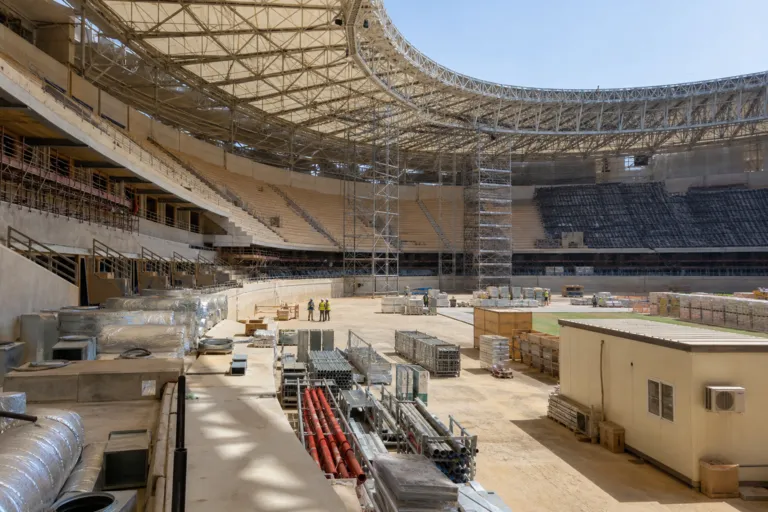
In a mega-event cycle, fewer venues can still mean more complexity per venue. That is the practical reading of 2034 World Cup stadium plan changes for contractors and developers: less repetition of standard builds, and more pressure to deliver premium scopes on a tighter set of sites. One industry source points to Saudi Arabia’s 2034 FIFA World Cup bid listing fifteen venues across five host cities, combining four existing stadiums, three under construction, and eight planned new builds. Even if the final venue count trims, the mix matters. Existing and in-progress sites tend to pull budgets toward upgrades, commissioning, and package integration, rather than pure civil volume.
That shift favors teams that can win retrofit work without waiting for brand-new concrete. In stadium lighting, one market view frames retrofit demand as the “safer bet,” because it relies on old venues staying operational rather than on new venues getting approved. The same source describes the on-site reality as mast-by-mast swaps, where metal halide heads come down and LED optics go up. For contractors, a shorter venue list can concentrate these upgrade packages, but it also raises the bar on performance and disruption control. It also increases the coordination load with other systems that modern venues now expect as standard.
Where Spending Concentrates When Venue Counts Shrink
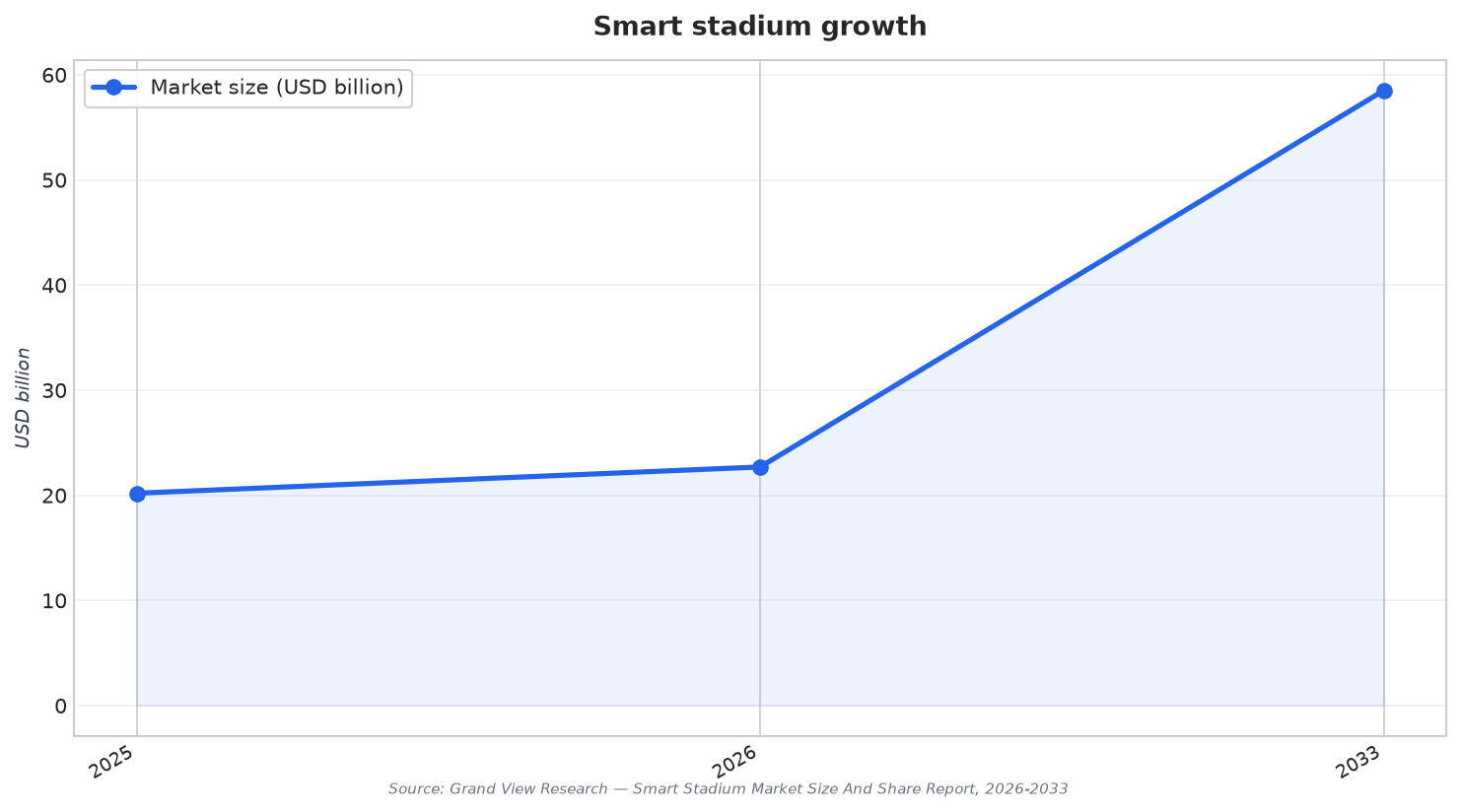
Technology integration is one place where fewer venues can still produce large, high-value scopes. Fortune Business Insights is cited as reporting that more than 53 percent of new stadium construction projects now include integrated digital technologies such as automated lighting controls. That signals system buying, not lamp buying, which reshapes bid strategies toward controls, networking, software, and services. The global smart stadium market context reinforces this direction: it was valued at USD 20.2 billion in 2025, projected at USD 22.7 billion in 2026 and USD 58.5 billion by 2033, with a 14.5% CAGR from 2026 to 2033. In that same dataset, retrofit led installation with a 59.5% revenue share in 2025.
Security packages also scale with expectations, even when the venue list compresses. A stadium security market report values the global market at $12.4 billion in 2025 and projects $26.8 billion by 2034, expanding at a CAGR of 8.9% from 2026 to 2034. It also notes the Middle East & Africa region held approximately 6.4% share in 2025, with GCC countries, particularly Saudi Arabia, Qatar, and the UAE, investing heavily in world-class stadium infrastructure as part of broader Vision 2030 and diversification strategies. For developers, that implies fewer sites can still carry heavier compliance and technology loads, including surveillance, access control, emergency management, and cybersecurity components.
Interiors and spectator infrastructure stay relevant, but the mix can tilt toward refurbishment cycles and fast installs. The global stadium seats market is projected at USD 1.83 billion by 2025 with a 1.81% CAGR, and the same analysis ties mature growth to strategic refurbishment cycles and selective new construction. It also cites practical install levers: injection molded seats can reduce shipping costs by up to 20% per unit versus metal frames, and modular design can decrease labor costs by 15–25% during critical phases. For North America specifically, a separate report expects the metal stadium seating market to reach 315.36 million with a 3.90% CAGR by 2034. For contractors tracking 2034 World Cup stadium plan changes, the takeaway is simple: fewer venues can mean fewer slabs, but not fewer specialized packages to win and deliver.
How could 2034 World Cup stadium plan changes reshape contractor opportunities?
Why do retrofits matter if fewer new stadiums are built?
What numbers show the pull toward smart, integrated stadium systems?
How big is the stadium security market, and why does it matter?
What cost and labor factors show up in seating upgrades?