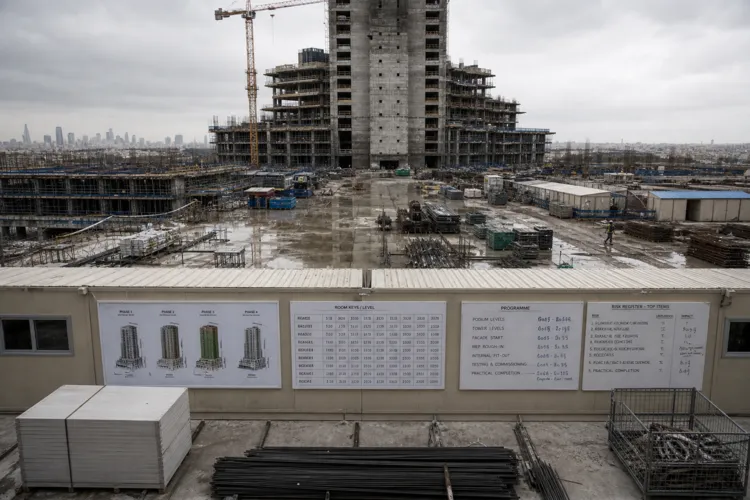
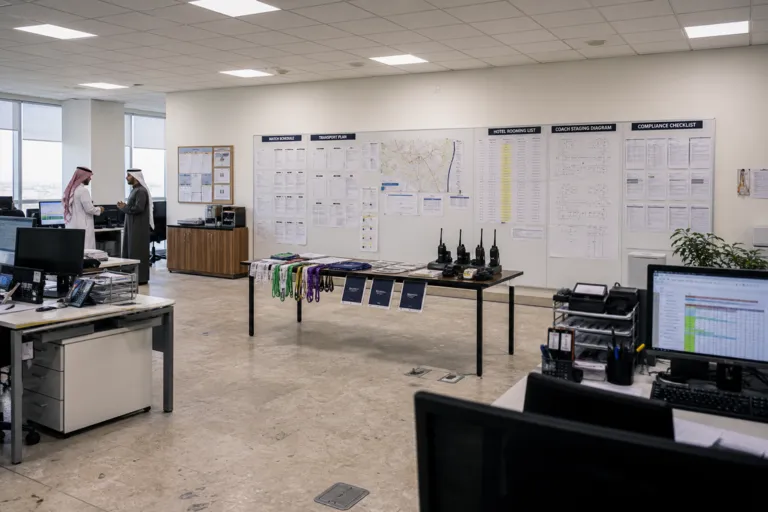
Packaging the FIFA 2034 World Cup is not just about selling match tickets. It is about building end-to-end trips that connect aviation, hospitality, transport, and event access into one friction-reduced product. Saudi Arabia has signaled that sport is a central instrument of its Vision 2030 agenda, tied to tourism, youth engagement, and employment in events management and hospitality. That context matters for inbound sports tour operators Saudi Arabia-based, because it points to sustained programming beyond a single tournament. It also frames why organizers are investing in stadiums, venues, and digital infrastructure that can support repeatable, scalable visitor experiences.
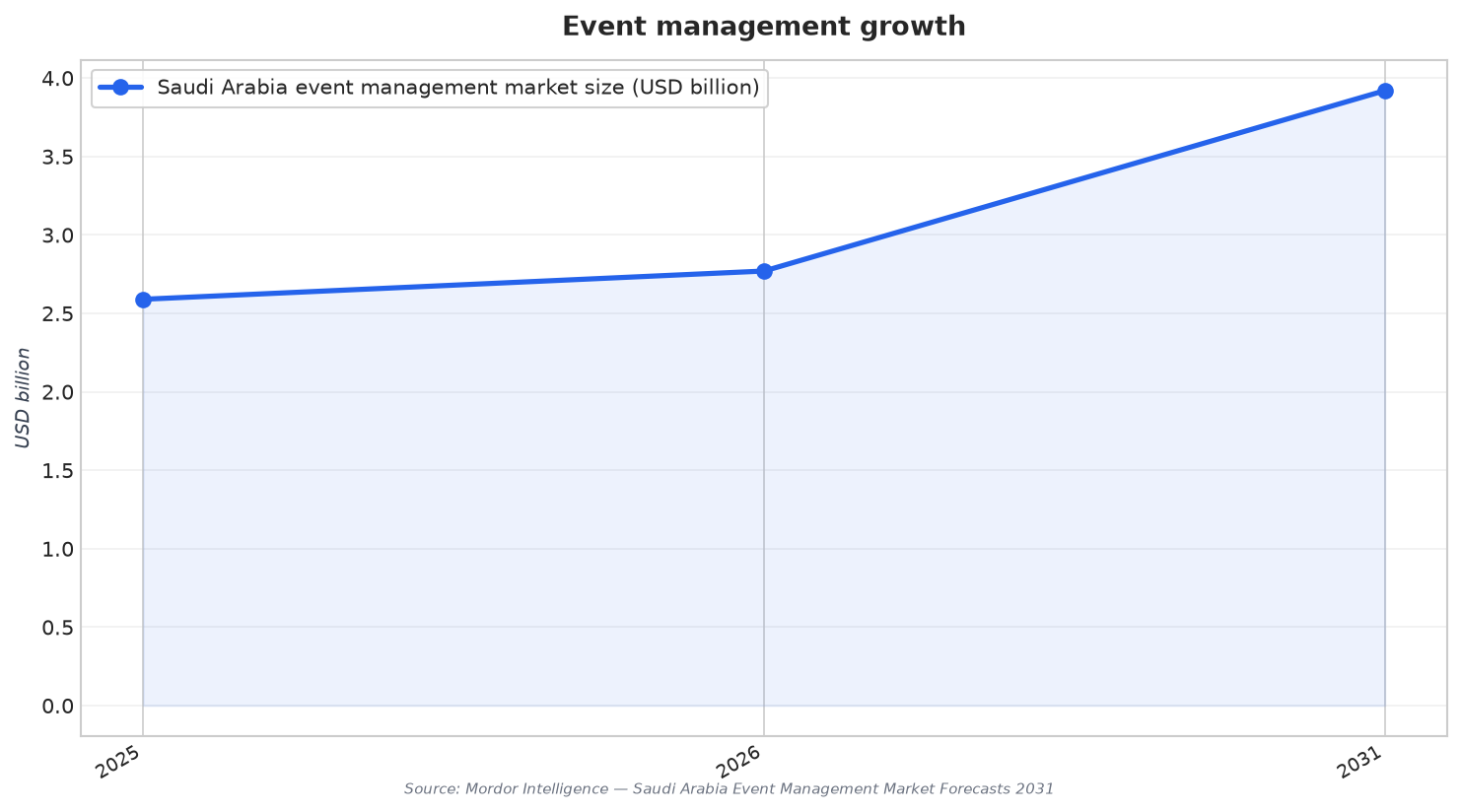
The wider events platform is already expanding. Mordor Intelligence forecasts the Saudi Arabia event management market to grow from USD 2.59 billion in 2025 to USD 2.77 billion in 2026, reaching USD 3.92 billion by 2031 at a 7.14% CAGR over 2026–2031. In 2025, ticket sales represented 54.92% of the market’s revenue source mix, while sponsorships are expected to rise at a 12.85% CAGR between 2026 and 2031. Venue utilization is also cited at 68% in Riyadh and 61% in Jeddah as of 2025, a practical signal that demand is becoming more consistent and operational planning matters.
What to Package: Venues, Mega-Projects, and Fan Experiences
Tour-operator packaging starts with where fans will go and what they can do between matches. The U.S. Department of Commerce notes Qiddiya will feature over 300 leisure and entertainment facilities, including a 20,000-seat clifftop stadium slated to host a portion of the 2034 World Cup, and that Qiddiya aims to attract over 48 million visitors per year. The Jeddah Central Project is also described as including a sports stadium hosting a portion of the 2034 World Cup, alongside more than 17,000 residential units and 2,700 hotel rooms. At the wider venue-supply level, Mordor Intelligence states that more than 100 new event-ready facilities are slated for completion under giga-projects such as NEOM, Qiddiya, and the Red Sea destination, including King Salman International Stadium’s 92,760-seat bowl.
Operators should design products around real behavior shifts in sports travel. Grand View Research highlights the rise of packaged sports travel, including VIP hospitality, fan zones, and event-linked holidays. It also reports that, for the 2025 Esports World Cup in Riyadh, 40% of ticket sales so far are to international fans, pointing to inbound demand that can be nurtured with add-ons and multi-day itineraries. On the supply side, Mordor Intelligence notes that ticketing platforms leveraging AI have driven a 15% uplift in average revenue per attendee through personalized offers and dynamic pricing. For packaging, this suggests inventory and pricing may move quickly, so tour operators need clear allotment strategies and flexible inclusions.
Finally, inbound operators should treat 2034 as a catalyst for a multi-event calendar rather than a one-off. Vision2030.ai positions the Kingdom’s sports push as spanning leagues and mega-events, citing the Saudi Pro League’s commercial growth, Formula 1’s Saudi Arabian Grand Prix in Jeddah and its move to a purpose-built facility at Qiddiya, and other global properties. Travel And Tour World adds broader global context by modeling sports tourism at USD 1.98 trillion by 2034 under an 11.79% CAGR assumption, while emphasizing that “passive” sports tourism represented 43.2% to 59.0% of global market share in 2025 and is projected at 58.78% in 2026. For Saudi Arabia, the practical takeaway is product design: spectator-led trips anchored on ticket access, with optional excursions tied to new districts and entertainment zones.
How can inbound sports tour operators in Saudi Arabia build 2034 World Cup packages that sell?
What event-market signals suggest packaging demand is rising in Saudi Arabia?
Which giga-project assets can operators use to add non-match experiences?
What does international demand look like for Saudi-hosted mega-events before 2034?