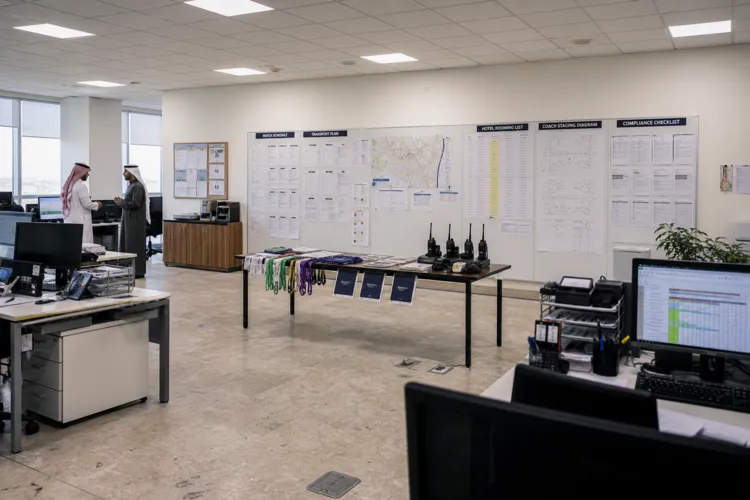
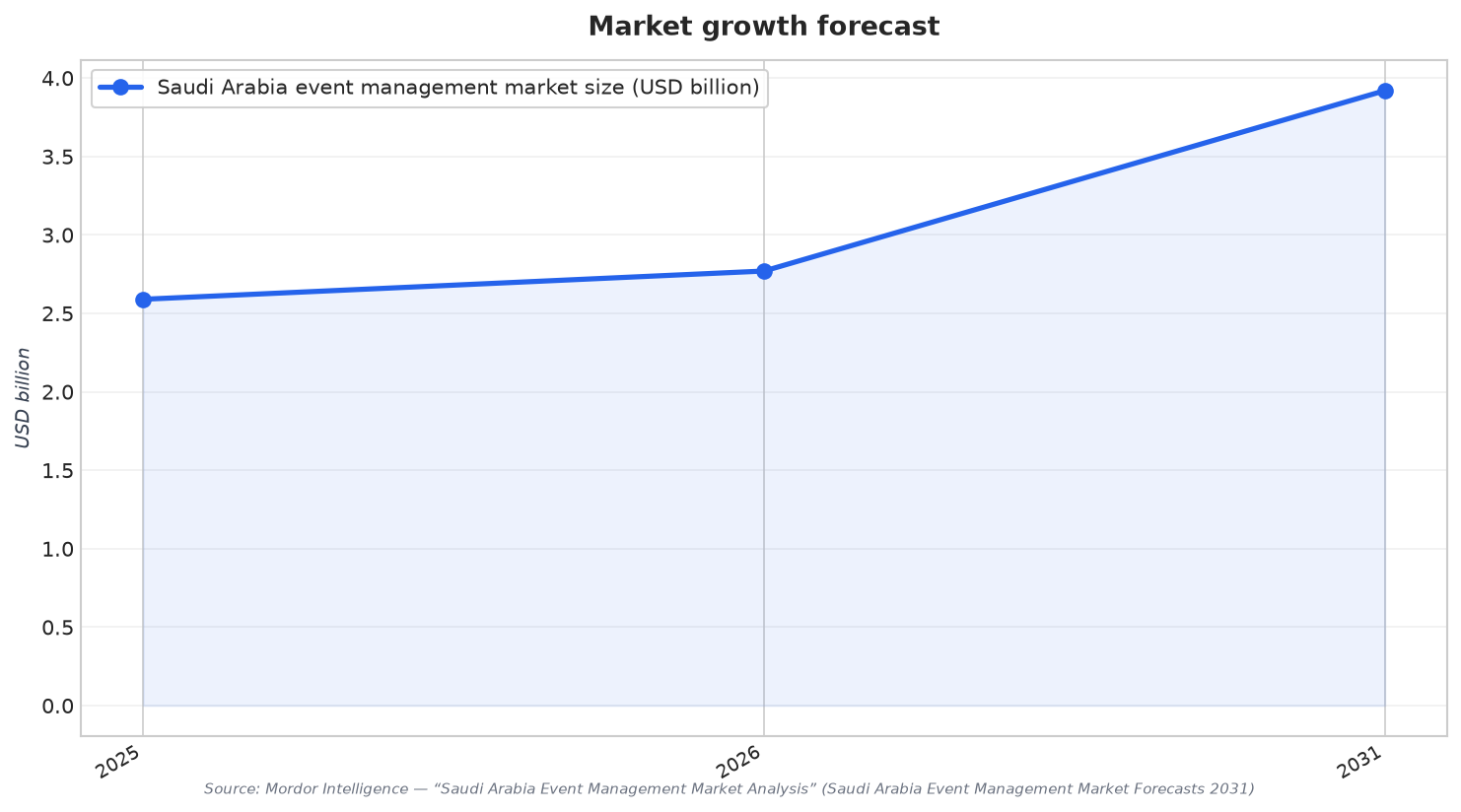
Saudi Arabia’s events sector is scaling fast. Mordor Intelligence forecasts the Saudi Arabia event management market to grow from USD 2.59 billion in 2025 to USD 2.77 billion in 2026, and to reach USD 3.92 billion by 2031, at a 7.14% CAGR over 2026–2031. Sports sits inside a broader mix where exhibitions & conferences and sports together captured 36.94% market share in 2025. With more events and larger crowds, climate-risk planning becomes an operational requirement, not a side task. That is where outdoor sports heat management in Saudi Arabia becomes part of scheduling, staffing, venue selection, and emergency readiness.
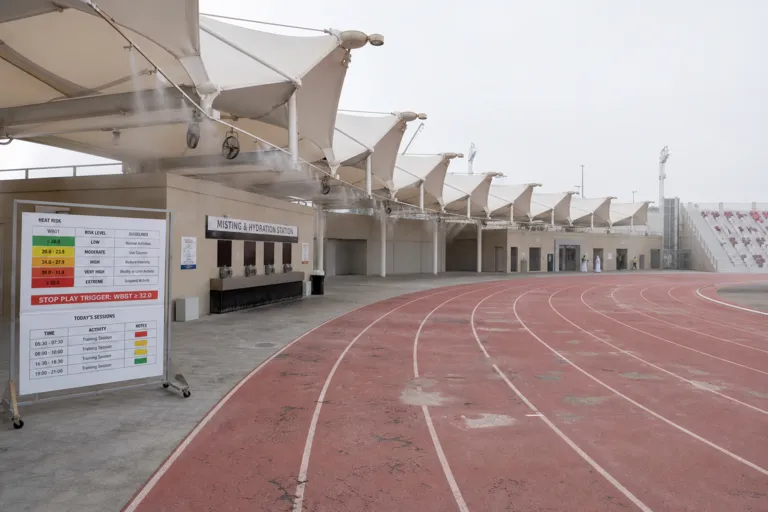
Heat risk is not only about air temperature. The Guardian reports that wet-bulb globe temperature (WBGT) accounts for humidity, direct sunlight, and wind, and at high enough heat and humidity sweat can no longer evaporate efficiently, which can lead to rapid overheating and heat illness or even death. In a 2026 tournament analysis, the Guardian found an estimated nine World Cup group-stage matches were played in conditions of severe heat that the players’ union Fifpro has previously said should trigger the delay or postponement of games, with WBGT that may have been at or over 28C (82F). That kind of decision threshold translates directly into event-day playbooks: define triggers, align them with staffing and medical response, and treat postponement as a planned option rather than a last-minute crisis.
Scheduling and Venue Choices: Make Heat a First-Class Constraint
Recent football planning offers practical signals for schedule design. The Guardian notes that organisers attempted to reduce risk by scheduling some games in higher-risk, uncooled locations later in the day, while also highlighting that air-conditioning in some stadiums can effectively eliminate risk inside those venues (though not outside, which can still affect spectators). NPR similarly reports that FIFA scheduled many games for cooler afternoon and evening hours, added extra water breaks for players and referees, and installed air conditioning on the sidelines for those on benches. For Saudi outdoor events, the lesson is to decide early which competitions must be placed in cooler windows, which venues need cooling capabilities, and which event elements (queues, fan zones, transport, volunteer posts) remain exposed even when the field-of-play is mitigated.
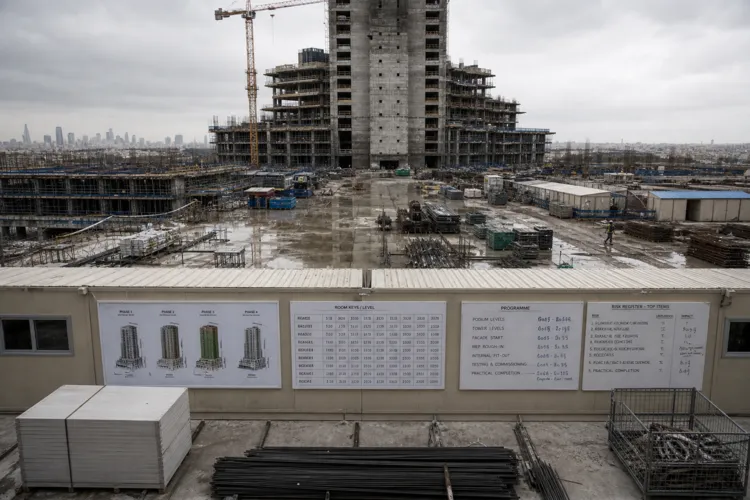
Saudi Arabia is building and operating at scale, so planning tools must scale too. Mordor Intelligence reports that more than 100 new event-ready facilities are slated for completion under giga-projects such as NEOM, Qiddiya, and the Red Sea destination, including King Salman International Stadium with a 92,760-seat bowl. It also reports average venue utilization of 68% in Riyadh and 61% in Jeddah as of 2025. Those figures imply tighter calendars and less flexibility if weather forces changes. Heat risk therefore belongs in contracting, permitting, and vendor SLAs: define WBGT monitoring needs, set delay/postpone protocols, and pre-stage medical pathways. The Guardian reports that “work-rest cycles for staff and volunteers are adapted accordingly” and first-aid readiness is reinforced with clear triage and escalation pathways for suspected heat illness.
Longer-term climate risk adds another planning layer. A PLOS Climate study provides a global, CMIP6-based assessment using daily projections and four indicators relevant to sport practice: WBGT for morning, afternoon, and evening conditions; dangerous Heat Index days; heavy rainfall days; and heatwave days, combined into a composite Sport Climate Risk Index (SCRI, 0–1). It finds a rapid intensification and spatial expansion of climate constraints on outdoor sport, and highlights that mitigation choices influence future feasibility. In football governance, the Guardian reports that Saudi Arabia is expected to host the 2034 tournament during the northern hemisphere winter, a scheduling shift designed to avoid summer temperatures that regularly climb above 40C (104F). For organizers, the core message is governance-ready planning: integrate climate indicators into season selection, daypart scheduling, and site design from the start.
Why should Saudi outdoor event schedules use WBGT-style triggers?
What practical steps have major tournaments used to reduce heat risk?
How does venue expansion affect outdoor sports heat management in Saudi Arabia?
What indicators can organizers use for broader climate-risk planning beyond heat?
Why is winter scheduling discussed for Saudi-hosted football in 2034?