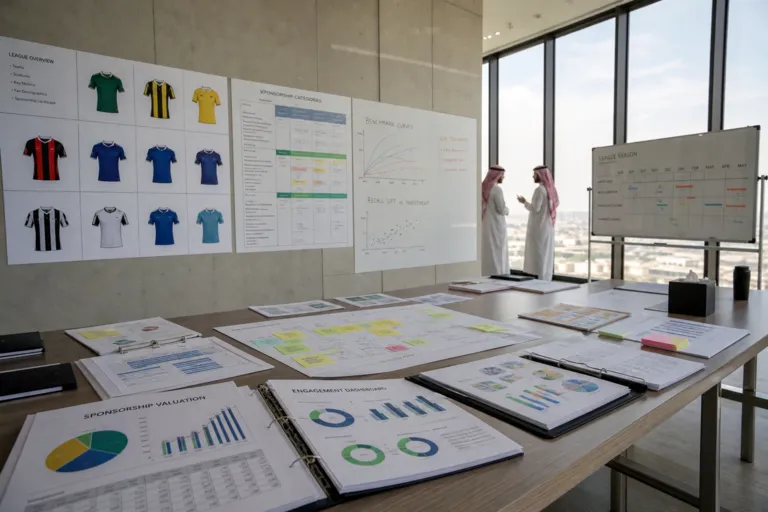
For brands evaluating Saudi Pro League shirt sponsorship, the first step is setting benchmarks that can be defended internally. Saudi Arabia has been described as entering a “golden sports decade,” with major events ahead including the FIFA World Cup 2034 and the Asian Games, plus Formula 1, golf, tennis, boxing, and esports. In that context, the market is projected to grow to USD 22.4 billion by 2030, up from USD 1.3 billion in 2016. That growth creates opportunity, but it also raises the bar on governance and accountability, especially as the Public Investment Fund has confirmed an emphasis on “sustained value creation… and maximizing long-term returns.”
Valuation discipline starts with measurable exposure and interaction. Fox Sports reported Saudi Pro League distribution reached 180 countries worldwide, up from 150 the year before. The same reporting said international sponsorship deals surged by 200%. Digital audience signals also moved, with social media following growing from 11 million to 15 million last season and engagement up 60%. These metrics do not prove commercial return on their own, but they give teams and sponsors a baseline to price inventory and to define “what good looks like” for a shirt-front, sleeve, or training-wear placement tied to activation.
Where Benchmarks Come From: ROI Proof, Recall Risk, and Fan Demand
Brands should also price in the measurement gap that exists across sports sponsorship. A PTTOW! Sports Summit release said 76% of marketing executives cannot measure return on investment from sports sponsorships, even as it described the global sports market reaching USD 600 billion. It also said 63% of global consumers follow sports regularly, yet most cannot recall sponsors from recent events. That makes the “logo value” on a jersey only one part of the business case. Post-event brand lift, recall checks, and activation-linked outcomes matter, especially because the strongest value can come from what MediaPost called “the oldest kind” of ROI: using sponsorship to enable tickets and VIP experiences where “deals get done.”
Category gaps are easiest to spot when you combine Saudi fan commerce with global deal structures. In Saudi Arabia, licensed football merchandise is valued at approximately USD 340 million, and apparel (including replica jerseys and shirts) is the leading sub-segment due to fan demand to display club support. That creates a natural fit for consumer brands that can connect purchase intent to kit visibility. Globally, the sports sponsorship market was valued at USD 82.97 billion in 2025 and is projected to reach USD 191.08 billion by 2035 at an 8.70% CAGR, which signals rising competition for premium inventory. It also signals why brands may look for underdeveloped categories and “white space” assets that rights holders can package across an entire organization, not just one team.
Finally, benchmarks should reflect how sponsorship formats are evolving. Technavio projects the sports sponsorship market size will grow by USD 29,861.6 million from 2026 to 2030 at a 6.6% CAGR, while also highlighting a shift toward advanced analytics and digital activation. That matters for Saudi Pro League jersey assets because exposure alone can be easy to buy, but hard to attribute. The best-positioned brands will structure agreements to capture consistent reporting on reach, engagement, and activation outputs, using the league’s published distribution and digital growth signals as the starting point, then building measurement that reduces recall risk and strengthens the long-term return story.
How should a brand benchmark a Saudi Pro League shirt sponsorship deal?
What metrics show recent momentum that can support valuation discussions?
Why do category gaps exist even when sponsorship inventory is highly visible?
How does merchandise demand influence shirt sponsorship attractiveness in Saudi Arabia?