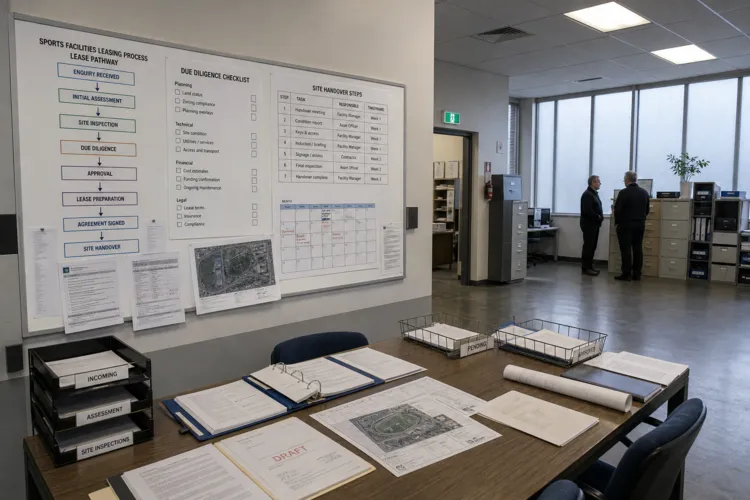
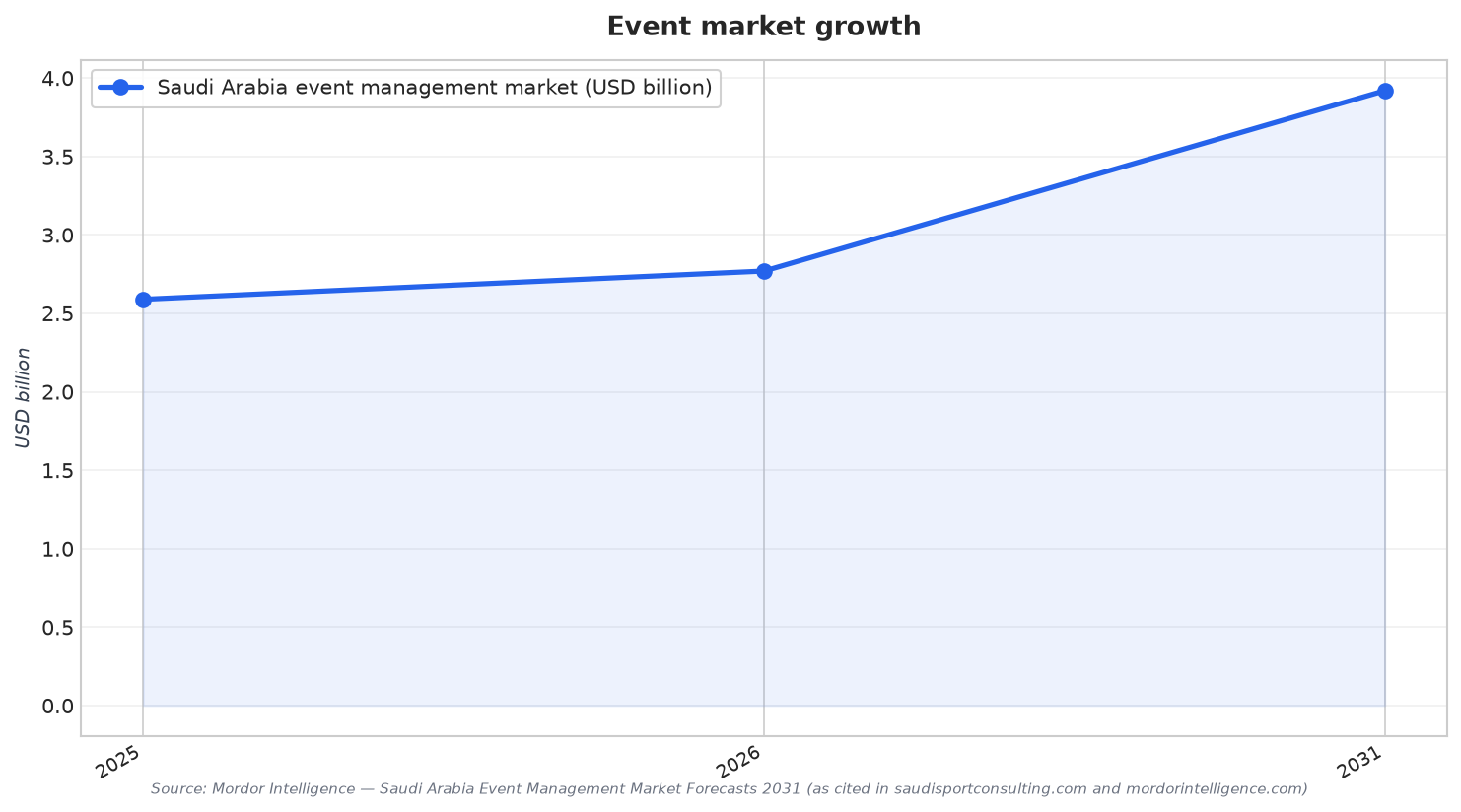
Saudi Arabia’s stadium and event programme is being pulled forward by demand, not just construction ambition. The Saudi sports event market generated USD 4.9 billion in revenue in 2025 and is expected to reach USD 12.2 billion by 2033, with a CAGR of 12.2% from 2026 to 2033. Professional sports events represented 77.55% of revenue share in 2025, while e-sports events are described as the most lucrative segment with the fastest growth during the forecast period. This creates a planning problem that looks like a delivery problem: calendars, venue capacity, and operational readiness must move in sync. A Sports Project Management Office (PMO) is the mechanism that can connect those moving parts into one accountable schedule.
On the supply side, the workstream is clearly multi-asset. Construction on 15 new smart stadiums is underway. One proposal for NEOM includes a 46,000-capacity stadium planned as part of The Line, designed to be 350 metres above the ground, with work set to begin in 2027 and conclude in 2032. In Qiddiya Sports Park, the National Athletics Stadium is positioned as a central facility, with design consultancy led by HOK (UK), engineering support from WSP (Canada) and Schlaich Bergermann Partner (Germany), and WT Partnership as cost consultant. A PMO has to manage these cross-border consultant interfaces, align technical standards, and keep procurement and lifecycle decisions consistent so operational handover is not delayed by late changes.
What the PMO Actually Controls: Calendar, Utilization, and Readiness
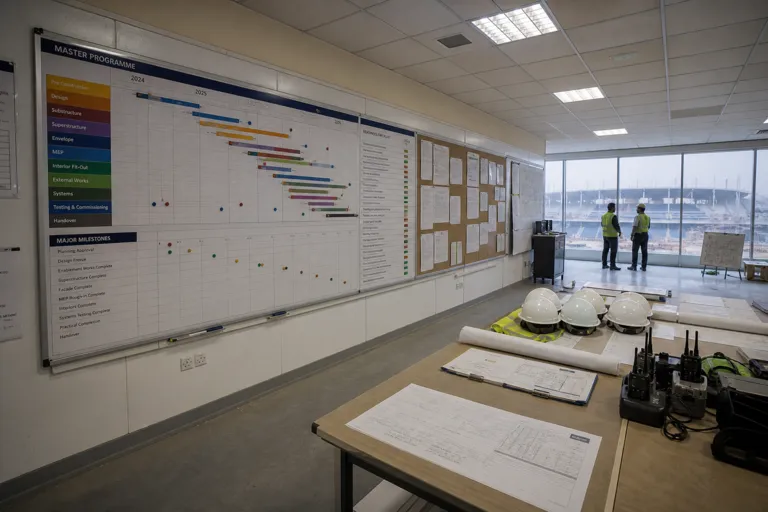
To keep openings meaningful, the PMO must link build milestones to demand modelling. One venue management analysis states that the difference between a 20% utilised venue and an 80% utilised one is not design, but demand and supply modelling. Utilization benchmarks show how tight programming can get in major cities, with average venue utilization at 68% in Riyadh and 61% in Jeddah as of 2025. Event mix also drives operating design: in 2025, corporate end users accounted for 58.42% of the event management market share, while exhibitions & conferences and sports together held 36.94%. A PMO can convert that mix into a master programme that balances sports, conferences, concerts, and community use while coordinating changeovers, staffing assumptions, and service levels.
Environmental and cost constraints make schedule discipline more than an engineering preference. Mordor Intelligence notes summer temperatures topping 45 °C can push cooling expenses to 70% of operational budgets, with medium-scale outdoor concerts incurring up to USD 200,000 in temporary HVAC outlay. That reality compresses demand into cooler months and complicates booking availability, which means venue commissioning dates and test events must be planned against seasonal peaks. Indoor arena strategy reinforces the same logic: year-round programming needs year-round buildings, even if indoor venues are more expensive to build and operate. The PMO’s job is to align capex decisions with the calendar that will actually pay for the asset.
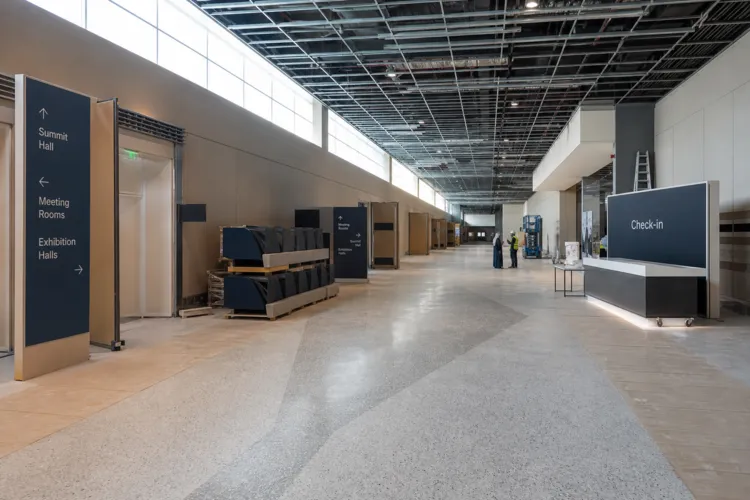
Operational readiness is where sports PMO mega-project delivery becomes visible to fans. Saudi Arabia is preparing to host major events such as the FIFA World Cup 2034 and the Asian Games, alongside Formula 1, golf, tennis, boxing, and esports. Participation rates rose from 13% of the population exercising regularly in 2015 to 50% today, and female participation grew 400% in the same period, expanding peak-and-off-peak demand patterns. A PMO can translate those signals into practical readiness gates: crowd flow planning, transport integration, and stable control-room processes. It also has to anticipate technology-enabled experiences as stakeholders adopt analytics to improve engagement, including forecasts of over 30 million attendees expected at sporting events in future.
Why does Saudi Arabia need a Sports Project Management Office for stadium and event programmes?
What delivery scope is already visible in Saudi stadium development?
How do utilization and event mix affect PMO planning?
What climate-related risks can disrupt event schedules and operating budgets?
What does effective sports PMO mega-project delivery focus on day-to-day after handover?