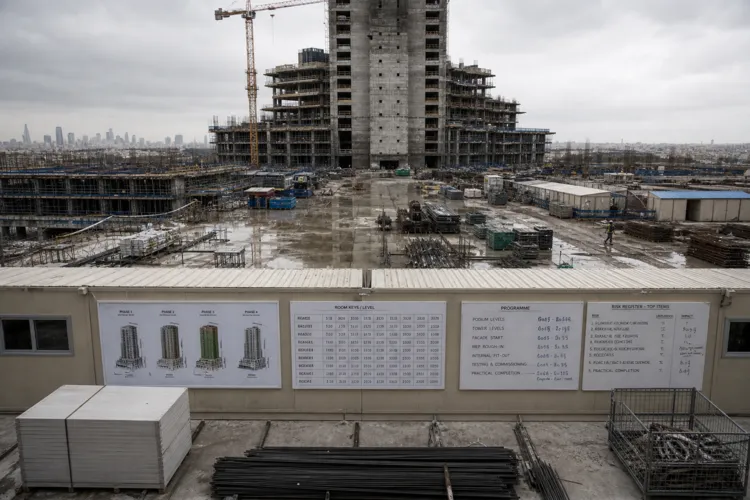
Saudi stadium development is expanding in a national environment that increasingly rewards measurable resource efficiency. Planned 2034 venues are described with capacities ranging between 45,000 and 92,760, including the King Salman International Stadium in Riyadh planned at about 92,760. For vendors selling reuse and diversion services, the stadium build cycle is not only about equipment. It is also about compliance documentation, procurement fit, and operational continuity across event days and district-linked uses such as retail and hospitality around venues.
The water-reuse market backdrop is explicit. World Bank estimates cited in a Saudi water recycling market report put Saudi Arabia’s renewable internal freshwater resources per capita at 67 cubic meters in 2019, below a 1000 cubic meters threshold used as an indicator of water scarcity. The same report states the government set a target to achieve 100% reuse of treated urban wastewater by 2025, and that Saudi Water Partnership Company (SWPC) is planning to increase private sector participation to 100% in the country’s desalinated water production. In this context, stadium water recycling in Saudi Arabia becomes a procurement category that can align with national reuse goals, not just venue-level sustainability messaging.
Where Stadium Vendors Compete: Equipment, Operations, and Proof
Vendors that serve large venues can position around full-cycle operations, not just bins or pipes. A stadium services provider, Copia Resources, describes coordinating hauler schedules, optimizing pickups, managing all waste streams, and providing back-office support such as reporting, scheduling, and compliance documentation, with event-specific billing. That service framing matters because Saudi Arabia’s broader waste-management market is scaling quickly. Mordor Intelligence values the Saudi Arabia waste management market at USD 25.84 billion in 2025, estimating growth from USD 27.39 billion in 2026 to USD 37.53 billion by 2031, at a 6.5% CAGR during 2026–2031. In the same report, disposal and treatment services account for 53.45% of the market in 2025, while recycling is projected to grow at a 9.7% CAGR through 2031.
For venue procurement teams, diversion performance and audited outcomes intersect with a concentrated supplier landscape. Mordor Intelligence states Saudi Investment Recycling Company (SIRC), Veolia, SUEZ, Averda, and BEEAH collectively managed more than 50% of treated volumes in 2025, and that SIRC alone recycled 16 million tons of construction and demolition (C&D) waste in that year. Separately, Trade.gov notes that most of the country’s waste is currently being landfilled at an average of $1.87 per ton, citing the former CEO of SIRC. Those numbers create a practical vendor story for stadiums: solutions that reduce landfilling exposure, strengthen reporting, and integrate with municipal contractor workflows can be easier to justify in tenders than standalone, unverified claims.
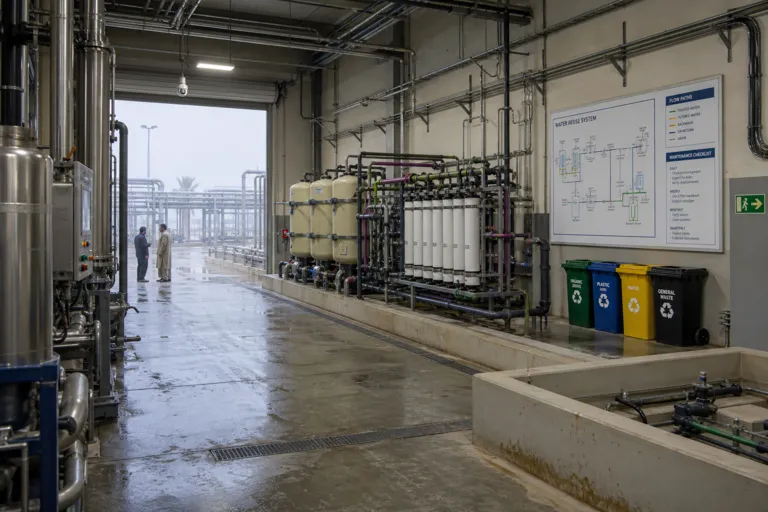
The commercial opportunity for reuse hardware and systems is also reflected in market revenue estimates. Grand View Research reports the Saudi Arabia water recycle and reuse market generated USD 246.8 million in 2025 and is expected to reach USD 578.3 million by 2033, adding that filtration was the largest segment with a 39.91% revenue share in 2025. For stadiums, that segmentation signals how bids may be packaged: filtration-led scopes paired with tanks, pipes, and drains, plus O&M and compliance reporting. Taken together with the scale of new and refurbished venues, water-positive stadium strategies will likely be won by vendors that can deliver integrated reuse and diversion outcomes that are easy to measure, verify, and run on event schedules.
Why is water reuse a priority context for Saudi stadium projects?
What market figures suggest growth in recycling services that stadiums can tap into?
Which vendors are cited as managing a large share of treated waste volumes in Saudi Arabia?
How large is the water recycle and reuse opportunity in Saudi Arabia, according to market estimates?
What should stadium operators look for in stadium water recycling in Saudi Arabia vendor proposals?