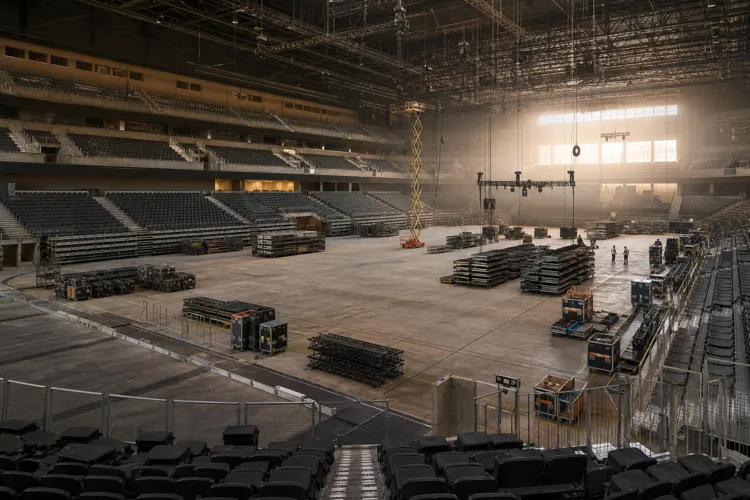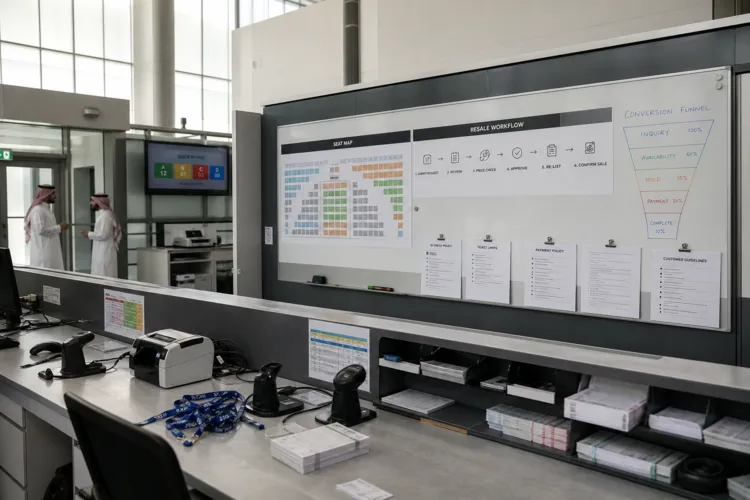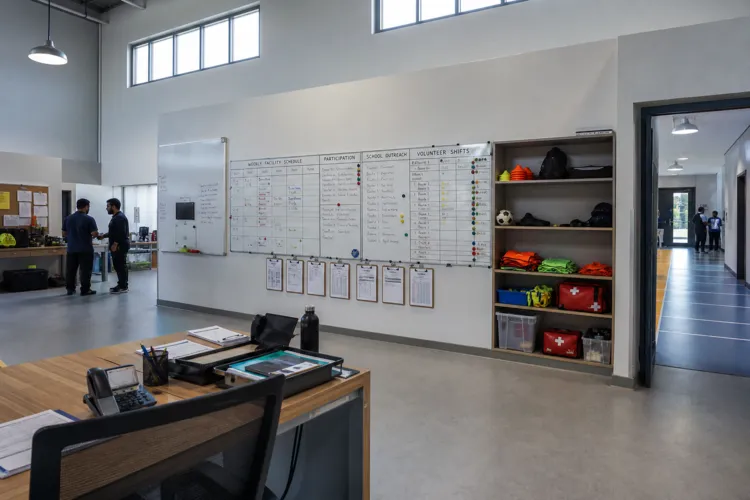
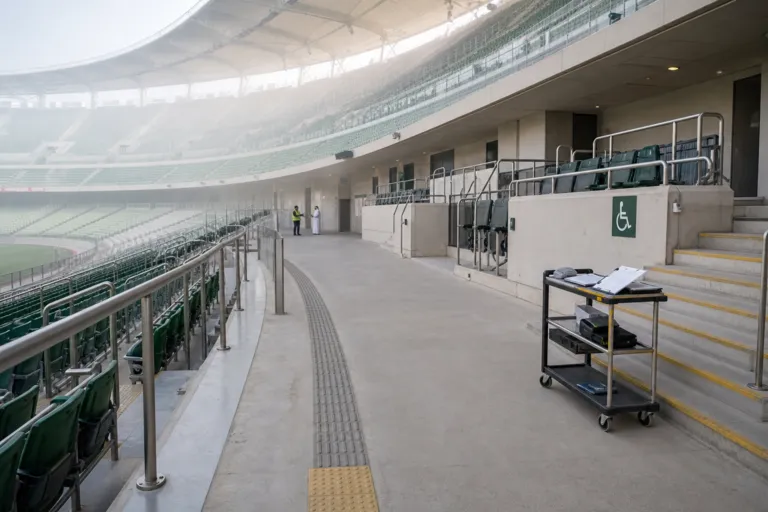
Saudi Arabia’s FIFA World Cup 2034 bid is built around 15 stadiums across the Kingdom, with four refurbishments and 11 new builds or venues currently under construction. Another overview frames the same total as 15 venues across five host cities: Riyadh, Jeddah, Al Khobar, Abha, and NEOM, combining newly built arenas with redeveloped existing sites to meet FIFA’s standards. This scale creates a practical opening to treat accessibility as a design baseline, not an afterthought. For stadium accessibility compliance in Saudi Arabia, the critical advantage is timing: decisions made early in new builds and major upgrades are easier to align with procurement, operational plans, and the wider precinct experience that modern venues are expected to deliver year-round.
Several projects illustrate why accessibility and compliance planning will not be “one size fits all.” Motaded describes a new stadium north of Riyadh with a capacity of 45,000 seats, alongside renovations of five existing stadiums. It also reports planned expansions: King Fahd Stadium in Riyadh to 92,000 spectators; Prince Faisal bin Fahd Stadium in Riyadh to 45,000; Prince Mohammed bin Fahd Stadium in Dammam to 30,000; and Prince Saud bin Jalawi Stadium in Khobar to 45,000. In parallel, another concept for Riyadh’s King Salman International Stadium is presented with an approximate capacity of 92,760, with construction scheduled to start around 2025 and opening expected by 2029. The compliance implication is simple: capacity jumps and mixed portfolios increase complexity for circulation, wayfinding, and operations, so vendors that can standardize solutions across both refurbishments and new builds gain an advantage.
Where Compliance Meets Legacy: Designing for Utilization and Mixed-Use Value
Roland Berger argues that leading stadiums now operate as 365-day, mixed-use destinations combining sports, entertainment, commerce, hospitality, and community activity. The same source highlights Saudi Arabia’s “greenfield opportunity,” noting that 11 of the 15 venues are under construction or planned as new builds, allowing districts and venues to be designed from scratch. That framing matters for accessibility: compliance is not just an event-day checklist, but a requirement for daily usability across retail, hospitality, and community programming. A Saudi sports facility feasibility guide cites a benchmark: the difference between a 20% utilised venue and an 80% utilised one is not design, it is demand and supply modelling. For vendors, accessible customer journeys can be positioned as part of demand planning, because barriers to entry can reduce addressable audiences for year-round programming.
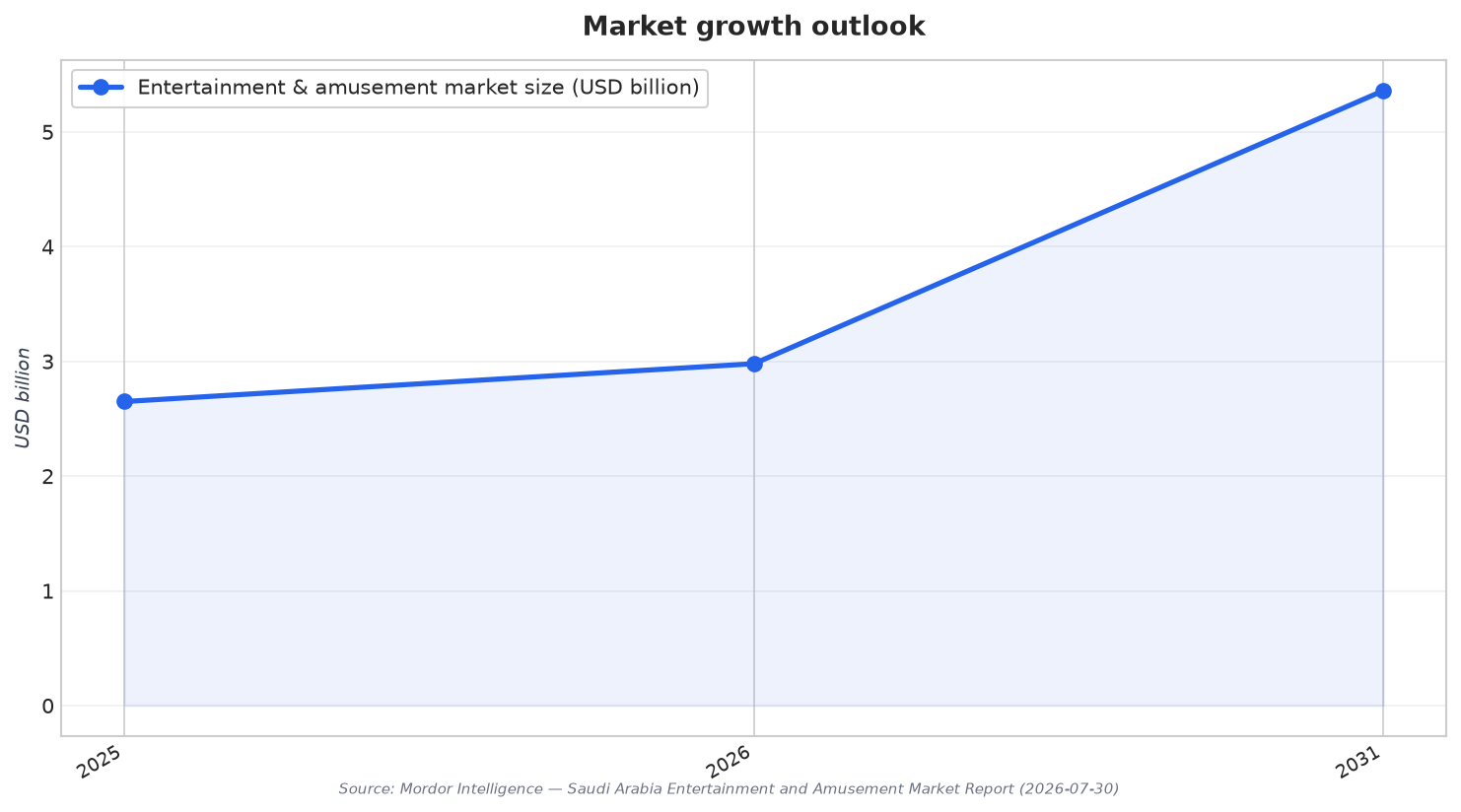
Vendor opportunity also sits inside the market context for leisure-led precincts. Mordor Intelligence estimates Saudi Arabia’s entertainment and amusement market at USD 2.98 billion in 2026, growing from USD 2.65 billion in 2025, with projections of USD 5.36 billion by 2031 and a 12.4% CAGR over 2026–2031. In 2025, it attributes 36.02% market share to family entertainment centers, and says families represented 46.78% of the visitor demographic. It also reports Riyadh held 52.10% of market share in 2025. These figures are not stadium-specific, but they explain why stadium districts are being planned as wider leisure ecosystems. Accessibility compliance vendors can align offers with family-focused visitation patterns, and with Riyadh’s concentration of activity, by packaging integrated solutions for venues plus surrounding destinations rather than isolated, stadium-only scopes.
Procurement structures can reward vendors that treat accessibility as operational performance over time. A PPP delivery analysis for Prince Faisal Sports City in Riyadh describes a DBFOM approach, where financing, operations, and maintenance are integral to bid strategy, and where the stadium is positioned for World Cup readiness and major domestic and international events. The same analysis notes a pipeline of PPP-delivered stadiums expected ahead of 2034, tied to the 15-venue host plan across five host cities. It also sets an operating lens of 20–30 years for delivering a stadium and wider precinct plan and then running it commercially beyond tournament moments. That is where accessibility compliance in Saudi Arabia becomes a vendor differentiator: firms that can prove maintainable, auditable, and operationally embedded solutions can compete for longer-term roles that extend beyond construction into daily operations and lifecycle maintenance.
How can stadium accessibility compliance in Saudi Arabia be built into 2034 projects early?
How many 2034 World Cup venues are planned, and where are they located?
Which Saudi stadium projects show major capacity targets that may affect compliance planning?
Why do vendors often link accessibility work to year-round utilization and legacy?
How can PPP delivery models shape accessibility and compliance vendor opportunities?