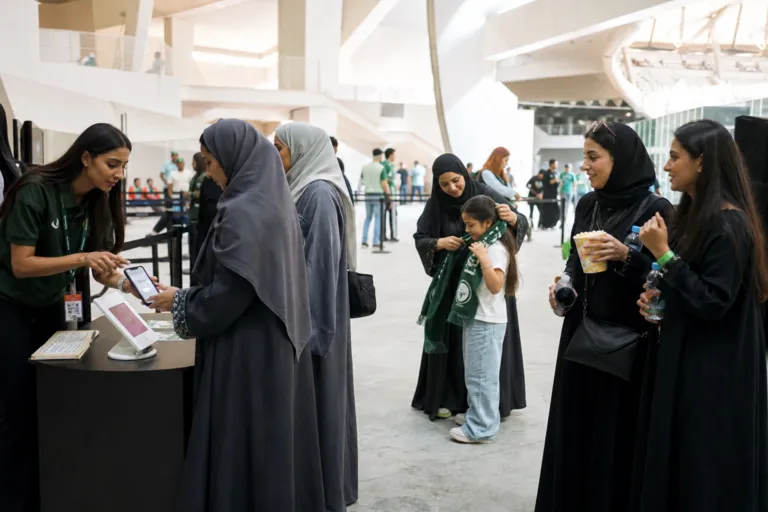
Female fan engagement Saudi Arabia starts with a clear reality: interest can rise faster than match-day habit. Garbine Muguruza said the WTA Finals had a successful first year in a new market, and that this year there is “much more interest among the fans.” She also described visiting schools and clubs to attract more female tennis players, and said the women she met were “so happy” the event was taking place on their doorsteps. For match-day planners, that points to a conversion funnel: create familiarity before the event, then reward first-time attendance with reasons to return.
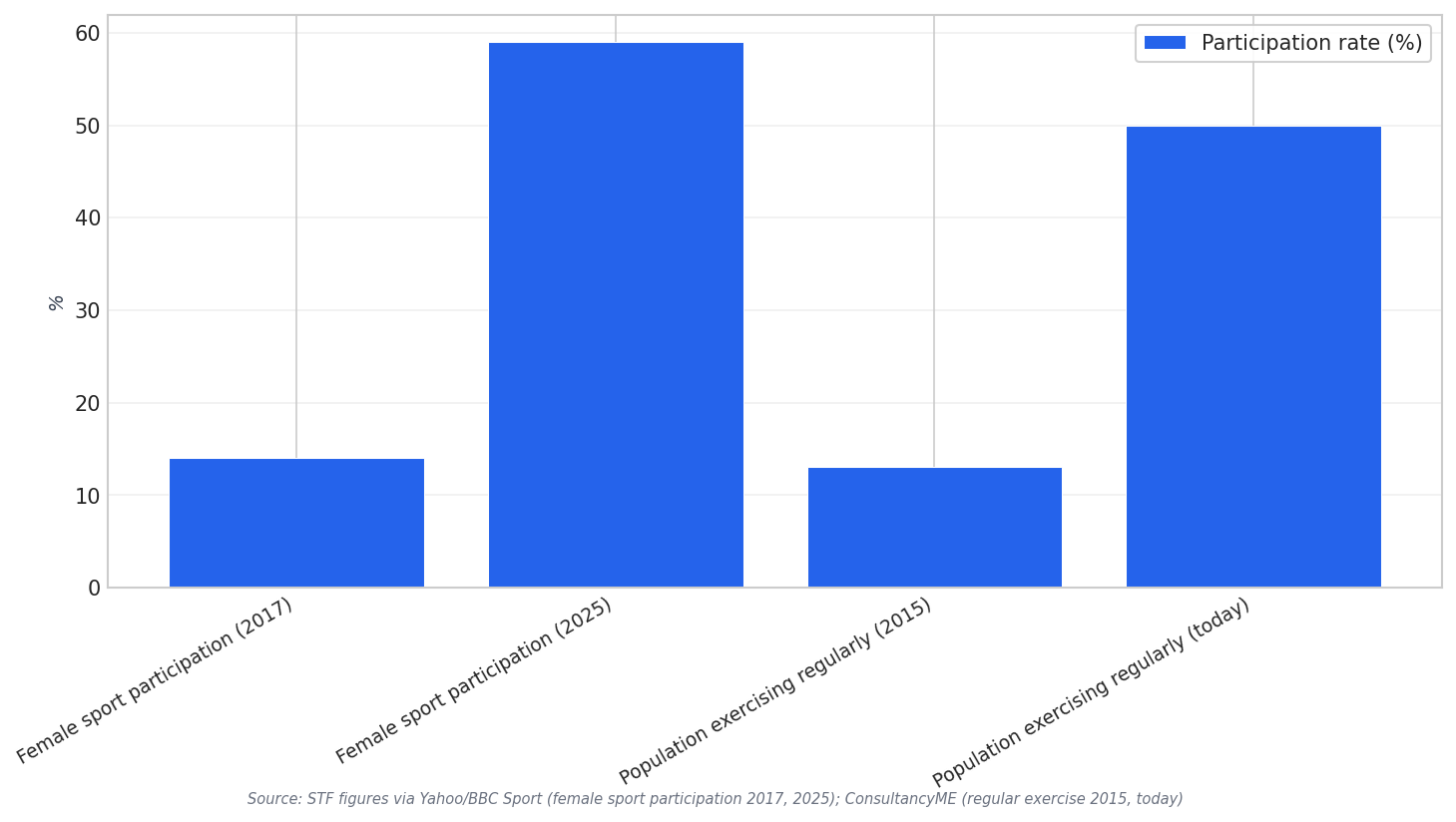
Participation signals show why the funnel is worth building. The Saudi Tennis Federation (STF) has an ambition to get one million people engaged in tennis by 2030, covering everything from playing to administration. It also said there were 177 clubs and 14,000 women actively playing tennis last year, and that 17,000 women are now actively playing. The STF also reported that female participation in tennis increased more than 24% since the 2024 WTA Finals. These numbers suggest a growing base of women who are not just spectators. They can become repeat attendees if match-day experiences speak to their sport identity.
Match-Day Design That Converts Interest Into Return Visits
Conversion also depends on solving attendance friction where it is explicitly acknowledged. In the BBC report on the Saudi Women’s Premier League, the “biggest problem is attendances,” with every team other than Al-Ula playing in stadiums with capacity less than 15,000 and crowds described as sparse. Player Ashleigh Plumptre linked this to an absence of community initiatives that get children attending with families, including giving out free tickets in schools. For match-day experience design, that means building a family-and-schools pipeline, then backing it with on-site moments that feel worth the trip.
Brand work should sit next to ticket work, not behind it. The ECB’s strategy for women’s cricket described a shift from “just selling tickets” to “building a brand,” supported by refreshed audience segmentation. Their research found a “passionate core” already engaged and a sizable group open to women’s cricket but not yet pulled in. The practical match-day takeaway is to market the sport itself, not just progress narratives. The ECB emphasized communicating “skill, the drama and the competition,” so fans “see it, feel it, connect with it.” Use match-day content and in-venue storytelling to make those qualities obvious.
Finally, match-day experience has to beat the at-home alternative. Skift’s esports example explains why: at home you get replays, commentators, your own food, and comfortable seating, while the arena offers atmosphere and physical excitement. That comparison is useful for female fan engagement Saudi Arabia because women’s sport can be streamed too, including SWPL matches on the Saudi Sports Company network and Shahid in the Middle East, with DAZN holding rights in Europe. Design the stadium day around what TV cannot replicate: community, access, and a feeling of belonging that creates sustainable engagement beyond a single star or single event.
What does “female fan engagement Saudi Arabia” mean in match-day terms?
Which participation signals suggest a bigger audience pipeline?
What is a reported barrier to attendances in Saudi women’s football?
How should women’s sport be marketed to pull in new fans?
How can live events compete with streaming?