Mass-participation running has shifted from a niche sports scene into a broad, experience-driven event category. A global research report valued the marathon events market at $2.8 billion in 2025 and projected it to reach $5.1 billion by 2034, with a 6.9% CAGR for 2026–2034. The same report estimated 68 million people worldwide participated in at least one organized road-running event in 2025, describing this as a doubling over the past decade. In that global context, the Riyadh Marathon has positioned itself as an annual, international road-based event in Riyadh, Saudi Arabia, held since 2022 and described by organizers as the Kingdom’s first official full marathon, with World Athletics Elite Label Road Race status since its inaugural edition.
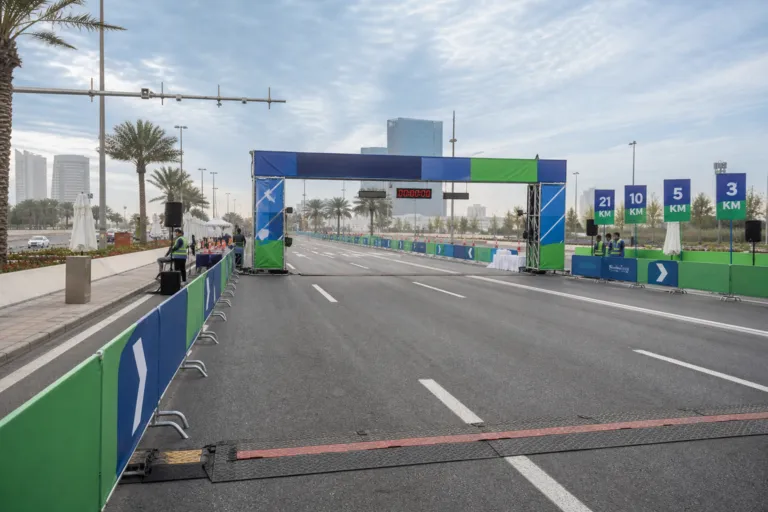
At event level, a sponsorship-and-tourism platform needs scale, variety, and reasons to stay longer than race day. The Riyadh Marathon’s format supports that. It offers the full marathon distance of 42.195 kilometers alongside shorter races including a half marathon (21.1 km), a 10 km run, and a 4 km fun run accessible to participants of all ages, abilities, and genders. It launched on March 5, 2022, organized by the Saudi Sports for All Federation (SFA) under the patronage of the Ministry of Sport, and is framed as supporting Saudi Vision 2030’s Quality of Life Program. The inaugural edition drew over 10,000 participants from more than 100 countries and awarded prizes exceeding SR1 million (approximately $266,000) to elite runners.
From Participation Scale to Sponsor Value and Visitor Spend
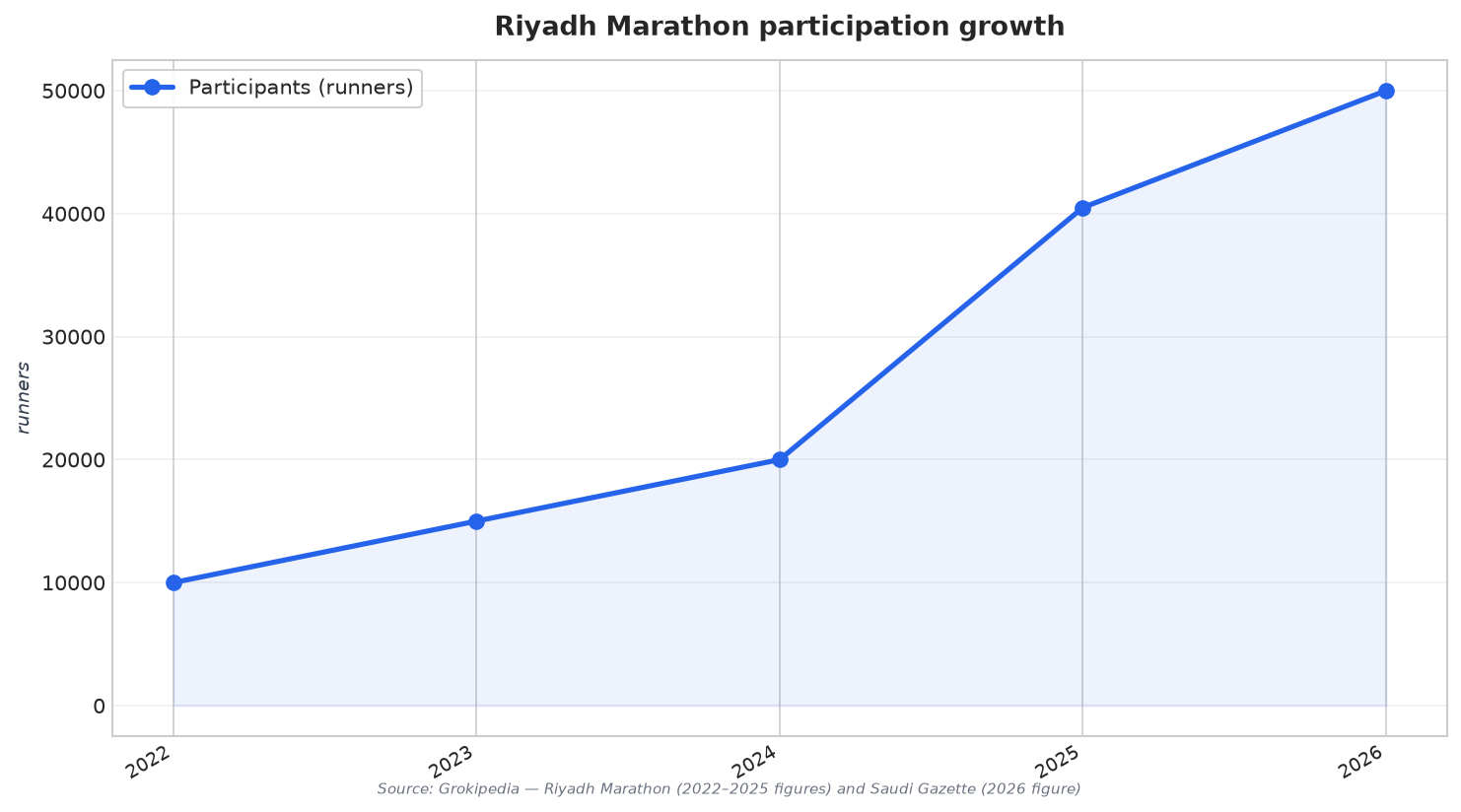
Participation growth is the most visible signal for sponsors evaluating reach and engagement. According to an event overview, the 2023 edition attracted over 15,000 runners, the 2024 edition over 20,000, and the 2025 edition a record 40,494 participants from 131 countries. Saudi Gazette reported that the Riyadh Marathon 2026 closed with participation from more than 50,000 runners, spanning multiple age groups and a wide range of nationalities. For brands, broader participation maps to more touchpoints across runner types, from competitive marathoners to family groups in a 4 km fun run. For Riyadh as a destination, the international spread matters because it aligns with marathon tourism’s core promise: combining athletic participation with travel.
On the tourism side, a separate market report valued the global marathon tourism market at $5.8 billion in 2025 and projected $8.9 billion by 2034, at a 6.2% CAGR. It also reported Asia Pacific as the dominant regional market at $2.1 billion in 2025, representing 36.5% of global revenue, driven by expanding middle-class populations and investments in sports infrastructure and tourism development. While those figures are global and regional, they explain why tour packaging has become central around major races. A Riyadh-focused tour page describes how modern marathon tours attract both runners and spectators, turning marathon weekends into major tourism occasions, and notes that its company assists clients with visa application processes for marathon tourism destinations worldwide.
The commercial logic links sponsorship, event operations, and destination marketing into one loop. A global marathon events market report said sponsorship revenues account for approximately 29.5% of total market value, as brands recognize marathon events as high-engagement consumer touchpoints. Riyadh’s event setup gives sponsors multiple on-site moments, including a festive Marathon Village and an SFA Expo for sports and wellness engagement, alongside digital resources and health guidelines mentioned for the 2026 edition scheduled for January 31, 2026. Put together, this creates a practical Riyadh Marathon commercial model: scale participation across distances, keep the race internationally credible via Elite Label status, and extend the weekend experience through tourism services and community-focused programming.
How has participation in the Riyadh Marathon changed since 2022?
What race distances does the Riyadh Marathon offer?
Why is the event attractive to sponsors in market terms?
How does marathon tourism relate to Riyadh as a destination platform?
What does a Riyadh Marathon commercial model look like in practice?