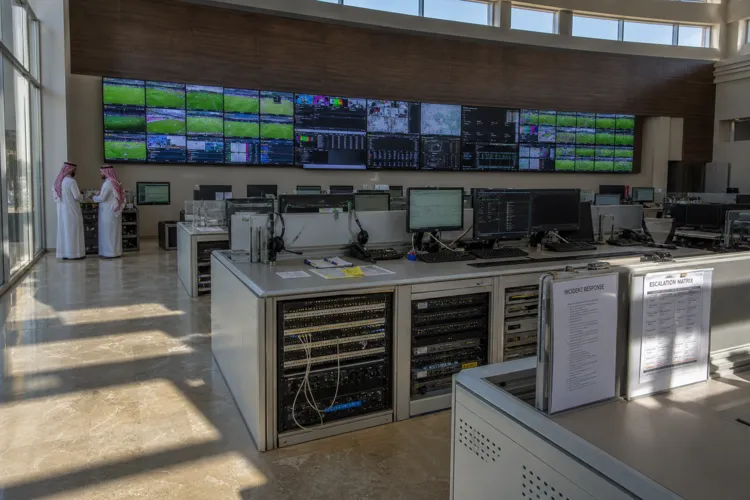
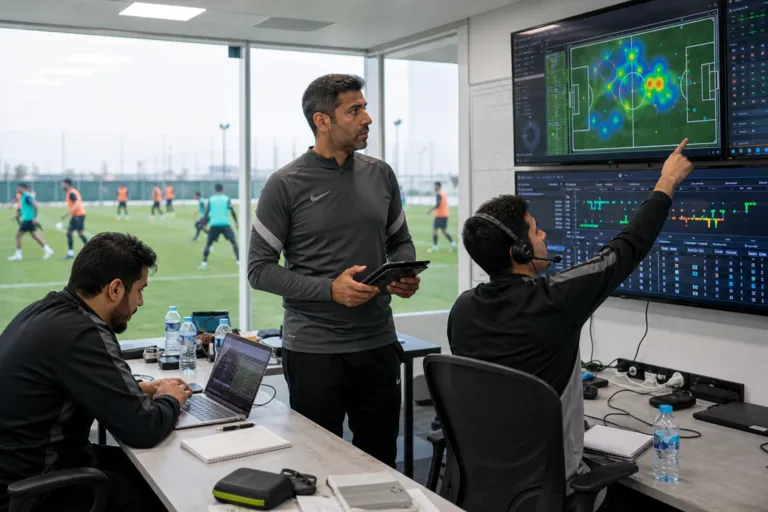
AI in sports Saudi Arabia is emerging inside a wider national shift toward data-driven work and decision-making. In professional sport, AI-powered analysis has expanded far beyond a coach’s notes. Tracking cameras can record every step a player takes, and AI can help extract speed, fatigue, positional spacing, and mechanical efficiency. That kind of detail changes how teams and analysts understand a match. It also shapes how broadcasters and fans interpret what they see, because simulated match scenarios and performance models can support predictions and explain patterns that the eye can miss.
Data analytics is also becoming more practical because AI reduces the time needed to prepare insights. In Saudi Arabia’s Qiyas program, assessments that once required extensive workshops and large volumes of manual data entry can now be supported by AI-enabled platforms that process operational data quickly and generate dashboards automatically. Tools like this reduce what once required months of manual preparation to a matter of days. For sports organizations, the same principle matters. Faster processing means staff can spend more time turning findings into action, rather than collecting and cleaning inputs.
From Participation Growth to High-Performance Insights
Saudi Arabia’s sports push is not only about elite events. Authorities set a target to lift weekly physical-activity rates to 40% by 2030. Participation also rose from roughly 13% in 2015 to over 48% by 2022. This broader base creates more athletes, more programs, and more performance questions that data can help answer. It also links to capability building, such as the pipeline of coaches and women’s sports leagues described after girls’ physical education was reintroduced in 2017. As activity scales, consistent data becomes more valuable.
Workforce readiness supports adoption. Four out of ten Saudi workers use AI daily, and use is not limited to the youngest employees, with Gen X and Boomers also active users. This matters for sport because clubs, venues, and federations rely on mixed-age teams in operations, marketing, medical support, and governance. The same research also links tools to better work experience. Among Saudis who report a healthy work relationship, 34% use AI tools provided by their employer every day. In sport, that can translate into more bandwidth for strategic work, not repetitive tasks.
Esports is another area where data and AI-adjacent infrastructure can shape outcomes. Saudi Arabia launched the Esports World Cup in Riyadh in 2024, reflecting a broader emphasis on esports and the cognitive skills it engages. The Qiddiya Esports and Gaming District aims to attract 10 million visitors a year to its venues by 2030 and incubate 30 leading video game development companies. Separately, the National Strategy for Gaming and Esports aims to incubate 250 companies, create tens of thousands of jobs, and contribute $13.3 billion to GDP, according to the PIF.
Behind these use cases sits an infrastructure and governance story. Saudi Arabia is building data capacity, including a government data centre designed to host more than 290 government systems, with SDAIA highlighting data sovereignty and security. Technology firms have also pointed to the Kingdom’s energy surplus as a reason to place compute locally and send results elsewhere. At the same time, ESG trade-offs are part of the discussion, with reporting noting that around 64% of Saudi Arabia’s total energy supply was from oil in 2023. For AI in sports Saudi Arabia, the next leap depends on trusted data, secure systems, and smart use of compute.
What does "AI in sports Saudi Arabia" mean in practice?
How is AI changing the speed of analytics work in Saudi Arabia?
What participation trend supports a bigger market for sports analytics?
What signals show Saudi workers are ready to use AI tools in sports organizations?
How is esports tied to data and AI-driven growth plans?