For operators planning an indoor climbing or bouldering concept, Saudi Arabia offers strong top-down momentum for fitness, but the most useful inputs are the numbers you can triangulate. One bouldering-gym market source sizes Saudi Arabia at USD 50.12 million, with a 13.6% share and a 3.7% CAGR, explicitly tied to adoption in indoor climbing and sports facilities. For broader context, global climbing gym market reports place worldwide revenue at USD 3.63 billion in 2025 with a projection to USD 7.40 billion by 2033 (9.3% CAGR, 2026–2033), and another dataset values global revenue at USD 3.32 billion in 2024, reaching USD 7.69 billion by 2032 (9.3% CAGR, 2025–2032). Use global growth and format mix as benchmarks, but keep Saudi sizing grounded in Saudi-specific figures and block-by-block validation.
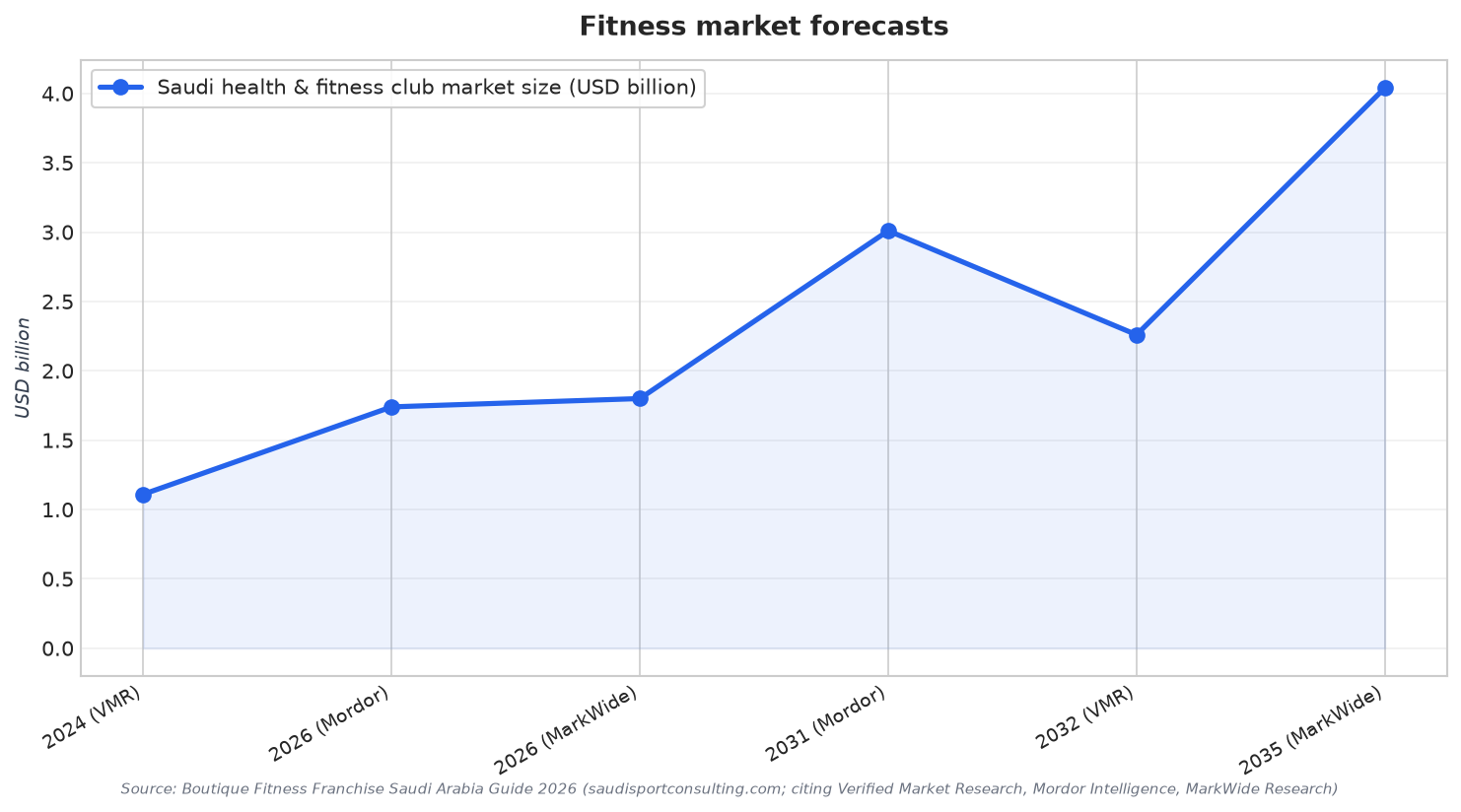
Format decisions shape both demand capture and real-estate feasibility. Globally, bouldering held the largest share by gym type at 41.0% in 2025, and indoor locations held 63.5% share in 2025. Another market source states bouldering-only gyms dominated with a 52.8% revenue share in 2025 (presented in a Gulf demand discussion that references UAE and Saudi Arabia), reinforcing why many new facilities lead with bouldering. That said, a Saudi operator still needs to map product-market fit to the local competitive structure. In the Saudi health and fitness club market (broader than climbing), independent operators held 66.74% share in 2025, implying fragmentation and localized pricing and community marketing. Planning should treat these mixes as directional, then validate the exact micro-catchment where the gym will open.
Site-Selection and Buildout: Turn Market Signals Into a Lease Decision
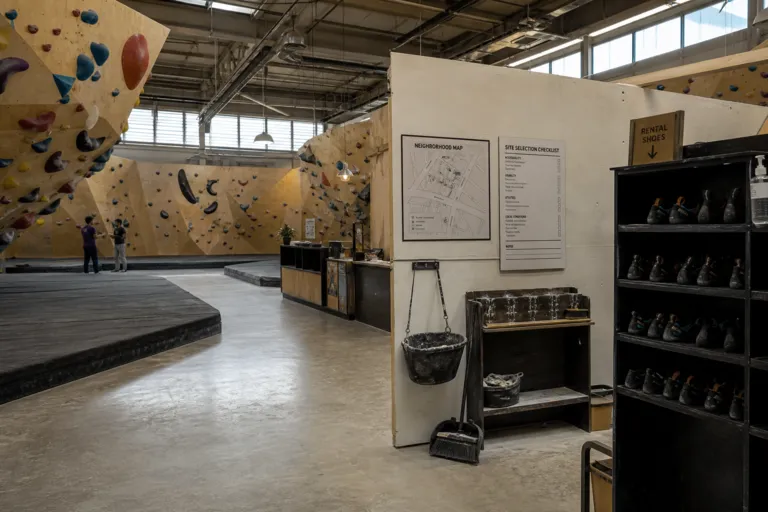
Site selection becomes easier when you translate build requirements into landlord-ready specs. One bouldering-gym source states a facility typically requires 800–2,500 square meters, with climbing walls ranging 3–5 meters in height. It also provides construction cost ranges of $250,000–$500,000 for walls, plus another $50,000–$100,000 for specialized flooring, wall design, and safety equipment. These constraints should drive an early screening process: ceiling clearances, column spacing, load considerations, and the ability to dedicate enough contiguous area for both climbing and circulation. The same source flags that urban location constraints can limit expansion, which is a practical reason to prioritize properties that can accommodate future programming and peak-hour throughput.
Operating assumptions matter as much as the opening capex. The bouldering-gym source indicates staffing costs (including instructors and safety personnel) can account for 15–20% of operational expenses, while compliance with national and international safety standards can raise operational costs by 10–15%. It also cites liability insurance premiums of $5,000 to $15,000 annually per facility. In parallel, a Saudi boutique fitness guide emphasizes controllable levers such as rent, labor, and marketing, and highlights replication costs like lease obligations, buildout, pre-opening payroll, training, and ongoing field support. Together, these figures support a disciplined underwriting approach for a climbing gym investment in Saudi Arabia: stress-test rent, plan for safety-driven opex, and keep the operating model simple enough to standardize.
Macro signals can guide timing and rollout sequencing, even if they do not replace on-the-ground demand work. Verified Market Research cites Vision 2030-related support, including an allocation of USD 13.33 billion for development of the sports and fitness sector, and reports that licensed fitness centers increased by 150% between 2021 and 2023. It also reports that female-only facilities grew by 300% over the same period (citing the Ministry of Sport). Separately, an OpenPR summary of a Ken Research analysis states Saudi Arabia had approximately 1,650 commercial fitness locations in 2025, forecast to reach around 2,430 by 2031. For operators, this supports a phased expansion plan: pick sites that are approval-friendly, partner with landlords who understand fitness use, and build a repeatable playbook for permitting and opening.
How big is the Saudi bouldering gym market in the cited sources?
What facility size and wall height should operators plan for?
What cost ranges are cited for building out a bouldering gym?
What operating cost benchmarks are mentioned for staffing, compliance, and insurance?
What should investors focus on when evaluating a climbing gym investment in Saudi Arabia?