The 2026 regional conflict has pushed investors to explicitly price geopolitical uncertainty into sports assets linked to Saudi Arabia, not just talk about it. Market anxiety has been reinforced by disrupted maritime routes and higher costs as commercial shipping has been forced to reroute around the Cape of Good Hope, adding weeks to transit times and substantially increasing shipping costs. In this environment, the “geopolitical risk premium” is no longer an abstract concept: the U.S. Energy Information Administration (EIA) reported in early 2026 that crude oil prices faced sustained upward pressure tied to supply concerns and risk premium dynamics. For global sports counterparties, that backdrop matters because it changes how financiers think about cash stability, timelines, and execution risk.
Investor sentiment data also shows why valuations and diligence standards are being reset. The PwC Middle East Economic Outlook found that 79% of international investors view geopolitical instability as a major risk when considering investment in Saudi Arabia. On-the-ground confidence indicators point the same way: a 2022 survey reported by Arab News found 62% of businesses in Saudi Arabia experienced declining confidence due to regional conflicts and geopolitical uncertainty. Capital flows can respond quickly to uncertainty as well. The UNCTAD World Investment Report figures cited in the sources show Saudi Arabia attracted $1.6 billion in foreign direct investment (FDI) in 2021 versus $5.6 billion in 2020, a drop that is frequently referenced by deal teams when debating risk adjustments and timing.
From Soft Power to Cash Flow Proof: What Changes in Sports Deals
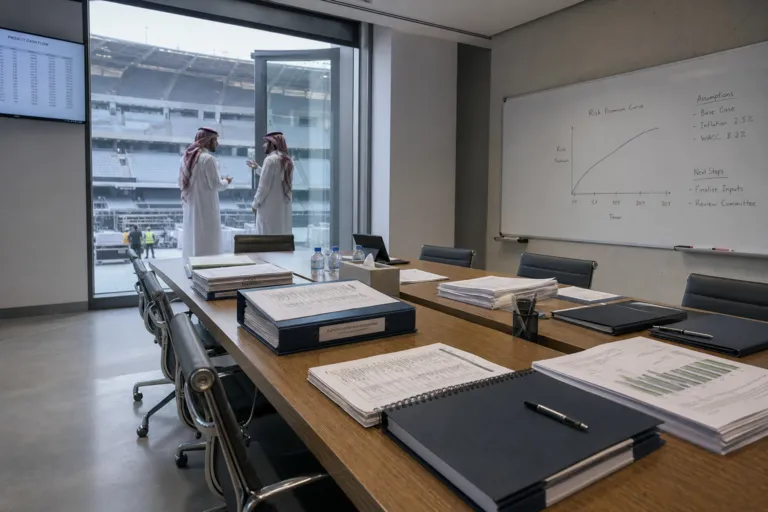
Against that sentiment backdrop, investors are parsing the sports balance sheet more aggressively. One analysis states Saudi Arabia has deployed an estimated $51 billion into sports properties since 2016. The same source ties that sports outlay to Public Investment Fund (PIF) context, including c.$925bn assets under management (AUM) and a $36.8bn 2023 profit as cited via ESCP. But the 2026 “recalibration” argument is that counterparties now assume support is conditional rather than unlimited, with the bar moving toward demonstrable economic value for Saudi Arabia, such as hosting events in-Kingdom or contributing to domestic ecosystem priorities. Deal structures, minority partners, and governance scrutiny rise in importance when markets are volatile and capital is more discriminating.
Financing risk is also being reframed through cautionary corporate episodes and a heightened focus on leverage. The same sports funding analysis highlights the John Textor/Eagle Football collapse, noting Ares placed the Bidco into administration in March 2026 over c.$1.2bn of debt. In parallel, the article points to external warnings about a valuations “bubble,” reinforcing the idea that multi-club and cross-border structures can break if credit tightens or assumptions fail. For Newcastle and similar holdings, the implication is practical: model performance under constraints and assume investors will demand clearer pathways to near-self-sustaining operations rather than relying on perceived sovereign backstops.
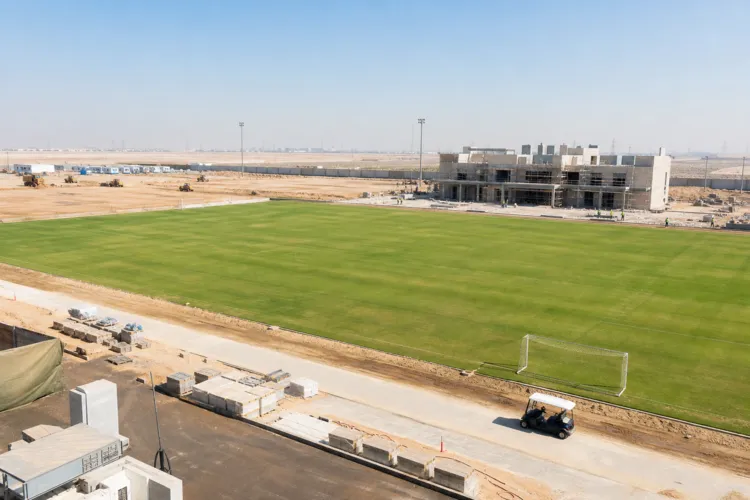
Finally, the conflict’s operational spillovers are influencing how investors discount future sports revenues. A March 2026 market note describes that air traffic across several regional hubs has been severely curtailed, while maritime traffic through the Strait of Hormuz has slowed dramatically. Fitch Solutions adds that prolonged disruption risk, including shipping through the Strait of Hormuz, is being treated as a strategic concern in Saudi Arabia’s broader economy, and it flags a conflict-driven supply shock that pushed construction input costs in Saudi Arabia sharply higher, contributing to a forecasted contraction of construction activity in 2026. While that construction forecast is not sports-specific, it affects venue build-outs, event logistics, and cost planning assumptions that sit beneath the broader geopolitical risk Saudi sports investment debate in late 2026.
Why are investors repricing Saudi-backed sports assets after the 2026 conflict?
What figures show geopolitical risk is affecting investment sentiment toward Saudi Arabia?
How much has Saudi Arabia deployed into sports properties, according to the cited analysis?
What does the article suggest about leverage and deal structure risk in global sport?
How should investors think about geopolitical risk in Saudi sports investment decisions now?