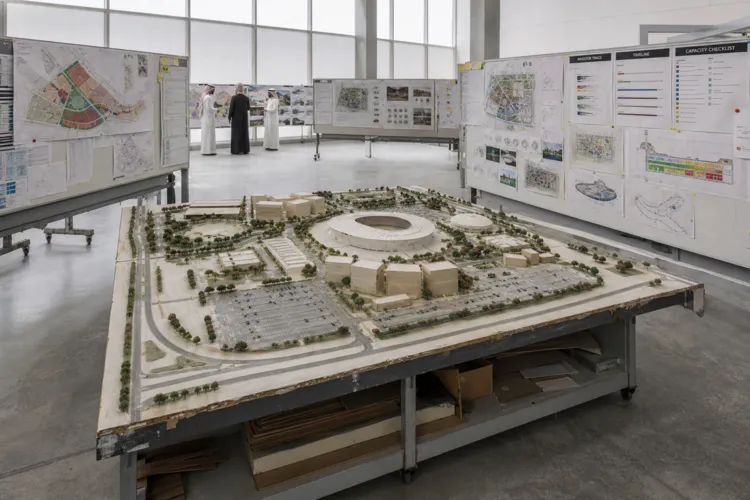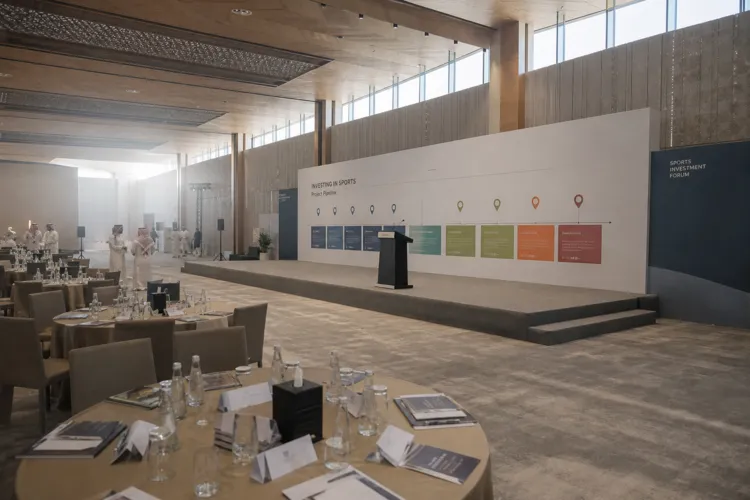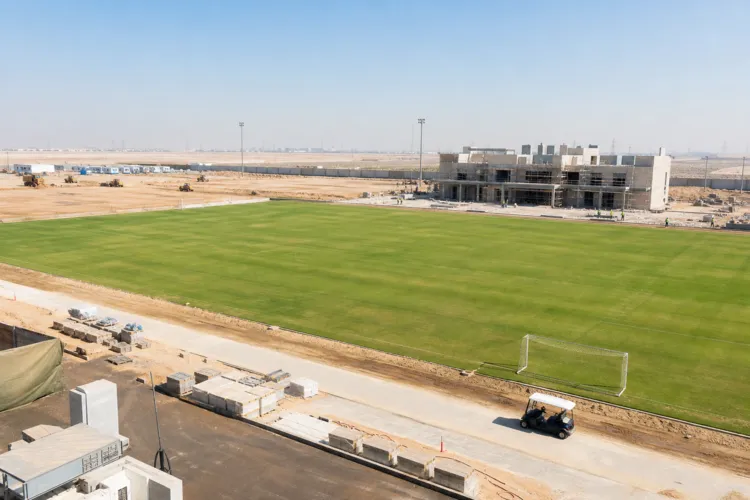
Saudi Arabia has announced a private-sector-led sports development in the Eastern Province with an estimated value of SAR 1 billion (also reported as $267 million). The announcement followed an agreement finalized during the Sports Investment Forum (SIF) in Riyadh, and a land allocation agreement was signed by Talal bin Nabeel Al-Maghlouth (CEO of the Sharqia Development Authority), SIF CEO Ibrahim Al-Bakri, Dammam Valley Co. CEO Abdulaziz Al-Mutlaq, and Basim Ibrahim representing the Ministry of Investment. Framed under Vision 2030, the planned Dammam Sports City adds another marker that sports infrastructure is being treated as a development catalyst rather than a standalone venue build.
For Eastern Province developers, the most important signal is the model. The project is described as private-sector-led within a public-private partnership approach, which points to procurement and delivery structures that can pull in operators, contractors, and adjacent-use investors earlier in the cycle. Alongside the main sports city investment, the Sharqia Development Authority, in coordination with SIF, also unveiled sports events in Dammam with total investments estimated around SAR 15 million. Read together, the message is that the opportunity set is not only construction; it also includes programming, event-led footfall, and the commercial ecosystems that follow recurring calendars.
Why Sports-Led Investment Matters More Now in the Eastern Province
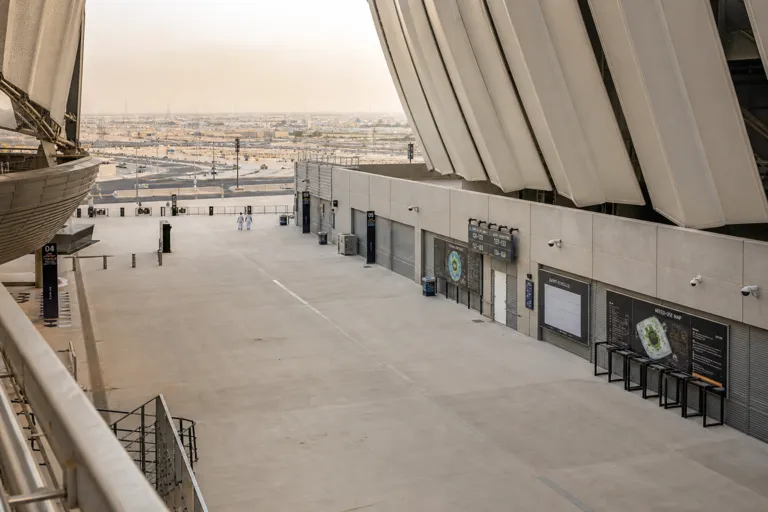
Sports and entertainment demand indicators in the Eastern Province help explain why planners are leaning into event-capable districts. One market report notes that King Fahd international stadium in Dammam is used for Saudi Pro League matches, concerts, and cultural events, with 2024 use projected to rise by 89% compared to 2019 due to diversified programming. The same source states that 30% of event visitors are based in Bahrain and other GCC nations, and it attributes this to a growing number of products and services in Saudi Arabia and competitive prices. It also reports that corniche waterfront construction within Dammam and Al-Khobar includes entertainment precincts that receive 15.4 million visitors in a year.
Developers weighing where to deploy capital can also see broader real estate momentum, while keeping regional distinctions clear. A national-level real estate report states the Saudi Arabia market size increased from USD 77.2 billion in 2025 to USD 84.1 billion in 2026 and is projected to reach USD 141.6 billion by 2034, growing at a CAGR of 6.73% from 2026–2034. The same report cites a 1.7% year-on-year rise in Q2 2024 real estate prices, driven by a 2.8% increase in residential property values, and notes that residential real estate held a 60.5% share in 2025. It also describes the Dammam metropolitan area as being driven by industrial and logistics expansion, with enhanced port infrastructure and cargo throughput growth supporting warehousing and commercial demand.
In practical terms, a sports city announcement can reinforce a pipeline mindset across mixed-use and hospitality, because it expands the number of reasons to visit, stay, and spend in the same corridor. The Tourism Development Fund’s Eastern Province material lists multiple large projects in Dammam and Al Khobar, including Al Othaim Park (design stage, value $1,600Mn, site area 268,000 m2, completion estimate Q2 2029) and Adel City Dammam (execution stage, value $1,000Mn, site area 32 km2, completion estimate Q2 2030). When sports programming, waterfront footfall, and mixed-use delivery overlap, Eastern Province developers are effectively being asked to build for continuity of demand, not one-off peaks.
What is the estimated investment value of the Dammam Sports City project?
Who signed the land allocation agreement for the planned sports city?
What additional spending was announced alongside the main project in Dammam?
What demand signals are cited for entertainment and events in Dammam and Al-Khobar?
What does a national real estate report say about Saudi Arabia’s market trajectory and prices?