Saudi Arabia will host the FIFA World Cup 2034 entirely within the Kingdom, after FIFA confirmed the decision at an Extraordinary Congress on December 11, 2024. The tournament is scheduled from mid-June to mid-July 2034. The bid framework points to 15 stadiums across five match-hosting cities: Riyadh, Jeddah, NEOM, Al Khobar/Dammam, and Abha. It also names 10 additional supporting cities, including AlUla and Al Madinah, that will not host matches but are set up mainly as team base camps and training locations. That wider footprint matters for legacy because training sites, mobility upgrades, and hotel supply all shape year-round usage patterns beyond a single tournament window.
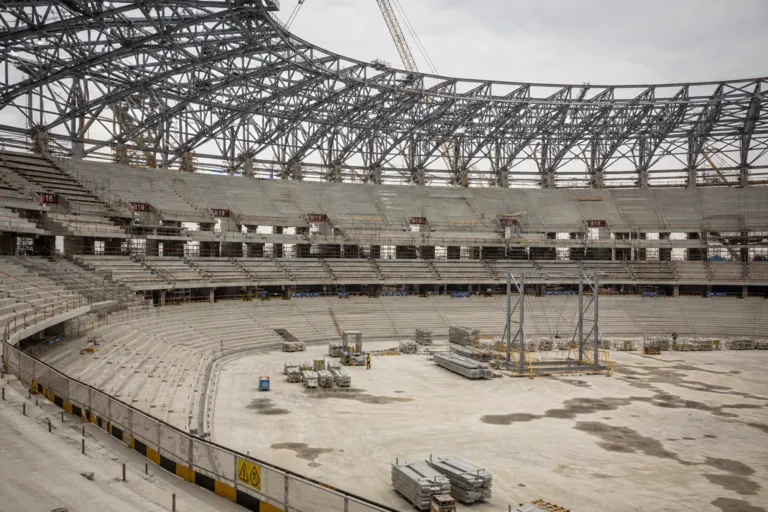
The venue plan is build-heavy. One source describes four refurbishments alongside 11 new builds or venues under construction, and another frames the plan as approximately 15 stadiums with 8–10 newly built venues plus several renovated existing stadiums. Comparisons show why post-event flexibility becomes decisive: the 2026 tournament cycle is described as relying overwhelmingly on existing NFL and soccer venues, with minimal new construction, while Qatar’s 2022 approach is referenced as seven new stadiums that drew sustained scrutiny over labor conditions and cost. Saudi Arabia’s emphasis on new venues elevates the importance of reversible fit-outs, scalable capacity decisions, and credible operating models that keep districts busy once global attention moves on.
Legacy-Mode Planning Starts With Demand, Not Drawings
A Saudi feasibility guide highlights a cited benchmark: the difference between a 20% utilised venue and an 80% utilised venue is not design, but demand and supply modelling. For stadium legacy planning Saudi Arabia can treat that as a practical rule for “legacy-mode” execution. The same guide argues for mapping realistic user segments, booking patterns, and federation pathways, rather than relying on optimism, and for translating legacy into measurable operating assumptions. It also notes Saudi Arabia is preparing for events including the 2034 Asian Games and the FIFA World Cup 2034, within what it calls a “golden sports decade” that includes Formula 1, golf, tennis, boxing, and esports. That calendar can support usage, but only if operators can convert it into repeatable programming and partnerships.
Reversible venue design is easiest when it is tied to a clear post-tournament identity from day one. The King Salman International Stadium is positioned as a flagship, targeted for completion in the fourth quarter of 2029, with seating for more than 92,000 fans, and it is designed to become the Saudi national team’s permanent home ground after the World Cup concludes. Other briefs emphasize cultural identity, sustainability, and legacy planning, with all new venues targeting LEED Gold or equivalent certification, and fan comfort supported by cooling, sightlines, and amenities. A separate outline says the Kingdom has commissioned leading architectural firms and that each stadium should reflect Saudi heritage, landscape, or future vision, which can help long-term relevance if the surrounding offer stays active.
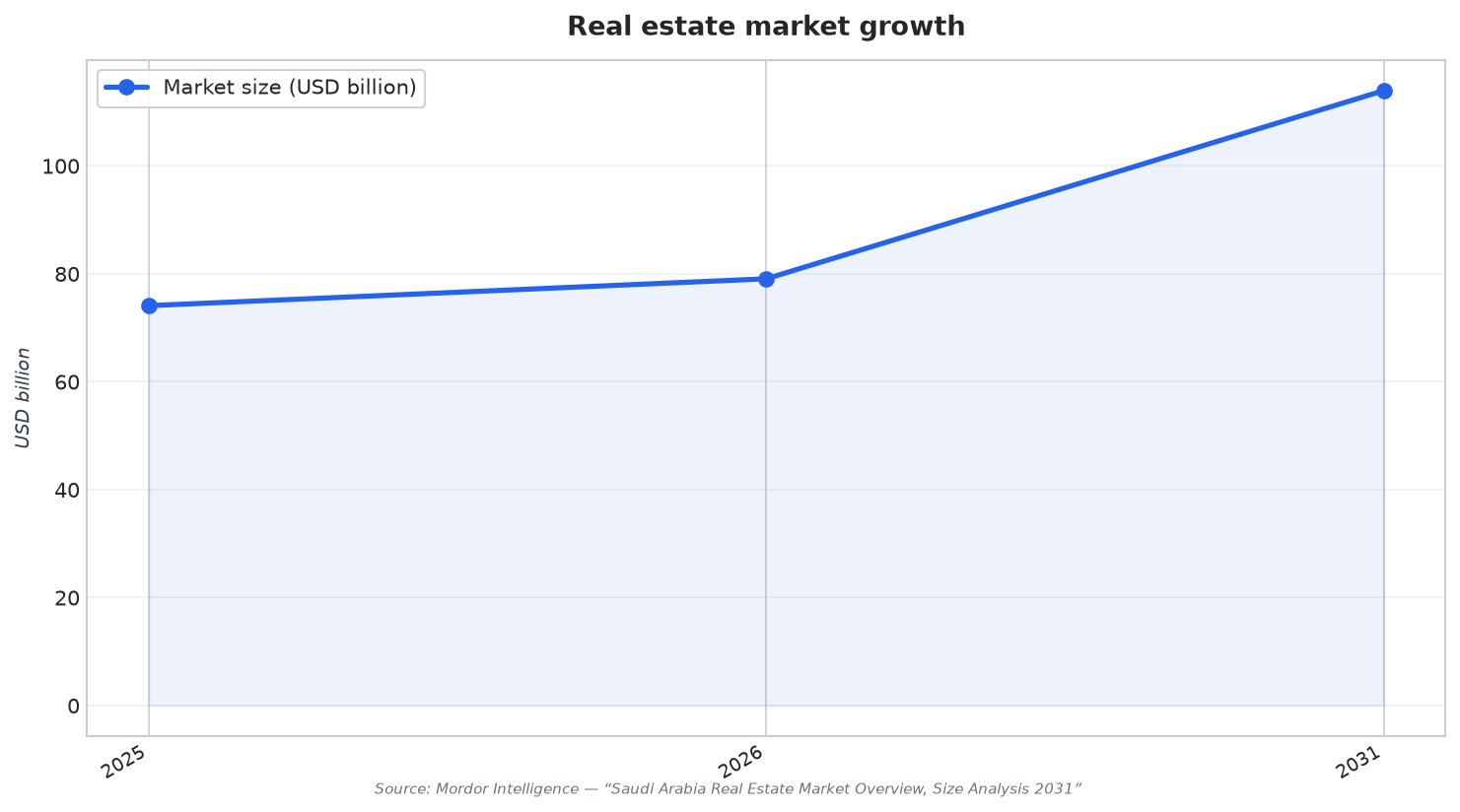
Legacy planning also connects to city development and real estate absorption, especially in Riyadh. A market overview projects Saudi Arabia’s real estate market expanding from USD 74.11 billion in 2025 and USD 79.09 billion in 2026 to USD 113.96 billion by 2031, a 7.58% CAGR between 2026 to 2031. Riyadh led with a 41.5% share of the market in 2025, and the Dammam Metropolitan Area is projected at an 8.41% CAGR to 2031. In parallel, one World Cup guide states the Kingdom’s population is projected to reach 40 million by 2034 and says Riyadh Metro is now operational and will be expanded with additional lines and stations to serve World Cup venues, while over 50,000 new hotel rooms are planned by 2033. Those figures suggest host cities can embed stadium districts into broader, year-round demand rather than treating them as standalone event sites.
How many stadiums and host cities are planned for the 2034 tournament in Saudi Arabia?
What is the timeline and capacity for the King Salman International Stadium?
What benchmark is used to explain why legacy outcomes can fail or succeed?
What sustainability standard do new venues target in the design brief?
How does stadium legacy planning in Saudi Arabia tie into Riyadh’s wider development plans?