Building durable branded retail revenue is becoming more central to how Saudi football clubs operate. One local signal is the Saudi Pro League’s PACE allocation formula, which SPL said allocates 22% equally, 22% by sporting performance over the previous three seasons, 28% by TV viewership, and 28% by commercial performance. That weighting makes “commercial performance” a measurable lever, not a side project. Retail also fits how matchday income works in practice. A Saudi football economy analysis describes matchday revenue as a visible layer that includes tickets, hospitality, concessions, merchandise, local transport, and nearby restaurants or hotels. In that environment, a club’s in-stadium and nearby store footprint can help turn attendance and tourism weekends into purchases that fans can take home.
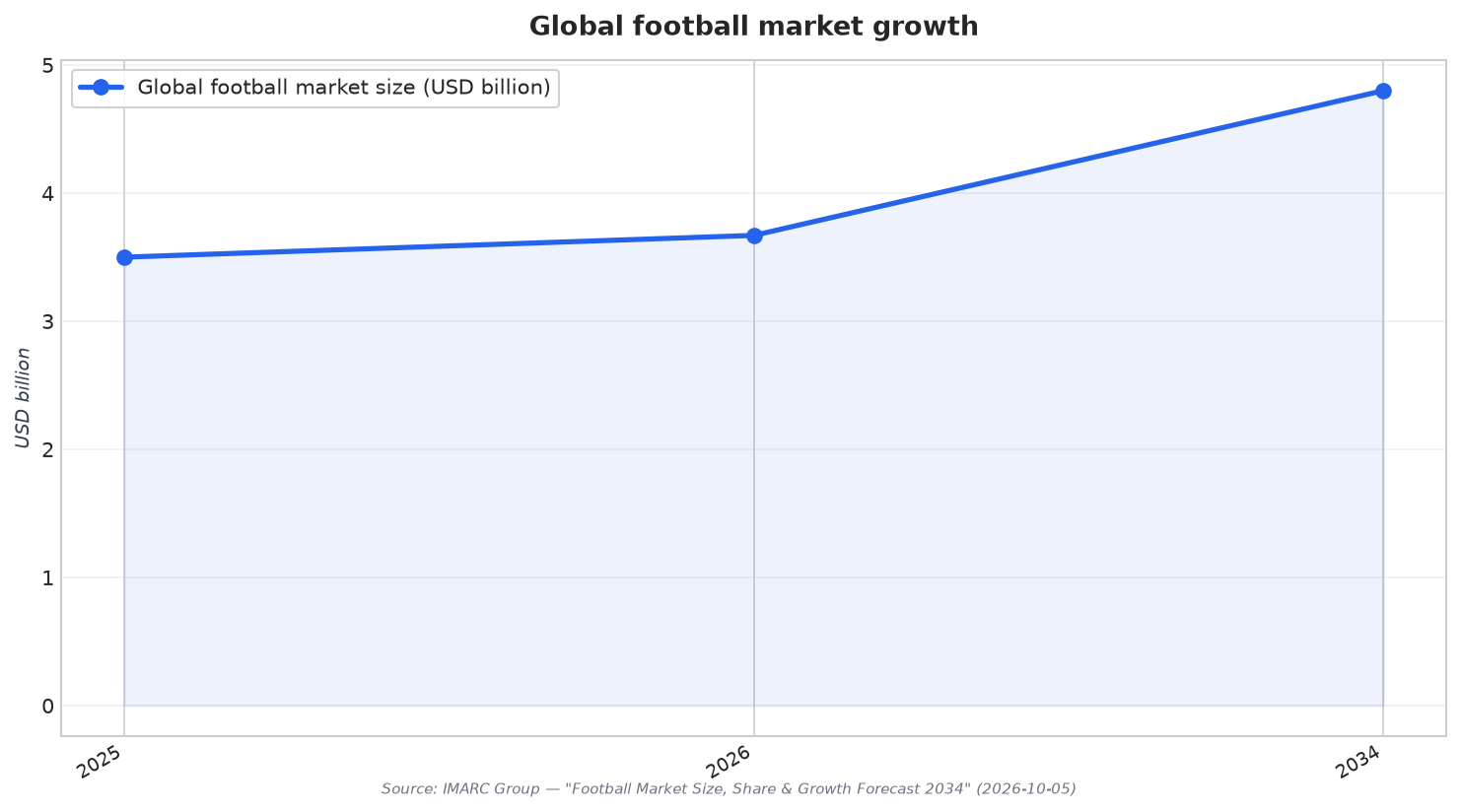
Demand fundamentals also point in the same direction. A football merchandise market forecast projects Saudi Arabia will reach USD 0.9 billion by 2035 and grow at a 15.0% CAGR from 2026–2035. That projection is explicitly about Saudi Arabia’s merchandise market and is framed by the report as being supported by a premium retail landscape, a multicultural consumer base, and a role as a regional events hub. For clubs, the implication is that branded product is not only an online play. A separate football market forecast notes that offline distribution channels account for 70.0% of the global football market in 2025, reflecting the importance of in-store product experience. Megastores, pop-ups, and stadium shops can therefore align with how many fans still choose to buy.
What to Sell and Where: Designing a Club Megastore Around Matchday Moments
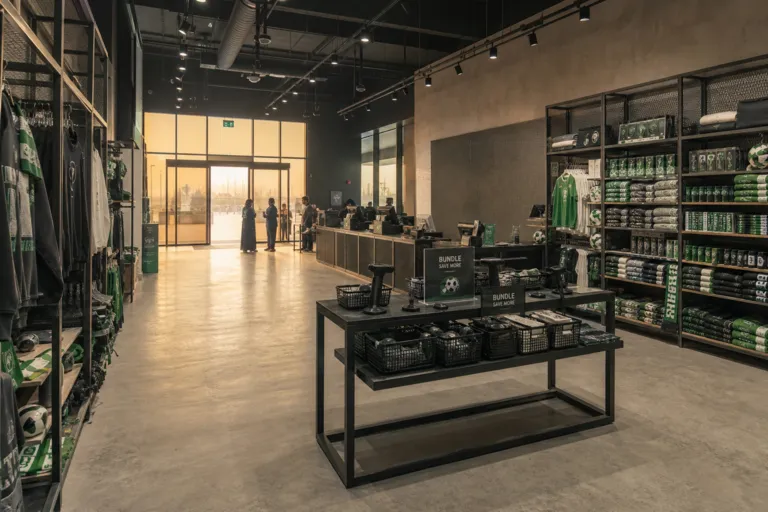
Club megastore retail in Saudi Arabia works best when the assortment mirrors matchday triggers and price points. The merchandise forecast highlights category dynamics that can guide shelf space. Footwear is projected to reach USD 6.9 billion by 2035 and represented 27.0% of global market revenue in 2025, benefiting from performance and lifestyle overlap, including club colorways and player associations. Accessories generated USD 1.8 billion in 2025 and are expected to expand at a 5.9% CAGR from 2026–2035. Scarves, bags, flags, and smaller branded items are positioned in the report as portable, giftable, and responsive to tournament and stadium-driven purchasing occasions. For matchday retail, that makes accessories a practical “queue line” and impulse strategy, while footwear can anchor premium zones.
Execution also depends on partnerships and credibility in the supply chain. A Middle East and Africa football market report points to deeper brand participation across Saudi club tiers, including Adidas beginning its kit partnership with Al Qadsiah on July 1, 2026 across men’s, women’s, and academy teams, while PUMA continues to work with Al-Hilal. The same report notes that Joma’s equipment deal with Al Khalij shows mid-tier European brands finding entry points through club partnerships. These deals matter for retail because official product, launch timing, and player or team visibility drive store traffic and conversion. They also sit within a wider commercial framing: the report cites Kingdom Holding’s agreement to acquire a 70% stake in Al-Hilal Club Company at an enterprise value of SAR 1.4 billion (USD 373 million), signaling that football assets in Saudi Arabia are being valued and managed on commercial terms.
For clubs, the next step is to connect store operations to the broader revenue model that global football is already shifting toward. A football clubs market outlook expects the market to grow from USD 13.22 billion in 2025 to USD 14.23 billion in 2026 and reach USD 20.52 billion by 2031, at a 7.61% CAGR over 2026–2031. In that report, television relay revenue led with 44.12% of market share in 2025, while “other business receipts anchored by digital assets” are projected to grow at a 16.12% CAGR through 2031. Retail can complement that trend by linking digital engagement to physical purchases, but the store itself remains crucial when offline buying is still dominant globally. With SPL rewarding commercial performance and matchday merchandising sitting inside the stadium economy, club megastores and matchday retail become a concrete way to build repeatable branded revenue.
How does the SPL PACE formula encourage clubs to grow retail revenue?
What is the outlook for Saudi Arabia’s football merchandise demand?
Which product categories fit matchday store buying behavior?
Why should clubs invest in physical stores, not only e-commerce?
What does “club megastore retail” in Saudi Arabia need to succeed on matchdays?