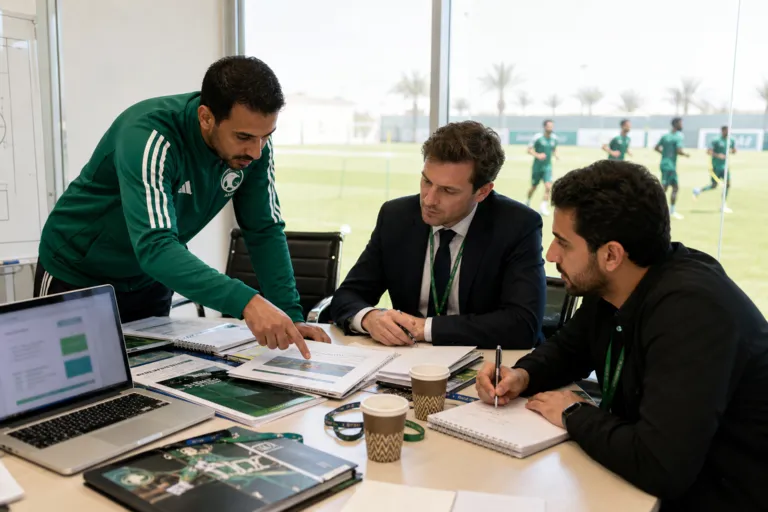
Commercializing the Green Falcons is not only about shirt deals. It is about building a repeatable playbook for the Saudi national football team commercial journey as 2034 approaches. Saudi Arabia is slated to host the World Cup in 2034, and state-linked sponsorship is described as common practice in future host countries for events such as the World Cup or the Olympics. That context matters because it frames how international audiences interpret brand motives and how rights holders package inventory across markets.
Big sponsorship numbers are now part of the football conversation. A sports marketing expert, Ricardo Fort, said an estimated $400-million sponsorship cost is consistent with the scale of the World Cup, and he called it a “negligible” amount for a deep-pocketed company. He pointed to how Aramco reported a net income of more than $104 billion in 2025. In that view, the commercial target is not only short-term sales. It is awareness, reputation, and whether “the brand Saudi Arabia has improved.”
But brand strategy also has to budget for criticism. In the weeks after FIFA announced its deal with Aramco, more than 130 professional women’s soccer players from 27 countries sent an open letter urging FIFA to end the sponsorship due to environmental and human rights concerns. That pushback is not a side story. It becomes part of the earned media around any activation, and it changes how a Saudi national football team commercial message is received outside the region.
From Rights to Retail: What Sponsors Will Actually Measure
Rights value is anchored by distribution power. FIFA accounts said television broadcasting rights contributed “the lion’s share” of annual revenue in 2025, worth more than $1 billion. Saudi Arabia’s ties to that ecosystem are widening. The Public Investment Fund (PIF) became an “official tournament supporter” of the World Cup in a deal covering North America and Asia, while also having been a commercial partner for the Club World Cup. The PIF-owned SURJ Sports Investment also owns a stake in DAZN, which broadcast the Club World Cup.
Modern activations are increasingly multi-surface and can be chaotic. Adweek noted that “commercialized hydration breaks” were among as-of-yet unconfirmed ad formats around the World Cup, and it warned that nothing is entirely predictable. It cited Budweiser paying $75 million to be the official beer of the World Cup in 2022, then making a marketing U-turn after Qatari officials declared stadiums alcohol-free zones. For any Green Falcons-led program, scenario planning becomes part of the commercial product.
The opportunity is still huge for brands that manage risk and relevance. Forbes cited YouGov findings that more than four in ten global adults are likely to follow the World Cup, and in some markets, more than four in five fans say they view sponsors more favorably. Vogue added that TikTok reported 46% of global sports views in the first half of 2025 came from its female users, reinforcing the need for broader creative. The best Saudi national football team commercial strategy ahead of 2034 will connect sponsorship to measurable awareness and trust, without ignoring the scrutiny that comes with it.
What does “Saudi national football team commercial” strategy mean ahead of 2034?
What numbers show the scale of World Cup sponsorship economics?
What reputational risks are cited in the sources?
Why do media rights matter so much to commercialization?
What audience shifts should sponsors consider for football marketing?