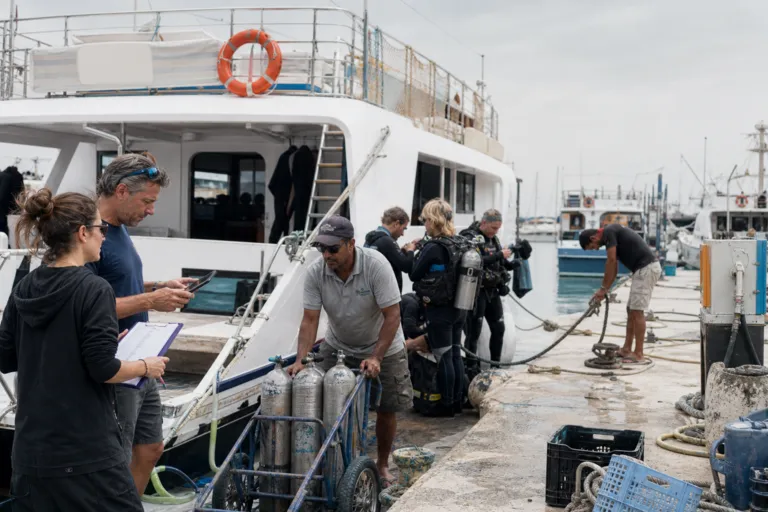
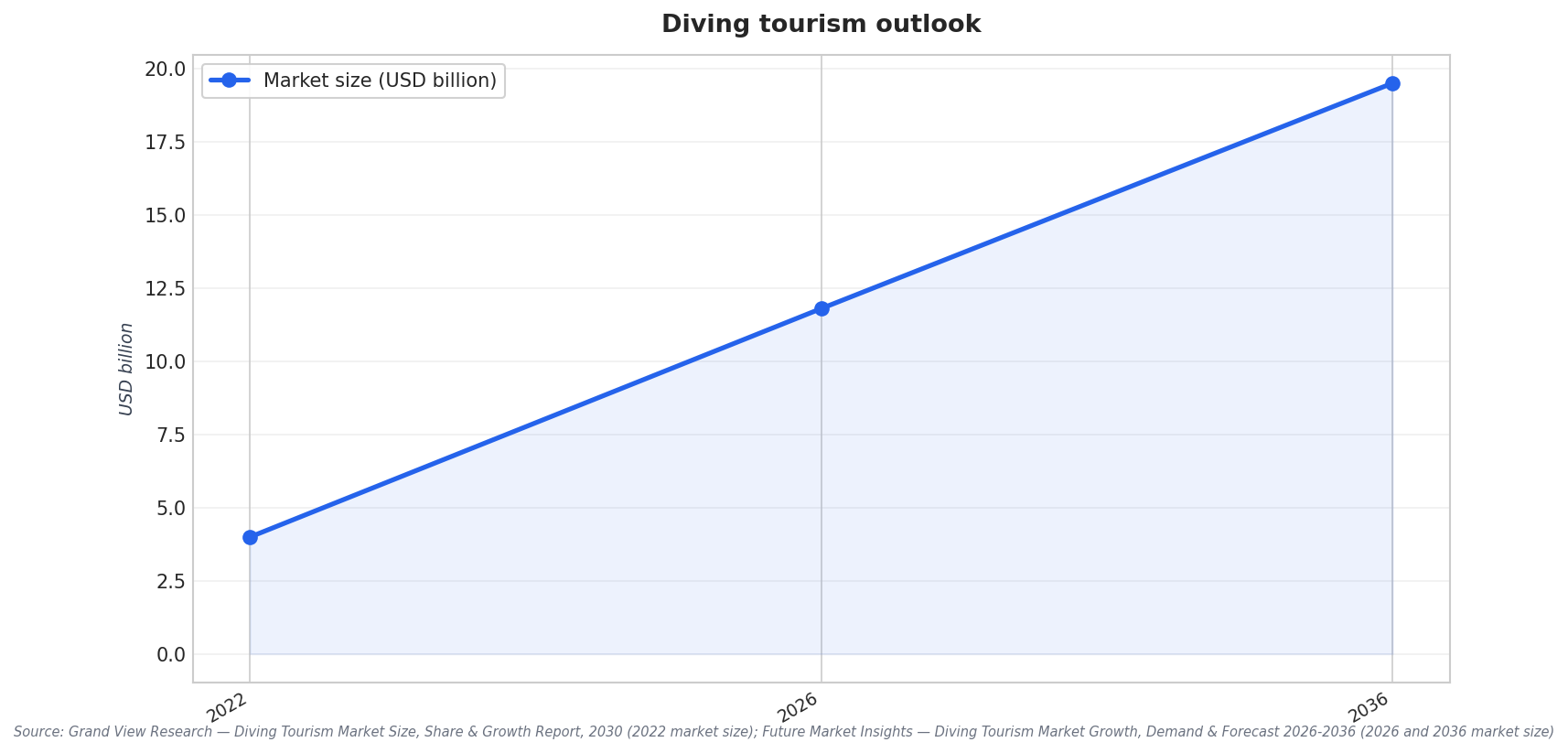
Diving, sailing, and other adventure experiences are moving from niche add-ons to structured products that require professional delivery. That shift matters for Red Sea adventure sports tourism, where buyers increasingly expect managed access, safety-led operations, and clear packaging. Global market forecasts highlight the direction of travel. Future Market Insights projects the diving tourism market at USD 11.8 billion in 2026 and USD 19.5 billion by 2036, a 5.1% CAGR for 2026 to 2036. Grand View Research estimated the global diving tourism market at USD 3,993.7 million in 2022, with a 10.4% CAGR expected from 2023 to 2030. These figures are global, but they help B2B sellers gauge demand momentum and plan capacity, distribution, and training partnerships.
For product designers, segmentation signals where packaging can win. Grand View Research reports that international travelers held 61.2% of the global diving tourism market in 2022, pointing to the value of cross-border distribution and multilingual service design. Fortune Business Insights adds that more than 40 divers out of 100 are aged between 20 and 40 years, reinforcing the need for modern booking flows, customization, and experience upgrades. The same source says demand for customized diving packages and luxury diving experiences is increasing. For B2B stakeholders, that aligns with bundling models that connect accommodation, boats, guides, and training in one itinerary, rather than selling single dives in isolation.
What Makes the Red Sea a Partner-Friendly Arena
Destination positioning also shapes supplier strategy. 360iResearch notes that in Europe, the Middle East, and Africa, Red Sea coastlines in Egypt and Saudi Arabia offer year-round visibility and luxury liveaboards. That combination supports higher-value inventory and longer dwell times, which can be attractive to tour operators, yacht and liveaboard managers, and travel management partners. Future Market Insights emphasizes a broader industry shift toward destinations that combine safety, marine conservation, and stronger visitor management, and it expects marine protected area expansion to support diving tourism through controlled access to high-value underwater sites. For B2B planners, this points to compliance-ready operating models and partnerships that align with regulated access and low-impact practices.
Investment intent is another useful proxy for opportunity. Fortune Business Insights states that more than 55 tourism investment projects out of 100 are focused on coastal and island destinations that support diving activities. While not Red Sea-specific, it supports a practical conclusion: capital is tracking coast-led experiences that can be packaged and sold. That can translate into demand for boats, marinas, safety systems, certified instruction capacity, and digital distribution. 360iResearch also highlights how divers increasingly expect seamless digital experiences, including virtual reality pre-trip previews and AI-powered dive planning tools that optimize safety and personalization. For sellers into the Red Sea ecosystem, these expectations support B2B offerings that connect inventory to online booking and pre-trip planning.
Outbound source markets and operator ecosystems help shape go-to-market plans. Emergen Research identifies Germany as the largest European source market for diving tourism and cites over 500,000 certified divers, with German divers showing strong preferences for Red Sea destinations and tropical Indo-Pacific locations. On the supply side, Grand View Research lists players active in diving tourism including The Natural Travel Collection Ltd, Dive-The-World.com, Bluewater Travel, Scuba Travel, Divers Den, Dive Adventures, Fly & Sea Dive Adventures, Ultimate Diving, ZuBlu, and PADI. For Red Sea sellers, the practical B2B play is to align sailing and dive inventory with international distribution, certified training expectations, and conservation-linked positioning that supports long-term site access.
What is the global outlook for diving tourism demand?
Why does international travel matter for diving and sailing packages?
What demand signals support premium, customized experiences?
How can Red Sea adventure sports tourism win B2B partnerships?
Which outbound market is highlighted as a major source for diving tourism tied to Red Sea demand?