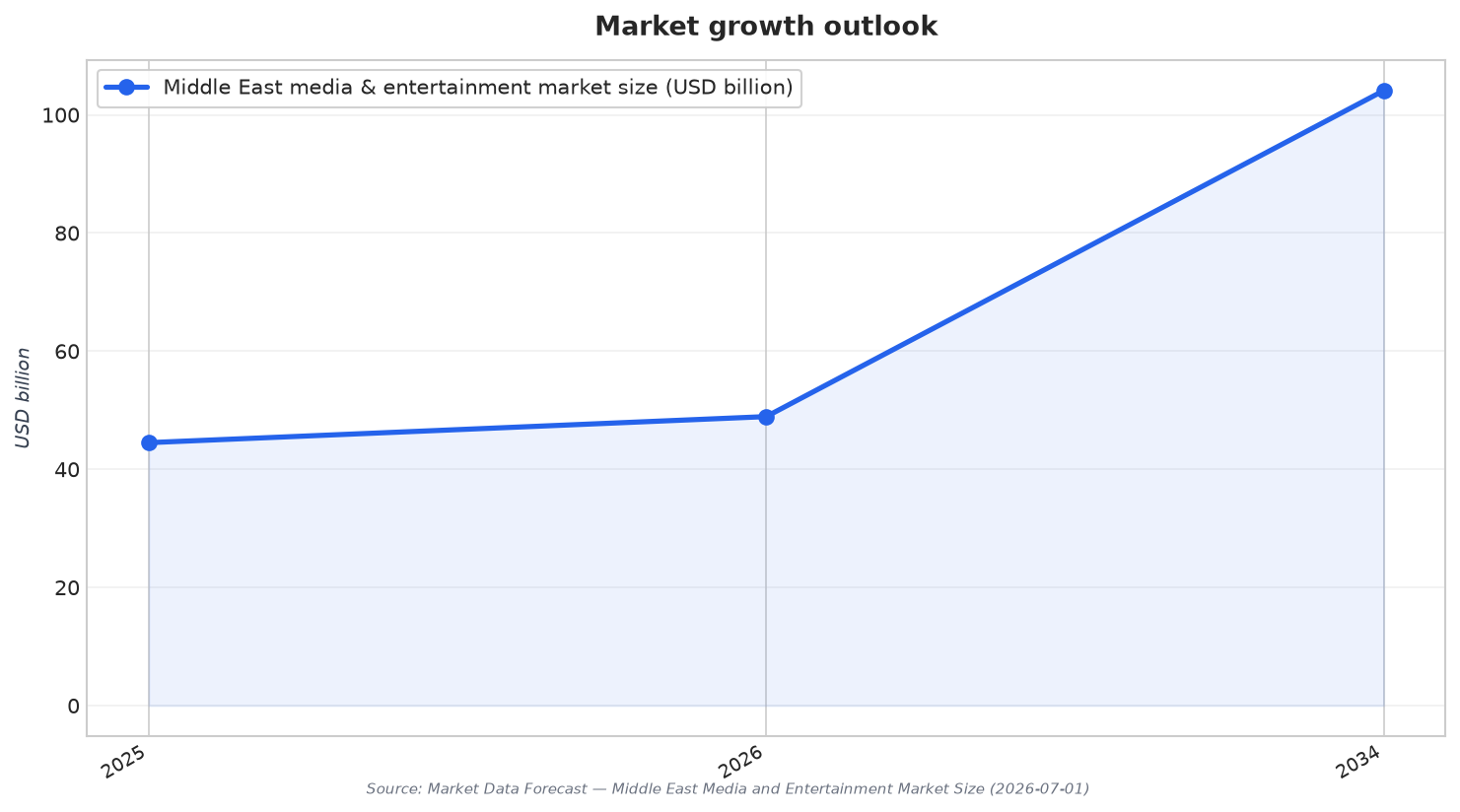
Arabic sports content localization is becoming a core differentiator in Saudi sports media because the region’s entertainment economy is expanding and consumption is increasingly digital. One market estimate values the Middle East media and entertainment market at USD 44.51 billion in 2025, rising to USD 48.92 billion in 2026 and projected to reach USD 104.10 billion by 2034, with a 9.90% CAGR from 2026 to 2034. A separate estimate places the market at USD 44.16 billion in 2025 and USD 48.43 billion in 2026, reaching USD 76.79 billion by 2031 at a 9.66% CAGR from 2026 to 2031. These trajectories matter for sports because localized commentary, studio formats, and short-form highlights sit inside the broader shift toward on-demand and digital-first distribution.
Demand signals also explain why localization vendors and Arabic commentary teams are being pulled closer to sports rights holders and platforms. Internet penetration in the Middle East has reached 85% (International Telecommunication Union). The World Bank says 65% of the population in Arab states is under 30, and youth in Saudi Arabia and Egypt represent over 60% of internet users. In 2023, Arab youth spent an average of 3.7 hours per day on digital entertainment (YouGov), while short-form video engagement on TikTok and Instagram Reels saw a 62% year-on-year increase. For sports media, those habits push broadcasters to localize not only full-match coverage but also clips, shoulder programming, and social-first narration that matches local norms and preferences.
Where the Vendor Market Forms: Digital Share, Rights Pressure, and Automation
Sports localization demand is also shaped by the way the Middle East media economy is monetizing. In 2025, online/digital captured 59.62% share of the Middle East media and entertainment market, while video-on-demand led by type with a 29.93% revenue share (Mordor Intelligence). Subscriptions accounted for 45.92% by revenue model in 2025, and advertising is projected to grow at an 11.05% CAGR through 2031. Saudi Arabia specifically dominated with a 39.22% share of the regional market in 2025. At the same time, sports rights economics encourage efficiency: a global sports media outlook notes the Middle East is forecast for an 18.18% CAGR to 2031 and highlights beIN Sports’ GBP 550 million Premier League package and Saudi Arabia’s USD 2 billion equity stake in DAZN as examples of capital and ambition in the sports ecosystem. As rights and distribution stakes rise, consistent Arabic commentary and localization partners become operational necessities, not optional add-ons.
Technology is widening the menu of localization options, including AI-assisted commentary and faster multilingual workflows, but the market signals should be read with geographic care. One AI-generated sports commentary report says the Middle East and Africa accounted for approximately 6.0% of that market and is expected to grow at a 19.1% CAGR through 2034, citing demand for multilingual sports content across global broadcasting platforms. Separately, a MENA expansion view from Comcast Technology Solutions argues localized content is particularly important for success and frames localization as tailoring to local tastes, cultural norms, and preferences. The same source states that Saudi Arabia sees the highest consumption of YouTube videos globally, reinforcing why sports highlight localization and Arabic voice tracks can be decisive for reach on digital channels.
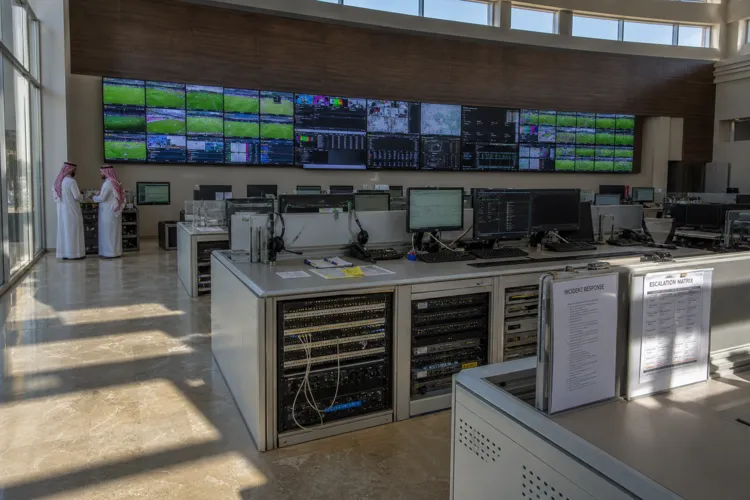
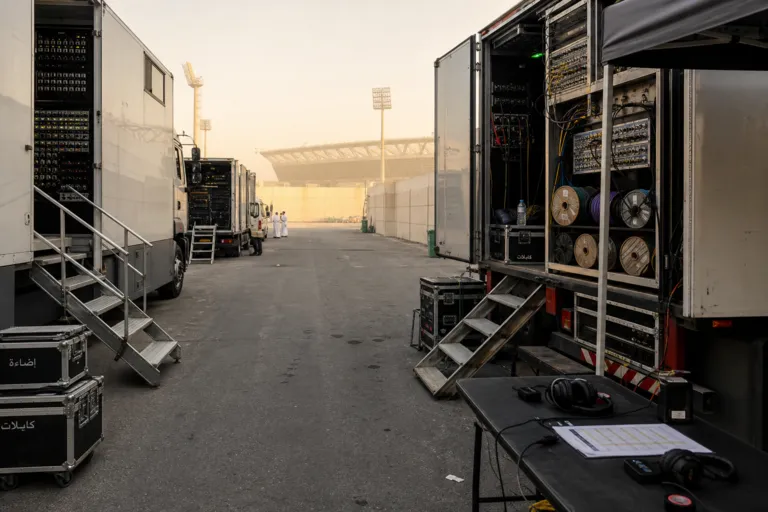
Behind the microphones, Saudi production capability and venue operations create steady pull for equipment, integrators, and service vendors that enable localized sports experiences. IndexBox finds Saudi Arabia’s audiovisual equipment market is positioned for a 6–8% compound annual growth rate through 2035 and remains import-dependent, with more than 80% sourced from international manufacturers. Displays and monitors are cited as the largest segment at 35–40% of market value, followed by professional audio equipment at 20–25%, while supply chain lead times typically run 8–16 weeks. The same report notes regulatory compliance can add 2–4 months to product introduction timelines. For Saudi sports media, these realities affect how quickly studios, OB setups, and venue screens can scale, and they shape vendor selection for Arabic commentary booths, audio chains, and multi-venue distribution that supports local-language coverage.
Why is Arabic localization becoming more important in Saudi sports media?
What market signals show Saudi Arabia’s weight in regional media and entertainment?
How do subscriptions and advertising affect localization vendor needs?
What does the Saudi audiovisual equipment market imply for sports production and localized commentary?
How much momentum is expected for AI-driven sports commentary in the region?