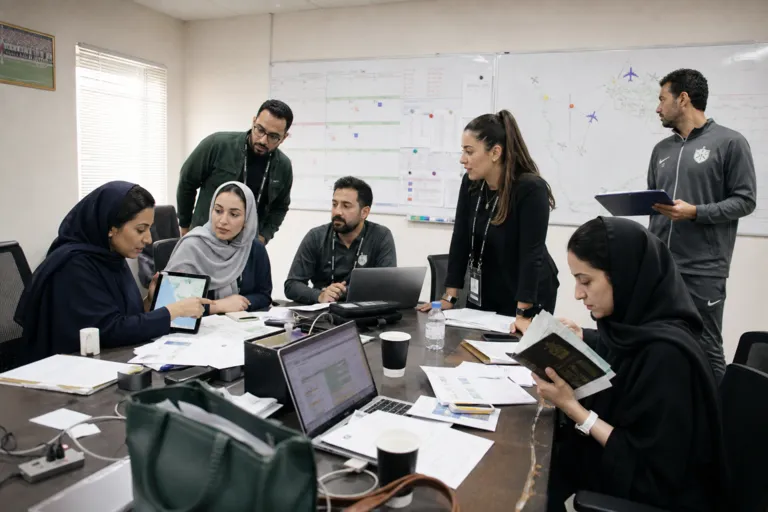
The women’s football league Saudi Arabia is still early in its commercial story, but it already shows how a club can be run as a managed project rather than a rushed showcase. BBC Sport reported that Ashleigh Plumptre became the first player to move from the Women’s Super League to the Saudi Women’s Premier League (SWPL), and she framed the move as choosing “a new project.” For club owners, that language matters. A project needs clear phases, controlled spend, and realistic expectations, especially when the league is not yet built around large matchday crowds.
On the product side, the SWPL has a recognizable “talent plus platform” approach. BBC Sport reported that two-time Women’s Champions League winner Asisat Oshoala joined Al-Hilal, and that France internationals Kheira Hamraoui and Amel Majri play in the SWPL. That mix creates marketing value even if the league is “not as star-studded as the men’s Pro League.” It also suggests a roster strategy for owners: select a small number of internationally known players who can lift standards and attention, while keeping the broader squad build paced and credible.
A Club-Owner Model: Logistics, Stars, and a Path to Returns
Operations are part of the commercial offer. BBC Sport noted that SWPL players can receive “star treatment,” including flights to games to avoid long travel times around a big country. For owners, this is not a luxury line item. It is a performance and retention tool. It also signals professionalism to sponsors and agents. The same report also carried a blunt reality check: “We don’t have many fans.” That means early revenue planning should lean less on gate receipts and more on controlled costs, partner value, and creating dependable broadcast-ready events.
The wider Saudi sports environment also points to how funding cycles can change. The Athletic reported Cristiano Ronaldo’s Al Nassr deal at £173 million ($234 million) a year, and said the Saudi Pro League saw vast sums poured into acquisitions and infrastructure as part of Vision 2030. It also reported Newcastle received £491.9 million ($665.7 million) in cash from its owners over five years, mostly from PIF, which holds an 85% stake. For women’s clubs, the lesson is structural: assume early backing can be strong, but plan governance and budgeting so the club can still function if investment priorities shift.
Privatization provides another blueprint. CNBC reported that three Saudi Pro League clubs have been sold to private entities, including a first foreign deal in July when U.S.-based Harburg Group bought Al-Kholood. CNBC also quoted Harburg saying clubs “can’t keep dumping money into clubs that are burning it every year,” and described a Europe-style approach: develop young local talent and sell them to bigger clubs. Even though that reporting focused on the men’s league, club owners in the women’s game can use the same logic: build a pipeline, prove sustainability, and treat the club as an investable asset rather than a perpetual subsidy.
Finally, owners should watch how major stakeholders talk about returns and redeploying capital. The Associated Press reported that PIF sold a 70% stake in Al-Hilal to Kingdom Holding Company, and that PIF said the sale “aligns with PIF’s strategy to maximize returns and redeploy capital within the domestic economy.” This is a clear signal for operators in the women’s football league Saudi Arabia: future-friendly clubs will document spending discipline, professional operations, and commercially credible partnerships. In a league still building its fan base, the best model is patient development paired with visible standards.
What is a practical commercial approach for the women's football league Saudi Arabia?
Which high-profile players have been reported in the SWPL?
How can operations influence commercial value in the SWPL?
What does Saudi club privatization suggest for owners?
What does PIF’s Al-Hilal stake sale indicate about investment priorities?