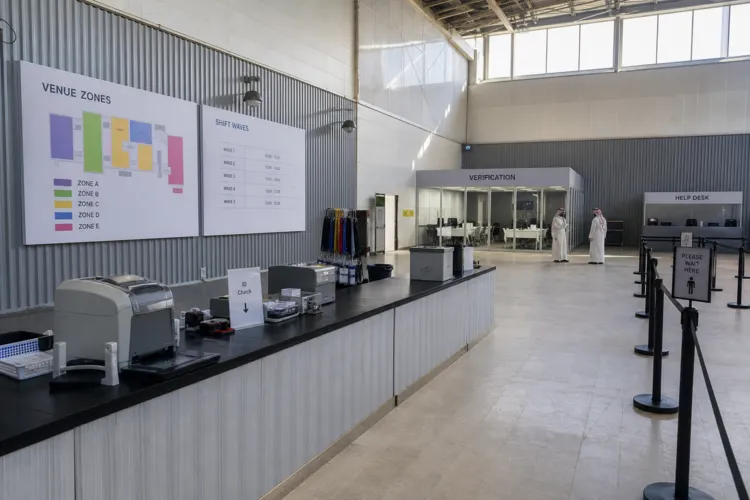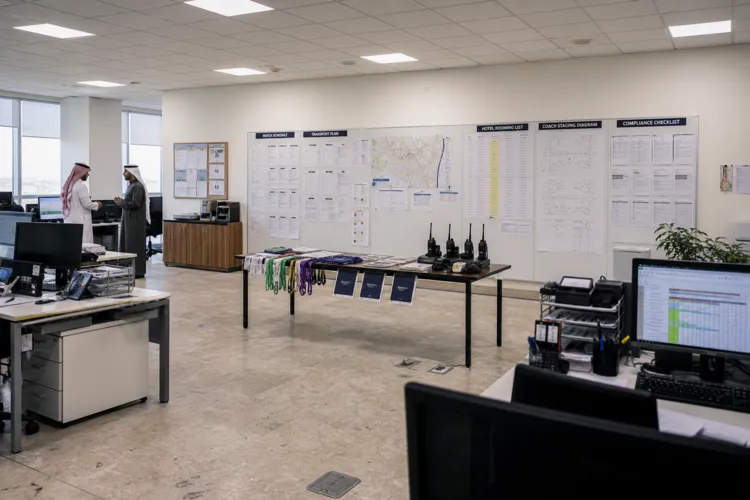
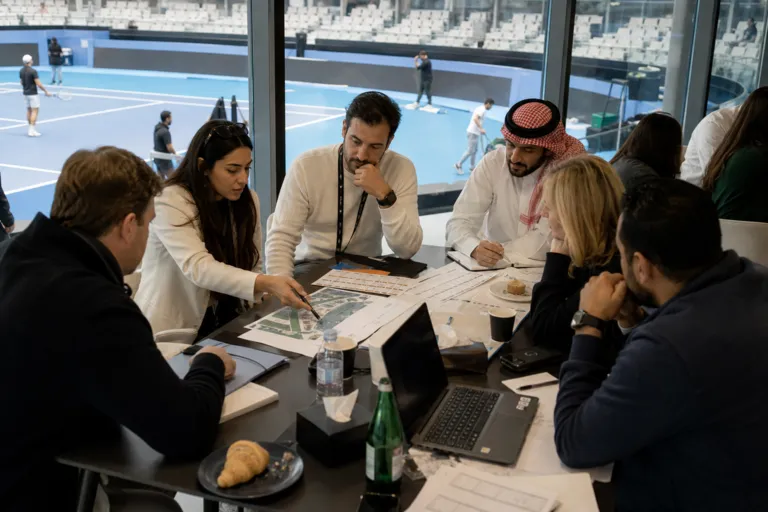
Saudi Arabia’s push to secure a permanent top-tier men’s tennis stop has advanced from speculation to a confirmed plan. In October 2025, ATP chairman Andrea Gaudenzi and SURJ Sports Investment CEO Danny Townsend announced the formation of a new Masters 1000 tournament in the kingdom, with the aim to launch in 2028. Key details are still being finalized, including the host city and exact dates, but Gaudenzi said the target is the beginning of the year on outdoor hard courts. The tournament is planned as a 56-player, one-week event, and its addition received unanimous approval from the ATP board, which consists of four players and four tournament representatives.
For sponsors, the license structure matters as much as the court action. SURJ, as the event’s licence holder, will control sponsorship and ticketing operations, putting a single stakeholder in charge of commercial inventory ranging from partner packages to premium seating. SURJ will also become a shareholder in ATP Media, the tour’s broadcast rights and production arm, aligning the event with the Masters 1000 owners whose rights are pulled and centralized. This matters for brands that buy for reach and repetition, because it creates a clearer bridge between on-site activations and the ATP’s wider media ecosystem, rather than treating the tournament as a standalone property.
Why Calendar Reshaping Changes the Sponsorship and Hotel Playbook
The ATP and SURJ’s plan is tied to broader calendar reshaping, and that has direct implications for hospitality and corporate travel. The Athletic reported that the ATP believes the current schedule is an “11-month globe-trotting slog” that is “confusing, bad for business, and excessively taxing” on players. In that context, SURJ is funding possible reacquisitions of tournament licenses to help create a longer off-season and increase focus on a major new event in the kingdom starting in 2028. The Athletic said acquisitions will cost “hundreds of millions of dollars,” with initial offers starting around $15 to $20 million per license for 250-level events and $35 to $45 million for 500-level events. For hotels, airlines, and destination partners, a condensed calendar can concentrate demand into fewer, higher-stakes weeks.
Hospitality brands should also watch how Saudi-hosted tennis has performed in-venue, because it signals what kind of activation strategy may be required. The Athletic reported that the WTA Tour Finals in Riyadh often took place in front of a half-empty arena with a capacity of 3,500, and it noted a time-zone challenge: Riyadh is eight hours ahead of the US East Coast, meaning matches often aired in the middle of the night for an important sponsorship market. Sky Sports separately referenced sparse crowds at a 4,200-capacity King Saud University venue. Those realities do not preclude premium experiences, but they raise the importance of local demand creation, packaging, and marketing so that sponsor visibility is backed by atmosphere and consistent audience delivery.
At the same time, Saudi tennis has shown it can attract attention and star power in ways that brands value. Semafor reported that the Six Kings Slam in Riyadh drew notable attendees such as streamer iShowSpeed, who has 50 million followers, and that the event’s second edition ended with world No. 2 Jannik Sinner pocketing a record $6 million alongside a gold-plated racket. That exhibition offered no ATP ranking points, but the money drew major names, illustrating how programming, talent, and spectacle can drive demand. If the ATP Masters 1000 Riyadh bid results in a permanent event on the calendar, sponsors and hospitality operators can plan longer-term, repeatable campaigns, while still calibrating for timing, broadcast windows, and the on-the-ground work needed to build reliable crowds.
When is the new Saudi Arabia ATP Masters 1000 planned to start?
What format has been described for the new Masters 1000 tournament?
Who controls sponsorship and ticketing for the planned Saudi Masters 1000?
What does the ATP Masters 1000 Riyadh bid imply for broadcast and media rights alignment?
What attendance and exposure challenges have been reported for Riyadh-hosted tennis events?