For Saudi competitions, safeguarding results is not only a governance issue. It is also a monitoring and intelligence challenge that can be strengthened with betting-market oversight. Industry analysis frames integrity monitoring as “paramount to consumer trust,” especially as peer-to-peer betting grows and operators add engagement features such as same-game parlays, cash-out functionality, and a wide range of player proposition bets. The risk picture also includes cross-border syndicates and the targeting of less-monitored competitions, which integrity officials need to anticipate rather than only react to. This is the operating context for match integrity monitoring in Saudi Arabia, even when the underlying betting activity may span jurisdictions and platforms.
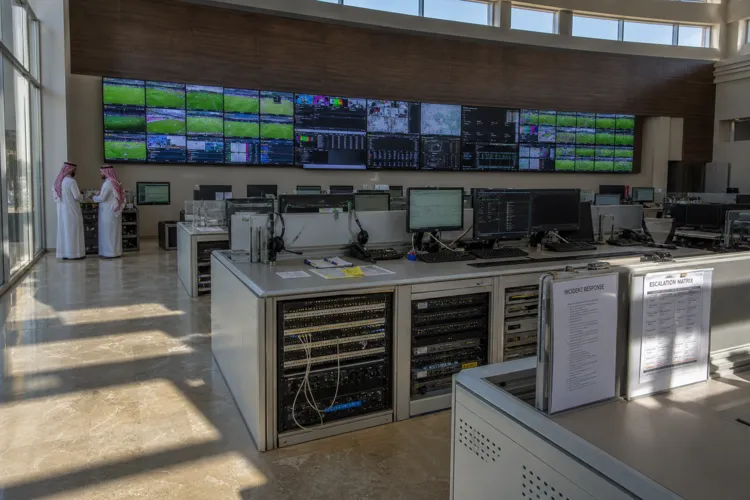
One established operational model is always-on betting-market monitoring. Stats Perform Integrity states its in-house system ingests and analyses the pricing of hundreds of global bookmakers across 100,000 football matches each year. It also says the service monitors pre-match and live betting markets from hundreds of operators 24 hours a day, 365 days a year, with betting data monitored in real time for over 100,000 events annually. The approach relies on bespoke algorithms to analyze each event and generate automated alerts when market movements deviate significantly from expectations. For Saudi rights holders, the practical takeaway is that integrity coverage can be designed as continuous surveillance rather than episodic checks.
From Alerts to Evidence: What Investigations Actually Use
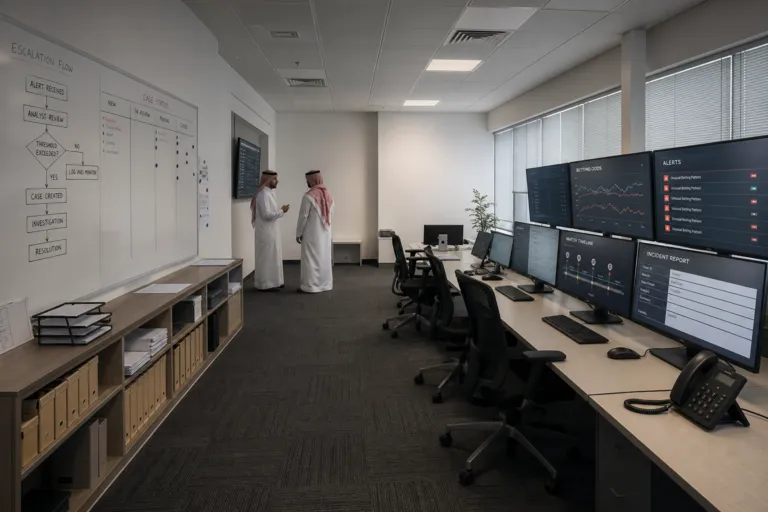
Monitoring only matters if alerts translate into usable casework. Stats Perform describes an “enhanced review” process led by a specialist Betting Integrity Team, where analysis of team line-ups, personnel changes, form, and head-to-head results is conducted using Opta resources. It also cites research into team motivations, club social media, open-source information, and industry intelligence, plus visualization of events on the field of play to build a comprehensive view of a match. It says concerns are shared with clients in clear, objective reports and that the service can provide statements on betting-market activity for use in disciplinary proceedings and other enforcement actions. This kind of workflow helps Saudi competition organizers connect market signals to governance and sanctions processes.
Research on detection methods reinforces why in-play monitoring matters. A 2026 study using high-frequency live-betting data from Italian Serie B (2018/19 to 2020/21) describes a state-space modelling framework to predict expected betting volumes conditional on match characteristics, then uses outlier detection to identify potentially suspicious periods. In parallel, the same paper notes that in Sportradar’s 2024 annual integrity report, 721 suspicious football matches were flagged (global figure for football, not Saudi-specific). Together, these sources underline a consistent logic: expected patterns can be modelled, and deviations can be prioritized for review, particularly in live markets where abnormal dynamics can emerge quickly.
Commercial investment trends indicate why integrity services are expanding. DataIntelo values the global Betting Integrity Analytics AI market at $2.8 billion in 2025 and projects it will reach $8.4 billion by 2034, with a 12.8% CAGR during the forecast period from 2026 to 2034. The same report describes AI solutions processing “millions of betting transactions per second” to identify anomalous wagering patterns. At the same time, compliance commentary warns that offshore or underground channels can evade safeguards used in legal markets, making it harder to monitor integrity. For Saudi competitions, the strategic implication is to treat monitoring, reporting, and collaboration as an integrated capability, not a bolt-on feature.
How can match integrity monitoring in Saudi Arabia use betting-market signals without relying on rumors?
What scale of coverage can modern betting monitoring systems provide?
What does an “enhanced review” typically include after an automated alert?
How do academic models help identify suspicious in-play betting activity?
What do the sources say about the growth of AI-driven betting integrity analytics globally?