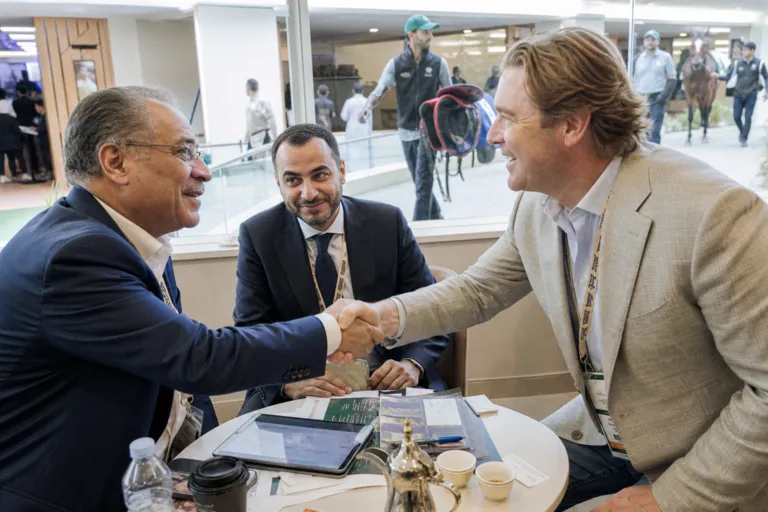
The Saudi Cup is positioned as the richest Thoroughbred race in the world, and the numbers set up a business story that extends beyond one afternoon. The race features a $20 million purse at King Abdulaziz Race Course in Riyadh. The winner of the Saudi Cup itself takes home $10 million. It is also part of a racing festival worth in excess of $38 million. Those figures create more than sporting prestige. They create an asset that can be packaged for partners, hospitality, and repeat engagement across the year.
Race-day clarity also helps brand planning. The Saudi Cup will be contested at 1800 meters on February 14, and this is the seventh running. International participation is central to its identity, with U.S.-based runners having won twice previously, in 2020 and 2024. The event’s draw is reflected in the way elite connections target it, even while acknowledging logistics. Bob Baffert, for example, described shipping as a challenge and the race as tough, while still pointing to it as a goal.
Turning One Date Into an Always-On Commercial Engine
A year-round platform starts with a year-round events mindset. A Skift analysis argued Saudi Arabia should become the world’s most event-friendly country, not just for Formula 1 and global sports, but across the full MICE spectrum, including corporate conferences, concerts, trade shows, and regional summits. The article highlighted an operational advantage: Saudi Arabia already knows how to move people at scale, while also noting challenges such as traffic congestion, venue capacity, and regulatory processes. For Saudi Cup horse racing, that framing suggests a path to build off-season programming that keeps sponsors and corporate guests returning.
Saudi Arabia’s broader sports calendar reinforces how premium events can be formatted for commercial impact. The General Entertainment Authority created the Six Kings Slam, a men’s tennis exhibition in October, as part of Riyadh Season. Each player receives at least $1.5 million per match, with the winner taking home $6 million. The same Athletic report noted a 12-year deal with the IOC for the first Olympic Esports Games in 2027. These examples show how a signature event can be nested inside a wider seasonal narrative that attracts entertainment, business travel, and sponsorship storytelling.
For the Saudi Cup, the business platform logic can also connect to racing’s regional cadence. A Forbes report on Dubai World Cup week described how connections were aiming for the Dubai Cup after winning a decisive Saudi Cup at King Abdulaziz on Valentine’s Day. That sequencing supports cross-event itineraries for owners, partners, and media, and it opens space for B2B activations between peak race moments. In parallel, hospitality investment commentary has pointed to government investments exceeding hundreds of billions of dollars in infrastructure such as airports and transport networks, which enhances readiness and enables year-round demand.
Finally, the Saudi Cup’s year-round potential sits inside a wider reassessment of sports spending, where outcomes matter. BBC Sport reported that Saudi Arabia has hosted an array of major events, and that LIV had racked up billions of pounds of losses since its launch in 2022, making it less compatible with a newer investment strategy as 2034 World Cup preparation looms. Separate reporting cited the $900 billion Public Investment Fund and described an evaluation of what has worked and what has not. In that environment, Saudi Cup horse racing can differentiate by converting its $20 million headline into repeatable corporate and tourism use cases that are measured in engagement, not just spectacle.
What makes Saudi Cup horse racing different from most races?
When and where is the Saudi Cup run?
How many times have U.S.-based runners won the Saudi Cup?
How does Saudi Arabia’s broader event strategy support a year-round platform around the Saudi Cup?
Why does proof of business outcomes matter for major sports properties in Saudi Arabia?