The Saudi equestrian industry is closely linked to Saudi Arabia’s push to build experience-led travel, events, and hospitality. Tourism is positioned as a pillar of economic diversification, and sustainability was set as a fundamental principle in the 2019 National Tourism Strategy tied to Vision 2030 goals. This matters for equestrian activity because racing festivals, training operations, and visitor programs rely on destinations, hotels, and transport readiness. Saudi Arabia is also shifting into implementation and performance measurement, with a focus on ESG principles across the sector, including showcasing natural and cultural heritage and using more clean energy.
Demand-side momentum is a key part of the investment case around equestrian travel. Saudi Arabia hosted 116 million visitors in 2024 and generated 284 billion Saudi Riyals in spending. Domestic travel remained the backbone of demand, accounting for 86.2 million trips in 2024. Inbound arrivals were described as accelerating due to eased visa rules and improved air connectivity, with international tourism surpassing 2019 levels by approximately 70%. In 2025, Saudi Arabia reported 122 million domestic and international visitors, a 5% increase year over year, while tourism spending gained 6% to nearly 300 billion riyals.
Racing Operations as a Global Visibility Engine
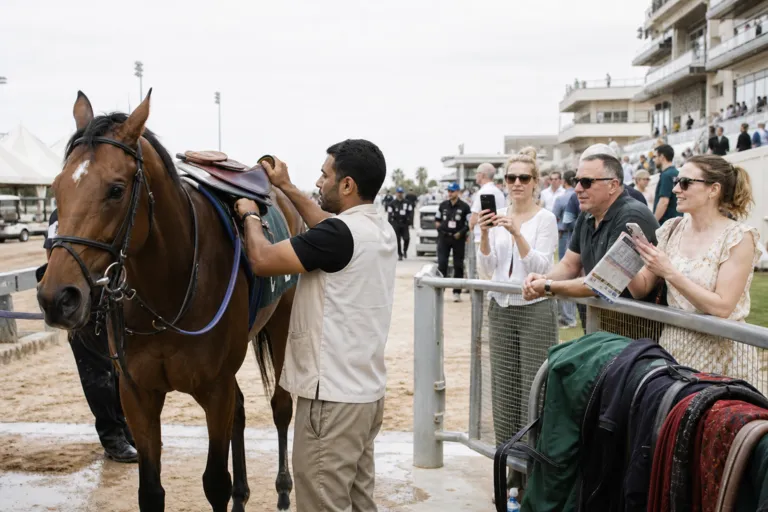
Racing provides a highly visible platform within the Saudi equestrian industry, and the Saudi Cup is a clear example of scale. The Saudi Cup is described as the richest Thoroughbred race in the world, featuring a purse of $20 million at King Abduiaziz Race Course in Riyadh. It is contested at 1,800 meters and is scheduled for February 14, with that edition noted as the seventh running. The winner of the Saudi Cup itself will take home $10 million. The broader racing festival is worth in excess of $38 million, underscoring how a single event week can anchor travel, hospitality, and destination programming.
Tourism and hospitality investment themes also shape what equestrian-linked projects can become, from viewing experiences to event-week itineraries. One investment view highlighted that the future of hospitality investment will favor projects aligned with purpose, contributing to destinations, communities, employment, culture, and national transformation. It also pointed to domestic tourism as an important stability factor for investors, especially when combined with GCC demand and international arrivals. Separately, the National Tourism Strategy framing emphasized an integrated ecosystem with public-private partnerships, an enabling business environment, and shared responsibility for long-term prosperity.
Saudi Arabia’s destination pipeline and major events calendar provide context for how equestrian tourism can be packaged and financed. Saudi Arabia is hosting mega events such as the 2027 Asian Cup, the World Expo 2030, and the 2034 FIFA World Cup. On the accommodation side, around 252,000 hotel keys have been announced, planned, or are under construction and due to be delivered by 2030 in Makkah and Madinah, while Neom is set to provide roughly 80,000 keys as it prepares for the 2029 Asian Winter Games. Within this broader environment, equestrian experiences can plug into multi-demand travel seasons rather than relying on one segment.
For tourism outcomes, official targets and reported contributions define the policy direction surrounding the Saudi equestrian industry’s tourism potential. One stated goal for 2030 is to welcome 150 million visitors, increase the sector’s contribution to national GDP to 10%, and create 1.6 million jobs. Tourism’s current GDP share was cited differently across sources, including 12.4% in 2024 in one study view and 5% in another statement, alongside the aim to reach 10% by 2030. Even with these differing reported baselines, the common thread is a major push to scale tourism, which can support equestrian racing operations and visitor-focused investment.
What is the Saudi equestrian industry’s biggest global racing draw mentioned in the sources?
How much does the Saudi Cup winner take home?
What tourism scale supports equestrian-linked travel in Saudi Arabia?
What 2030 tourism targets are cited that could matter for equestrian tourism investment?
What hotel supply figures are mentioned that indicate broader destination capacity growth?