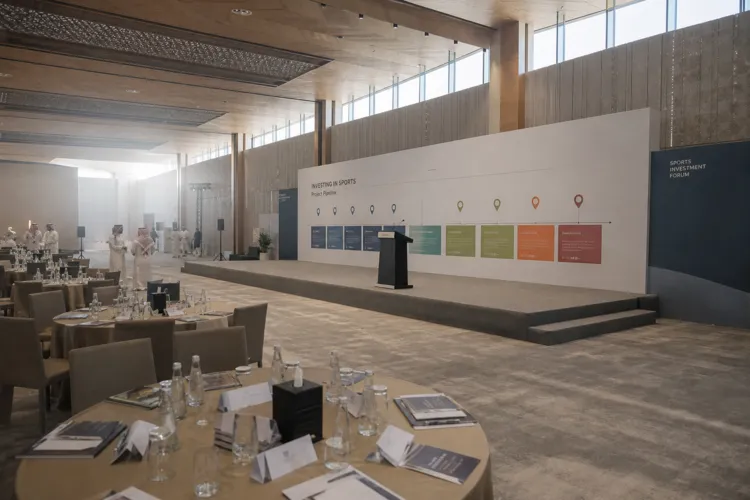
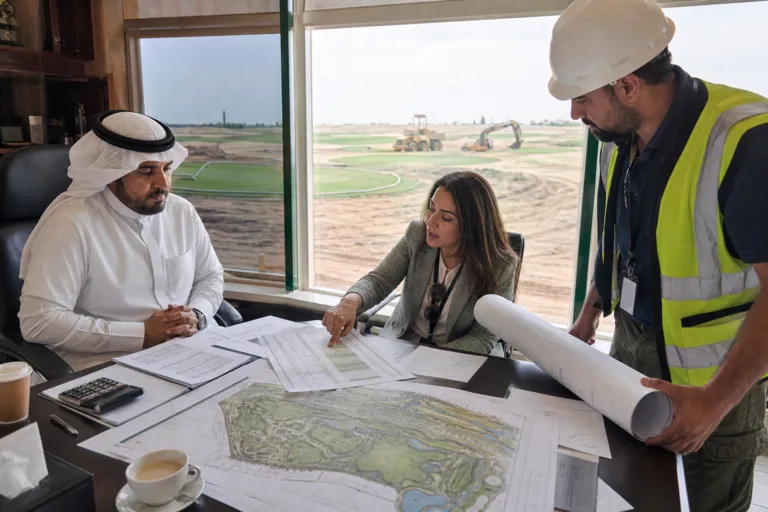
Saudi golf course development has to be planned in a period where Saudi capital is being reassessed and redirected. The Public Investment Fund (PIF) confirmed a new emphasis on “sustained value creation…and maximizing long-term returns.” This shift was reported alongside a major budget deficit of $73bn last year, driven by increased spending and lower oil revenues. At the same time, Saudi Arabia faces “enormous infrastructure and delivery costs” with the 2034 World Cup in eight years, and there are references to rising construction costs and higher defence spending. For golf developers, the message is simple. Structure projects to show payback. Prioritize assets that can operate reliably and support wider local economic goals.
Investment strategy should start with capital discipline, because PIF explicitly said LIV Golf’s “substantial investment required…is no longer consistent with the current phase of PIF’s investment strategy,” citing “investment priorities and current macro dynamics.” Bloomberg reported LIV has cost PIF over $5 billion since launch in 2022, and struggled with low attendance and poor television viewership. For course development, avoid models that rely on hype alone. Underwrite against realistic utilization, not international media promises. Align stakeholders early, because talks between the PGA Tour and PIF reportedly went quiet after a February 2025 White House meeting, showing that partnership pathways can cool quickly when priorities change.
Operating Model: Build for Year-Round Cash Flow
Operating strategy should be built around predictable revenue and cost control. A key lesson from LIV is that even high-profile sports properties can struggle when attendance and viewership are weak. Operators should focus on local demand drivers and a service model that performs without constant external subsidies. The macro environment also matters. Analysts cited geopolitical tensions, disruption to oil exportation, and a shift toward “security and essential infrastructure rather than prestige sports assets.” That context favors golf facilities that can demonstrate stable operations, transparent budgets, and clear community value, rather than venues that only work when paired with expensive international events.
Course operators should also assume that sports funding can be reprioritized quickly. After PIF’s change in emphasis, multiple sports signals appeared in reporting, including the sale of Saudi Pro League club Al-Hilal, cancellation of the Saudi Arabia Snooker Masters two years into a 10-year deal, and reports that plans to bid for the 2035 rugby union World Cup were abandoned. Yet PIF also stated it remains committed to deploying capital internationally, including “substantial current and future investments in various sports as a priority sector.” Golf operations should therefore be designed to stand on their own, while still being compatible with selective, return-focused sponsorships and partnerships.
Membership strategy should prioritize retention and recurring income over one-time fees. The environment described in the sources points to higher scrutiny of long-term returns, so membership should be structured around renewals, clear benefits, and operational consistency. Position tiers to match actual service delivery, because “rising construction costs” and broader project slowdowns were reported across the GCC. In 2025, the GCC’s contract value was projected at $220 billion, down from $261 billion in 2023 and $298 billion in 2024, while Saudi Arabia’s contract values were reported dropping from $125 billion in 2023 to a projected $77 billion in 2025. These figures are construction-wide, not golf-specific, but they reinforce a tighter capex and delivery environment that affects how aggressively clubs can promise upgrades.
Finally, golf course investors should plan for diversified funding paths and governance that can attract partners even if a single anchor steps back. LIV Golf is pitching a reduced 10-event international schedule and, according to reports cited by Field Level Media, has sought $250 million to $350 million in funding to continue operations beyond this year. Separately, PIF announced a new five-year strategy to focus capital more on the domestic economy, reflecting a broader push for capital efficiency and returns. For Saudi golf course development, that combination argues for phased build-outs, realistic member growth targets, and operating plans that remain resilient under shifting macro conditions and evolving sports investment priorities.
What does “Saudi golf course development” need to prove to attract investment now?
What caution does LIV Golf provide for golf investors?
How should golf clubs adapt operations to shifting sports funding priorities?
What macro pressures should developers consider in planning?