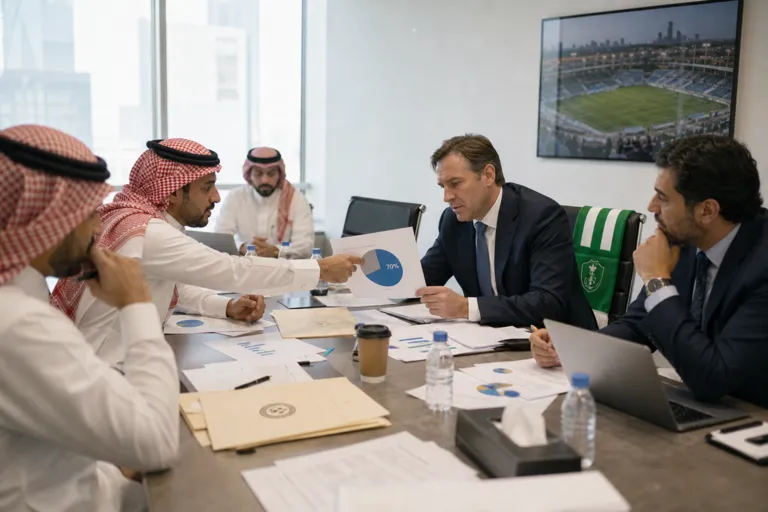
Saudi Pro League club privatization is being positioned as the league’s next major commercial step, after a phase of state-backed investment to build squads and infrastructure that can attract interest. CNBC reported that the Public Investment Fund (PIF) and the Ministry of Sports have opened the door to outside capital and that three clubs have already been sold to private entities. CNBC also reported the first foreign deal was closed in July, when U.S.-based Harburg Group bought Al-Kholood. Analysts cited by CNBC framed privatization as a way to bring business expertise, credibility, and global networks, while also potentially increasing investment in training facilities and league professionalization.
The main ownership model emerging is a shift from PIF majority control to a private acquirer holding a large stake, as seen in Al Hilal’s sale. The Athletic and ESPN reported that PIF sold a 70 per cent (70%) stake in Al Hilal to Kingdom Holding Company, run by Prince Alwaleed Bin Talal. The Athletic said the deal values Al Hilal at SAR1.4 billion, and ESPN also reported the valuation at 1.4 billion Saudi riyals ($373.20 million). PIF statements carried by multiple outlets said the move aligns with a strategy to “maximize returns and redeploy capital within the domestic economy” and to drive development and diversification in Saudi Arabia.
Valuations, Sustainability, and the Investor Risk-Return Question
Al Hilal’s disclosed valuation creates a reference point for how high-profile Saudi assets may be priced when a majority stake changes hands. But sources also stress sustainability concerns. CNBC quoted investor Ben Harburg saying clubs “can’t keep dumping money into clubs that are burning it every year,” describing financial sustainability as a key reason for privatization. CNBC also relayed a European-style thesis Harburg supports: clubs can “make money by developing young local talent” and then “selling them to bigger clubs.” At the same time, CNBC cited warnings that running a club can be a “high risk strategy” because it is “difficult for owners to make a profit from running a club.”
For investors, access routes described in the sources fall into two visible tracks. The first is direct club acquisition, including foreign participation, as CNBC reported with Harburg Group’s purchase of Al-Kholood. The second is buying a significant stake from PIF in major clubs, as seen with Kingdom Holding Company acquiring 70% of Al Hilal. CNBC also reported that the PIF and Ministry of Sports have been looking to sell their stake in the league’s “big four” clubs. Separate reporting by The Athletic and the Associated Press lists the four PIF-owned Saudi Pro League clubs as Al Hilal, Al Nassr, Al Ahli, and Al Ittihad.
Privatization is also being linked to Saudi Arabia’s broader sports investment reassessment. Business Insider and the Associated Press noted speculation that PIF could reduce funding for LIV Golf after spending more than $5 billion since its inception in 2022, while LIV’s CEO said the season would continue “as planned, uninterrupted and at full throttle.” The San Francisco Chronicle reported PIF owns about 85% of Newcastle United and that the Al Hilal sale raised questions about wider commitment, while The Athletic reported PIF regards Newcastle as a successful purchase so far and is not looking to offload it in the short-to-medium term. In this context, Saudi Pro League club privatization can be read as both a capital-recycling mechanism and a push to professionalize club operations.
What is Saudi Pro League club privatization?
What valuation was disclosed in the Al Hilal sale?
What ownership model did the Al Hilal transaction use?
What investor access routes are shown in the sources?
What risks and sustainability issues are highlighted for new owners?