Secondary ticketing resale in Saudi Arabia sits inside a global market that is formalizing fast. One industry report projects the global Secondary Tickets Market to grow from USD 34,409.45 million in 2026 to USD 38,094.7 million in 2027, reaching USD 85,952.81 million by 2035, at a CAGR of 10.71%. Another report values the global market at USD 31,390.8 million in 2025 and expects it to reach USD 34,909.8 million in 2026 and USD 90,832.5 million by 2035. These figures are global context, not Saudi-specific, but they show why regulators and platforms increasingly treat resale as a market that needs structure, verification, and consumer protection.
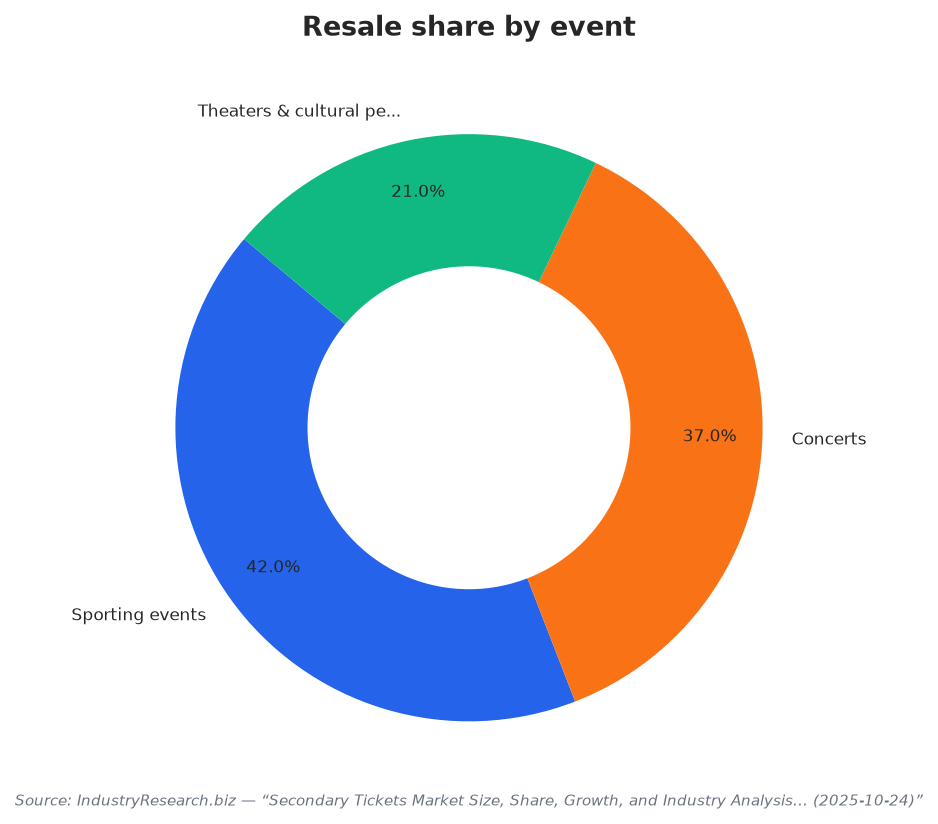
Demand and behavior patterns in the global resale ecosystem create a useful benchmark for Saudi platform design. In 2024, an estimated 126 million tickets were resold globally through secondary platforms, up 19% versus 2021. Sporting events represented over 42% of resold tickets, with concerts at 37% and theaters and cultural performances at 21%. Online resale accounted for 81% of global transactions, and mobile-first behavior continues to expand: in the U.S., roughly 68% of purchases occurred through mobile platforms, up from 49% in 2021. If Saudi resale grows, these numbers signal where to invest first: mobile UX, online verification, and category coverage across sports, concerts, and culture.
Regulatory Pressure Turns Into Product Requirements
Regulatory scrutiny is repeatedly cited as a central constraint in secondary markets, and it becomes a practical product checklist for platforms. One global report flags that 29% of consumers report distrust in ticket authenticity, and 17% cite hidden fees as a purchase deterrent. Between 2023 and 2025, 42 platforms launched digital identity verification tools, reducing fraud cases by 23% globally. A separate report also links blockchain-based verification to improved security, stating fraud cases were reduced by 30% and that blockchain use is a named trend. For Saudi Arabia, these global signals translate into clear compliance-and-trust features: identity verification, authenticated transfer flows, and transparent fee display.
Platform opportunity in Saudi Arabia also sits in pricing transparency and anti-bot fairness, which are increasingly tied to regulation. Technavio reports that platforms adopting all-in pricing saw a 10% uplift in customer conversion rates, underscoring demand for price transparency. The same source notes heightened regulatory scrutiny and mentions price controls as a challenge that can affect operating models and profitability. Another report highlights operational risks: 40% of tickets are scalped via bots, 30% of listings are removed for violations, and non-transferable tickets can reduce resale by 20%. A Saudi opportunity map therefore favors fan-to-fan exchanges, bot mitigation, and “show the full price” design that supports both trust and conversion.
Finally, Saudi Arabia’s role should be framed carefully: the sources list Saudi Arabia inside broader Middle East & Africa coverage, but they do not provide local market size, penetration, or enforcement data. Still, the global market structure suggests what a Saudi-ready platform stack can look like. Online accounts for 81% of transactions globally, and mobile share is high in mature markets, so mobile resale and digital wallets matter. AI pricing is described as increasingly common, with one report listing 70% of tickets priced via AI and 40% AI-based pricing use (global findings). The most durable opportunity is to pair these growth levers with verifiable ownership and fair-market rules that reduce authenticity and fee concerns.
What does secondary ticketing and resale mean for Saudi Arabia’s market opportunity?
Which event categories drive the most resale demand in the global market?
What are the biggest trust barriers that resale platforms must solve?
Which platform features are linked to lower fraud or higher conversion?
How important is mobile in secondary ticket purchasing behavior?