Saudi Arabia’s push toward next-generation venues is reshaping the vendor market for smart crowd management. One market lens is AI-powered stadium analytics inside the Kingdom. A ResearchAndMarkets.com offering says the Saudi Arabia AI-Powered Stadium Analytics Market is valued at USD 1.2 billion, with growth tied to advanced sports management technology, fan experience upgrades, and operational efficiency. The same source highlights key demand centers in Riyadh, Jeddah, and Dammam, linked to investments in sports infrastructure and major events. It also notes that in 2023 the Saudi government implemented regulations promoting AI use in sports and entertainment, including funding for research and development in AI applications to enhance fan experience and stadium operations.
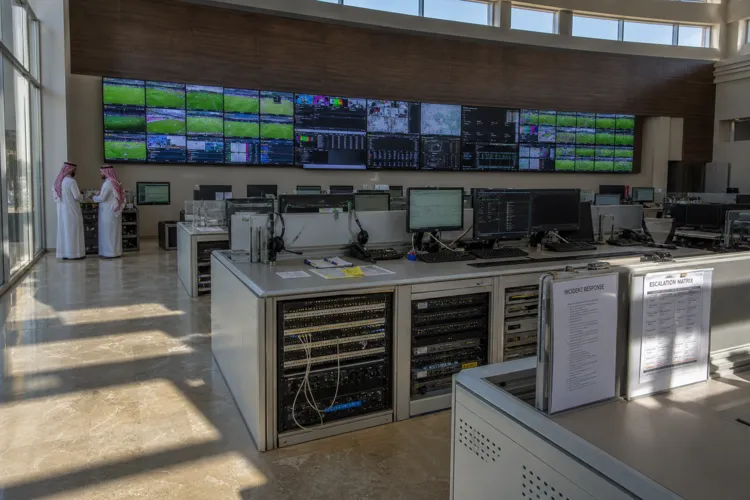
For crowd movement specifically, vendors are selling systems that connect analytics, ticketing, security, and venue operations into one decision layer. The Saudi analytics report expects over 30 million attendees at sporting events in future, and frames this as a driver for AI to personalize experiences, optimize seating arrangements, and improve in-stadium services. It also states that integration of smart technologies in stadiums is projected to reach 70% in future, driven by investments exceeding SAR 1.5 billion in digital infrastructure. In practical terms, this is where stadium crowd flow technology in Saudi Arabia becomes a procurement category, not just a feature, because crowd management must operate alongside real-time analytics and operational control.
What Vendors Actually Deliver for Crowd Flow and Safety
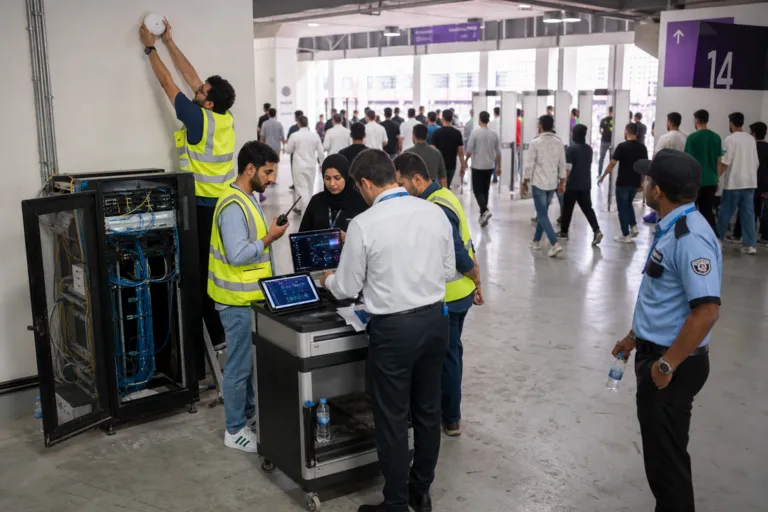
Across the wider smart stadium landscape, the crowd-flow stack is increasingly built around IoT sensing, AI analytics, and security platforms. A Smart Stadium Solution market analysis says 68% of global sporting venues are integrating IoT-based infrastructure to improve fan experiences and operational efficiency. The same source adds that 45,000 sensors are typically deployed in high-capacity venues to monitor real-time crowd flow and environmental conditions, and it reports a 55% increase in the use of AI-driven crowd analytics to manage stadium safety and movement. Verified Market Research also describes “Stadium & Public Security” applications that include AI-powered video surveillance and crowd management, while warning that interoperability issues among vendors can create data siloes and reduce system reliability when proprietary systems fail to communicate well.
Saudi Arabia’s vendor opportunity is also tied to build-and-upgrade activity in the region. A Smart Stadium Solution report claims Saudi Arabia leads with a 40% regional share, building 10 new smart stadiums, alongside a 15.2% annual growth performance in digital infrastructure. The same source states the Middle East and Africa region holds a 10% share of the market and that 80% of activity is concentrated in GCC countries. For suppliers, this shifts buying behavior toward long-term services, integration, and lifecycle support. A separate global report from Makdatainsights notes the Services segment holds the largest share in the smart stadium market due to ongoing installation, maintenance, and upgrade needs, reinforcing why integrators and managed service providers remain central to crowd-flow deployments.
Global market trajectories help frame how quickly these vendor categories are expanding, even when the local procurement mix is unique. Research Nester values the smart stadium market at USD 17.26 billion in 2025 and says it is set to exceed USD 74.19 billion by 2035, expanding at over 15.7% CAGR during 2026–2035, with 2026 estimated at USD 19.7 billion. Credence Research values the smart stadium market at USD 18.06 billion in 2024 and expects USD 53.73 billion by 2032 at a 14.6% CAGR, while noting the Middle East and Africa accounted for 7.8% share in 2024 and that growth is led by investments in countries including Saudi Arabia. For Saudi stadium operators, the practical takeaway is clear: buying crowd-flow capability means selecting vendors that can secure data, process it in real time, and integrate seamlessly across dozens of stadium systems.
What is driving demand for crowd management technology in Saudi stadiums?
Which Saudi cities are highlighted as key markets for stadium analytics?
How is IoT used to manage crowd flow in large venues?
What is a common vendor challenge when deploying stadium crowd flow technology in Saudi Arabia?
Why do services matter as much as hardware and software in smart stadium projects?