
Saudi Arabia’s 2034 accommodation program is being framed by official bid-book targets and follow-up industry reporting that point to more than 230,000 hotel rooms and serviced apartments across five host cities by 2034. The tournament itself is planned across 15 stadiums in Riyadh, Jeddah, Al Khobar, Abha, and NEOM, and multiple sources describe a combined 230,000 hotel rooms as part of the hosting commitment. Some reporting also flags a moving range, citing both 180,000 and 230,000 room figures in different contexts, which underlines that the plan is evolving as projects shift from planning into construction.
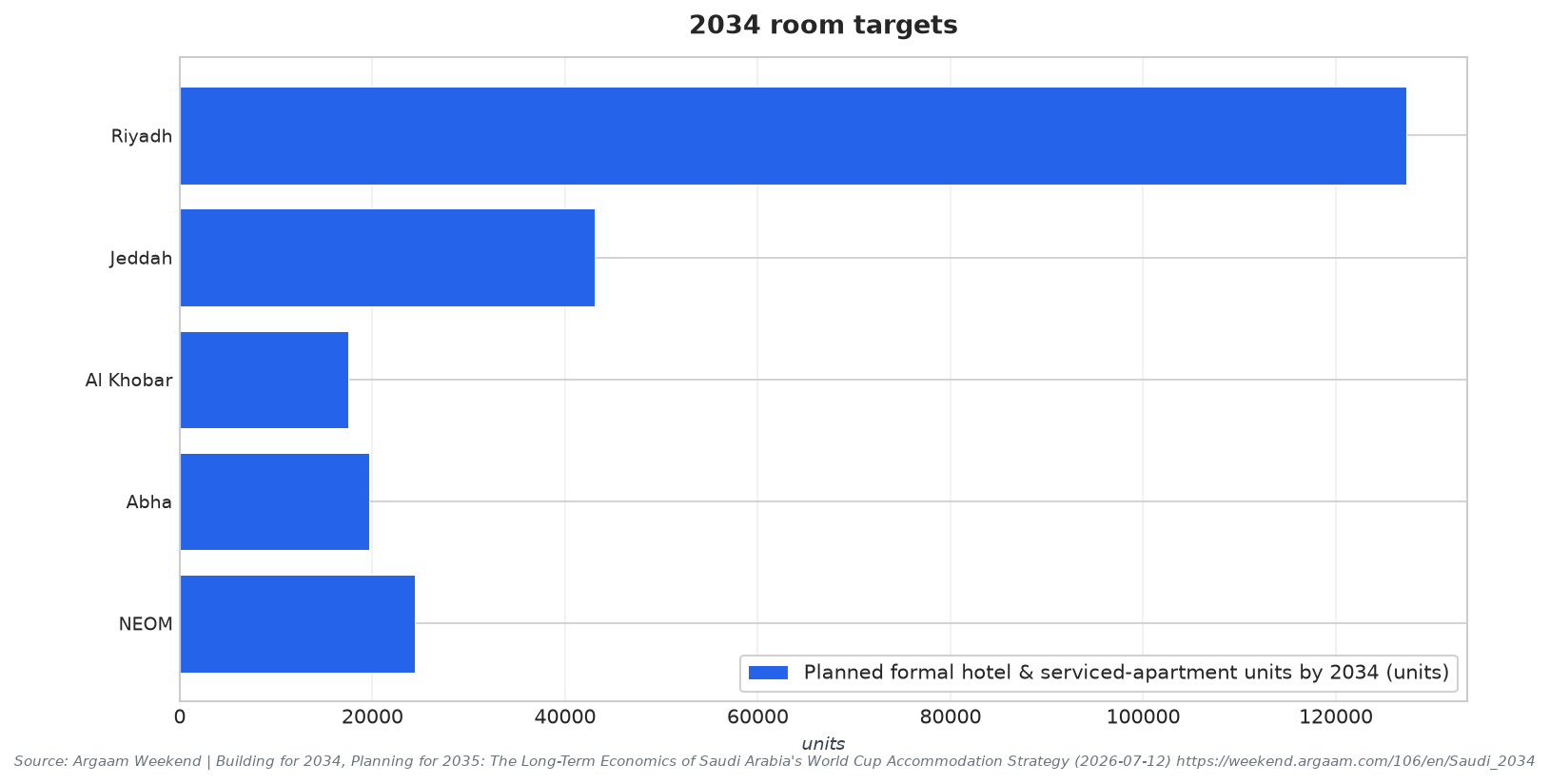
For investors and policymakers, the practical question is not only total capacity, but how much of it is incremental, and where it lands. Argaam reports that the five host cities currently have 46,904 formal three-star, four-star, five-star hotel and serviced-apartment units. By 2034, Argaam’s planned total rises to 232,023 units, implying 185,119 additional formal units. City-by-city, the same source projects Riyadh reaching 127,275 units by 2034 from 21,116 today, while Jeddah is projected to reach 43,109, Al Khobar 17,504, Abha 19,697, and NEOM 24,438. Kanzotech also summarizes bid-book reporting that breaks planned hotel capacity down with Riyadh at over 127,000 rooms, including around 51,000 five-star units.
Strategy: Build for a Tournament Spike, Then Operate for the Other 11 Months
The biggest strategic risk is confusing event logistics with sustainable demand. Argaam points to early signals from the 2026 World Cup in the US: a survey by the American Hotel & Lodging Association found that 80% of hoteliers across 11 US host markets said bookings were tracking below initial forecasts, while 65–70% said visa barriers and geopolitical concerns were significantly suppressing international demand. The same report found FIFA room-block releases can be material, with some affected hotels seeing 70–95% of originally contracted inventory returned to the open market. For Saudi Arabia, that is a reminder that the rooms created for a one-month peak must still compete in ordinary market conditions afterward.
That post-event reality is why phasing and mixed demand drivers matter. Beyond the host-city lens, HospitalityNet cites Knight Frank figures showing an existing national stock of 171,650 hotel keys and around 94,500 additional rooms under construction or at advanced planning stages, following a year when the Kingdom’s travel and tourism industry expanded by 32%. The same source notes domestic travel preferences, including Makkah as the top destination overall at 42%, and that for Saudis earning more than SAR 80,000 per month, Riyadh is the number one draw at 61%. Among metropolitan hubs, Riyadh at 40% and Jeddah at 40% are top domestic travel destinations, patterns that can support year-round occupancy if product, pricing, and location align.
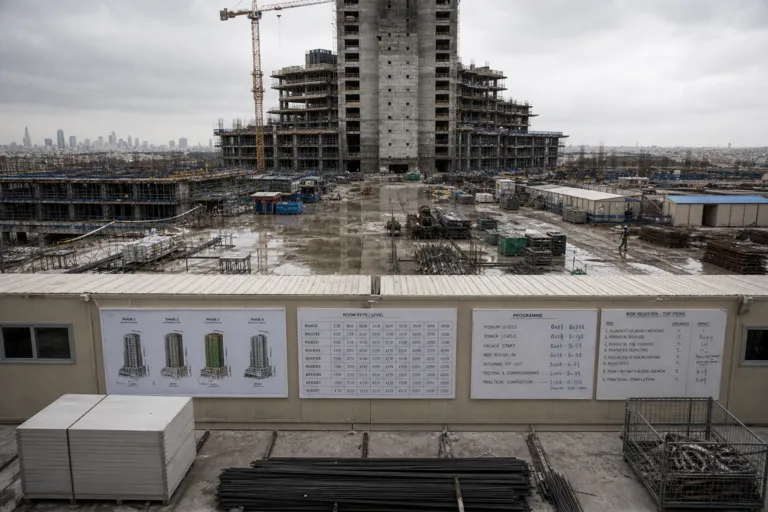
Finally, the delivery environment will shape outcomes as much as demand. The World Data cites a 100 billion SAR-plus investment figure (roughly USD 26.6 billion) for stadium construction and directly related infrastructure, while noting this is only a fraction of wider Vision 2030 megaproject spending that overlaps with World Cup infrastructure but extends beyond it. Mordor Intelligence adds that government targets for 150 million visitors by 2030 are catalyzing a 320,000-room hospitality pipeline, and highlights specific project signals such as Red Sea Phase 1 infrastructure finished in 2024, clearing the way for 8,000 hotel rooms across 16 resorts. In this context, 2034 World Cup hotel development works best as a coordinated host-city rollout that is sized for a spike, but designed to trade like normal hotels long after 2034.
How many room keys are planned across Saudi Arabia’s five 2034 host cities?
How many additional formal accommodation units does Argaam imply must be added by 2034?
Which host city has the largest planned accommodation increase by 2034?
What warning signal from the 2026 World Cup in the US matters for hotel planning?
What does the 2034 World Cup hotel development strategy need to optimize beyond room counts?