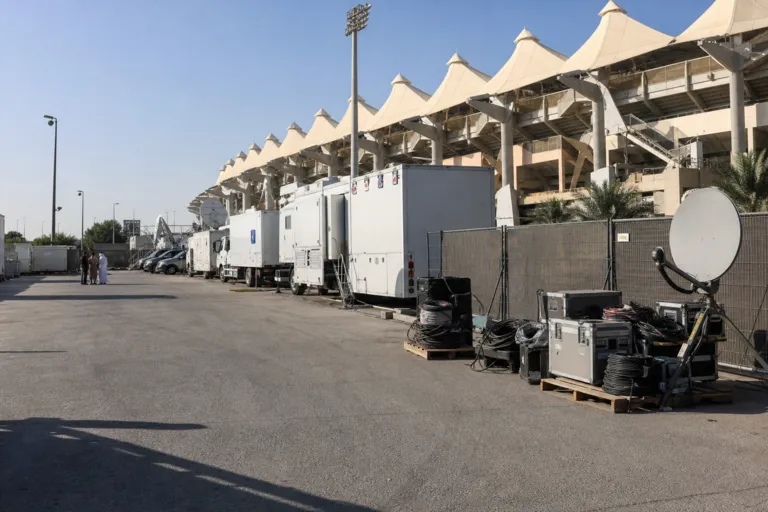
Saudi Research and Media Group (SRMG) has put a clear stake in the ground with Thmanyah. SRMG finalized a six-year contract valued at SAR 2.3 bn that gives its digital-first subsidiary, Thmanyah Publishing and Distribution, exclusive rights to broadcast and commercially exploit the Kingdom’s top football competitions. The agreement covers the Saudi Pro League, King’s Cup, Saudi Super Cup, and First Division League across Saudi Arabia and 23 MENA countries, including the UAE, Egypt, Morocco, and Qatar. According to Asharq Business, Thmanyah will broadcast matches for a fixed SAR 387 mn annually through the 2030/31 season. For Saudi broadcasters and brands, this is a shift from a TV-first model to a platform that is being positioned to monetize directly through digital distribution.
For broadcasters, the key point is exclusivity paired with commercial exploitation rights. SRMG is effectively asking whether a digital platform can out-monetize traditional TV operators such as MBC, STC, and SSC by leaning on subscriptions rather than relying mainly on ad sales. The agreement also marks a roughly 29% jump from the previous SAR 300 mn deal, which did not include the First Division League. The strategic bet is that a direct-to-consumer “super-app” approach can capture value from match access, packaging, and broader digital engagement across MENA, not only within Saudi Arabia. In that context, the rights-holder role is not just about distribution. It is about building a product that can be sold repeatedly to fans and repeatedly activated by brands.
Why a Homegrown Rights-Holder Changes the Brand Playbook
Thmanyah’s positioning is strengthened by SRMG’s ownership and funding moves. SRMG said it is increasing its stake in Thmanyah from 51% to 75%, subject to regulatory approvals. The transaction structure includes capitalization of previous payments and financing worth SAR 52.36 million, plus a SAR 45 million payment to existing partners, and an additional financing facility capped at SAR 200 million over four years to support operations and expansion. SRMG expects the financial impact to begin in the second half of 2026. For brands, this matters because it signals a multi-year build around production, distribution, and sports programming rather than a one-off rights acquisition. It also creates a clearer counterpart for long-term advertising and sponsorship planning.
Execution will depend on product design and content volume, not rights alone. Thmanyah launched its app and satellite channels in August 2025 and became the official broadcaster through a model that combines free viewing and paid packages. Other reporting describes a hybrid streaming model that mixes free and premium content, alongside production partnerships and expanded sports programming. Thmanyah also evolved from a podcast-focused platform into a broader sports and entertainment media ecosystem. In 2016 it was founded in Saudi Arabia, and it built its reputation through Arabic podcasts such as Fnjan, Swalif Business, Socrates, and Things That Changed Us, with more than 2.2m monthly followers. It has produced over 90 documentaries and short films that generated more than 15m views. That existing audience and production engine can help brands connect narrative content and live match moments in the same environment.
The regional and global context also frames expectations. Thmanyah’s rights agreement remains well below the broadcasting revenues cited for Europe’s top leagues: the English Premier League at EUR 1.9 bn, the German Bundesliga at EUR 1.1 bn, La Liga at EUR 990 mn, and Serie A at EUR 981 mn. Those figures are not about Saudi Arabia, but they offer a benchmark for what mature rights ecosystems can look like. The Thmanyah sports media strategy is therefore best understood as a test of whether Saudi football can be packaged into a digital product that scales across MENA, with clear value for advertisers, subscription pricing discipline, and a rights-holder that can invest steadily in production quality and distribution.
What rights did Thmanyah secure for Saudi football broadcasts?
How much is Thmanyah’s Saudi football rights deal worth and how long does it run?
How is SRMG funding Thmanyah’s expansion after the rights win?
How does Thmanyah plan to monetize as a rights-holder versus traditional TV models?
What does the Thmanyah sports media strategy mean for Saudi broadcasters and brands?