To build a world-class high-performance sports academy Saudi Arabia can be proud of, the starting point is legacy. Saudi Arabia has won just four Olympic medals in its entire history. That context raises the stakes for every facility decision, every coaching hire, and every talent pathway built today. The Kingdom is also entering what many describe as its “golden sports decade,” with a packed calendar that includes the FIFA World Cup 2034 and the Asian Games. This is the moment to connect participation growth to elite outcomes through a single, coherent academy system.
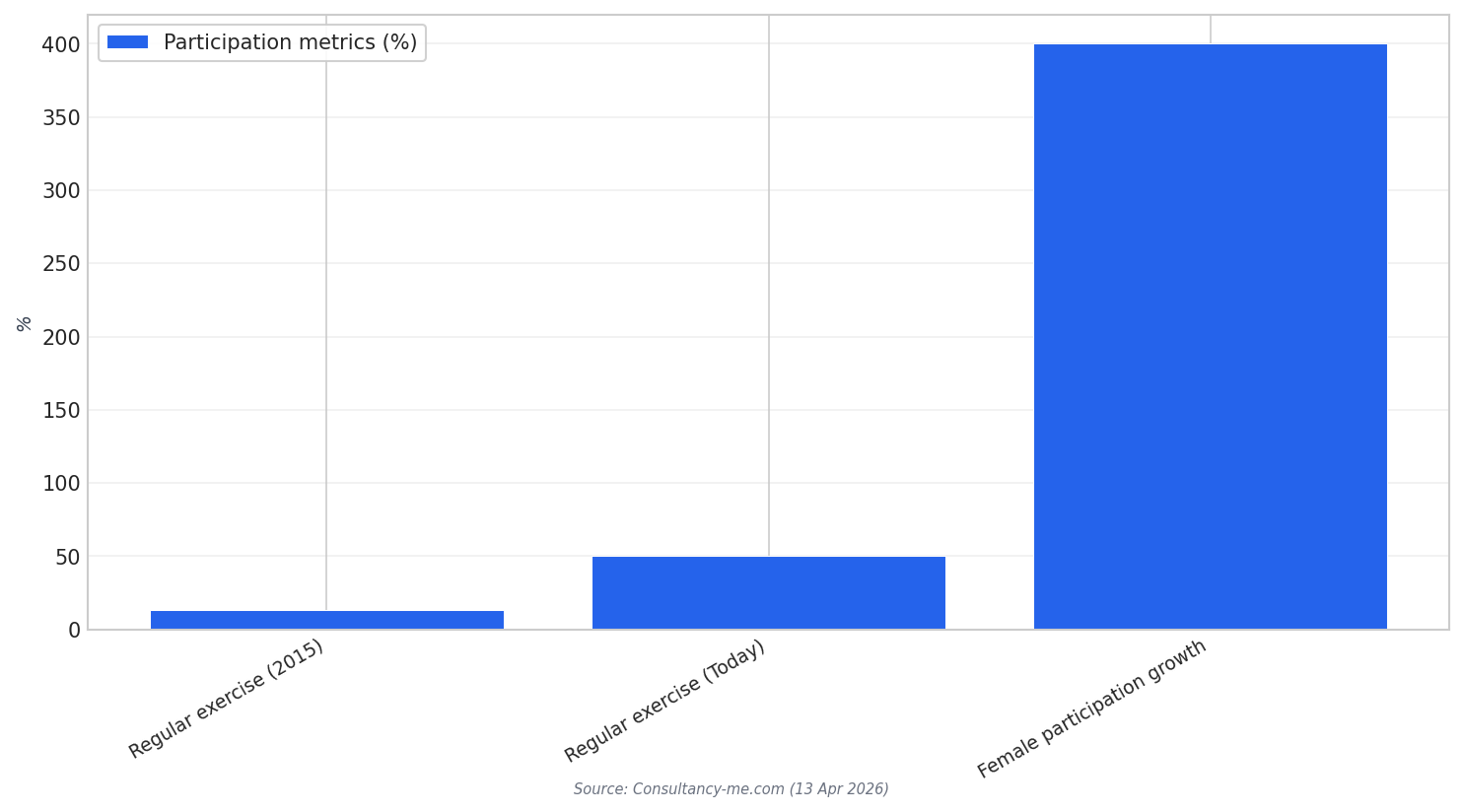
Demand planning should shape the academy’s footprint. One analysis notes that the difference between a 20% utilised venue and an 80% utilised one is not design, but demand and supply modelling. For a high-performance academy, that means programming comes first: daily community access, structured talent ID, and federated pathways that keep athletes moving forward. Participation rates have risen from 13% of the population exercising regularly in 2015 to 50% today, while female participation has grown 400% in the same period. Those shifts show where demand exists and where academy satellites and coach networks can be placed.
Infrastructure Is Rising; Academy Operations Must Keep Up
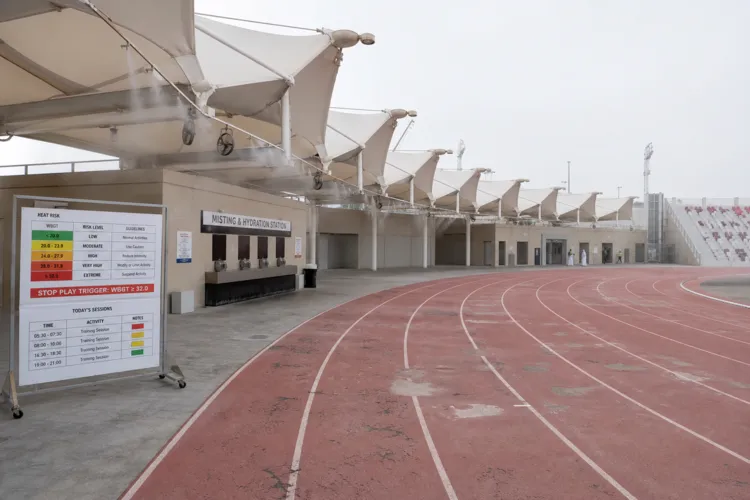
Saudi Arabia is undertaking a vast programme of sports infrastructure development, with $2.7 billion committed to facility development by 2028 and construction on 15 new smart stadiums underway. In Qiddiya, the National Athletics Stadium is positioned to support major international competitions and community use beyond its target completion year, with design consultancy led by UK-based HOK and engineering support from WSP (Canada) and Schlaich Bergermann Partner (Germany). A sports academy Saudi Arabia builds beside this wave should be designed as an operator, not a landlord: it must schedule coaching, testing, rehabilitation, and competition integration to keep venues active.
The academy model should also align with Saudi Arabia’s event pipeline and new venues beyond traditional stadiums. A track is being built in Qiddiya with a view to staging races there from 2028 or 2029, and the Qiddiya Speed Park Track is being developed by the Qiddiya Investment Company, owned by PIF, featuring a 20-story-high corner. At the same time, Saudi Arabia’s sports market is projected to grow to $22.4 billion by 2030, up from $1.3 billion in 2016. That growth can fund performance services, but only if the academy proves year-round utilisation and athlete progression.
Finally, a high-performance academy needs a values-led talent pipeline. A Jeddah forum tied workforce development to values, arguing that development loses impact without integrity. Saudi programs in other sectors show what structured training can look like: the Institute of Mineral Resources Advanced Training (IMRT) offers an Applied Mining Diploma with five semesters of 16 weeks each, totaling 1,424 training hours, including 360 hours of on-the-job training. A sports academy can borrow the same logic: defined hours, supervised practice, and placements with clubs and federations. The goal is simple: the next Saudi Olympian is a child now, and they will be discovered by a coach in a facility connected to a program.
What should a sports academy Saudi Arabia prioritise first?
What participation signals support building new academy pathways?
What facility investment context matters for academy planning?
How can an academy structure athlete development like other training programs?