Riyadh’s hosting of the WTA Finals became a high-visibility business case for women’s tennis. The hosting agreement was secured under a three-year deal running from 2024 through 2026, and it came with a commitment to equal prize money that matched the men’s ATP Finals dollar for dollar at $15,250,000. The same source described this as the single largest financial commitment to women’s professional tennis by any host in the event’s 53-year history. The commercial logic was straightforward: use the season-ending flagship event to reset expectations for what women’s tennis can command, then attach Saudi branding to the sport’s most repeated touchpoints, including rankings and content.
Money was the anchor, but the story was designed to travel beyond one tournament week. A Riyadh Tennis analysis stated the $15,250,000 prize pool represented a 69.44 percent increase over the 2023 edition held in Cancun, Mexico, and equaled the ATP Finals payout in Turin for the first time in history. It also reported that when Coco Gauff won the inaugural Riyadh edition, her $4,805,000 champion’s prize was the largest ever awarded at a WTA Tour event, surpassing Ashleigh Barty’s $4,420,000 at the 2019 WTA Finals in Shenzhen. In The Athletic’s 2025 reporting, Saudi Arabia guaranteed record prize money of $15 million and cited a 66 percent increase from 2023, with a record $5.23 million winner’s check for that year’s champion.
A Partnership Stack: Rankings, Content, and Fan Growth
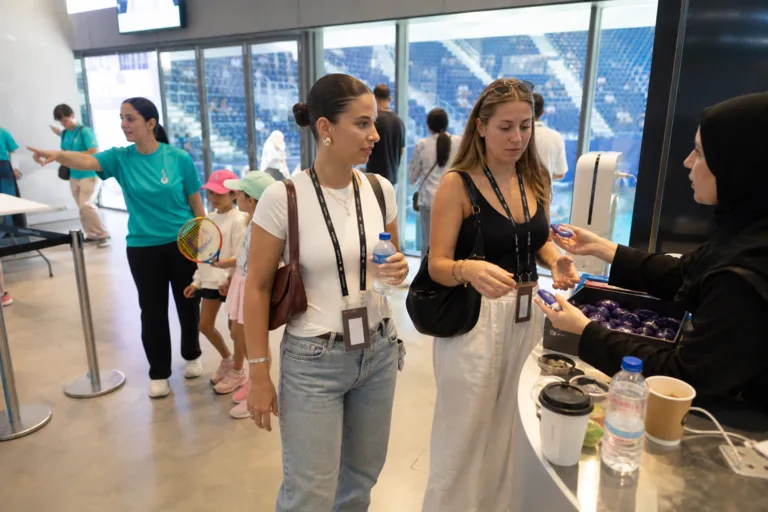
The WTA Finals in Riyadh were not positioned as a stand-alone asset. Riyadh Tennis reported that PIF became the official naming partner of the PIF WTA Rankings in addition to the PIF ATP Rankings, which keeps the sponsor’s name in routine competitive conversation all season. It also said a multiyear WTA partnership announced in May 2024 encompassed marketing collaboration, digital content development, fan growth initiatives, and women’s empowerment programming. The WTA and Saudi Tennis Federation later stated the event delivered 20 percent year-on-year growth in attendance, including sell-out crowds across the final days. The Athletic separately reported that attendance was up 24 percent over the first year, reinforcing that fan-growth metrics were central to the value narrative.
That narrative still faced a classic hosting risk: broadcast exposure can highlight what is missing as much as what is new. The Athletic’s 2026 reporting described stars of the WTA often playing in front of a half-empty arena with a capacity of just 3,500, with cameras beaming images to potential sponsors and future hosts. At the same time, the reputational debate stayed attached to the product. The Athletic’s 2025 piece explicitly referenced “sportswashing” as a risk that sports authorities sometimes pay when nations spend huge sums to host events partly to improve government reputations, even as Billie Jean King supported the deal for placing a high value on women’s tennis. The Human Rights Foundation also framed the tournament’s empowerment messaging as controversial, despite public statements about inspiring women and girls.
The end of the Riyadh cycle shows why this commercial approach should be treated like a playbook, not a permanent location strategy. In a joint statement, the WTA said that following two years of the WTA Finals in Riyadh, it requested to move the 2026 WTA Finals to a new host location; the Saudi Tennis Federation accepted the proposal and both parties mutually agreed on the conclusion of the hosting arrangement. Wikipedia’s 2026 WTA Finals entry adds that the tournament was originally scheduled to be held in Riyadh for November 7–14 for what would have been a third consecutive year, but it was moved to the United States due to safety concerns over the 2026 Iran War, after the three-year hosting contract ended six months early. Together, those details underline what the WTA Finals Riyadh commercial model ultimately delivered: a premium financial benchmark, a sponsorship architecture, and a short, intense window to build demand.
What made Riyadh’s hosting deal a commercial benchmark for the WTA Finals?
How did the partnership extend beyond the tournament week in Riyadh?
What attendance growth was reported for the WTA Finals in Riyadh?
What is the WTA Finals Riyadh commercial model in practical terms?
Why did the WTA Finals not stay in Riyadh for the planned third year?