Qiddiya City is a PIF-backed giga-project in Saudi Arabia, with Qiddiya Investment Company incorporated as a closed joint-stock company wholly owned by PIF on May 10, 2018, after an April 2017 announcement and April 2018 ground-breaking. The city sits southwest of Riyadh, described as 45 kilometers from downtown Riyadh and 70 kilometers from King Khalid International Airport, spanning more than 360 square kilometers across more than 20 neighborhoods. Within that mixed-use destination, official materials describe a dedicated gaming and esports district alongside attractions and venues such as Six Flags, Aquarabia, Speed Park Track, and the Prince Mohammed bin Salman Stadium. The commercial proof still depends on operating data, but the asset list and planning intent are now specific enough for partners to map realistic entry points.
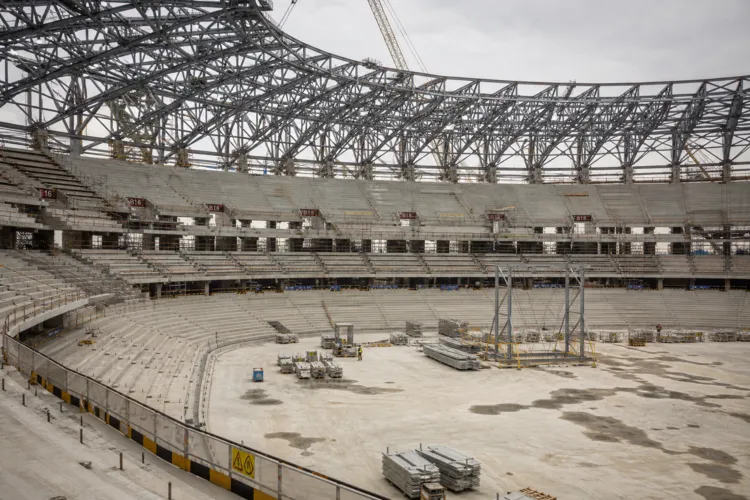
For vendors, the most concrete demand signal is venue scale and year-round activation. Qiddiya has announced four dedicated esports venues and a year-round calendar of major esports events, with a combined peak esports tournament seating capacity of 73,000 across the destination. One venue is planned to include the largest indoor LED screen in any esports arena and feature 5,300 seats, positioned as one of the three largest esports venues in the world. That combination creates opportunities for event operations suppliers, broadcast and live-production services, LED and AV integrators, ticketing and crowd-flow technology, and venue safety and accessibility specialists. It also suits training and delivery partners who can build repeatable operations, because the plan is not a one-off event site but a district designed for recurring programming.
Vendor, Tenant, and Sponsor Opportunity Map for the Precinct
Tenant opportunities cluster around “live, work, play” mixed-use. The district has been positioned as a place for gamers “from all walks of life” with gaming-themed apartments and hotels, which opens lanes for hospitality operators, branded lodging concepts, and lifestyle retail that can tie into competitive play and community. For design-led tenants and service providers, the precinct has been described as comprising three distinct areas—Cyber Punk, Alternate History, and High Fantasy—alongside a push to meet technical accessibility requirements and embody Universal Design principles aligned to international standards. That thematic zoning supports differentiated leasing: experience-led F&B, merch and collectibles retail, gaming lifestyle studios, and community training spaces that can be programmed around tournaments, creator meetups, and fan events.
Sponsors and rights-holders can anchor around proven esports visibility pathways linked to Saudi-hosted platforms. Qiddiya City is a Founding Partner of the Esports World Cup and, at EWC 2026 in Paris, is the naming rights partner of one of the event’s four competition stages. The “Qiddiya City Grid” is set to welcome over 1,000 spectators and host competitions across Apex Legends, Free Fire, PUBG: Battlegrounds, Call of Duty: Warzone, PUBG MOBILE, and Fortnite. EWC 2026 runs from July 6 through August 23 at Paris Expo Porte de Versailles and brings together more than 2,000 players and 200 Clubs from over 100 countries, while Riyadh remains the home of the EWC. That context supports sponsorship architectures that bridge international fan touchpoints and a future Saudi-based destination narrative.
Strategic fit matters because the district is explicitly framed as a core pillar of Saudi Arabia’s National Gaming and Esports Strategy, which targets more than SAR 50 billion in sector economic contribution by 2030, over 39,000 jobs, more than 30 globally recognized games, and 250 electronic gaming companies established in the Kingdom. Qiddiya itself is described as designed for repeat visits, with programmable assets that can change content week-to-week. For partners evaluating the Qiddiya gaming district, the best early approach is to align offers to scalable operations: venue-grade delivery for four esports venues and 73,000 combined peak seating, mixed-use tenant concepts linked to themed zones, and sponsorship packages that connect EWC-stage presence to long-term destination-building.
What makes Qiddiya City’s gaming and esports district commercially interesting for partners?
How large is the announced esports venue capacity across the destination?
What is known about the signature arena features?
How can sponsors activate around Qiddiya City before the district fully opens?
Where is the Qiddiya gaming district located and what is the site scale?