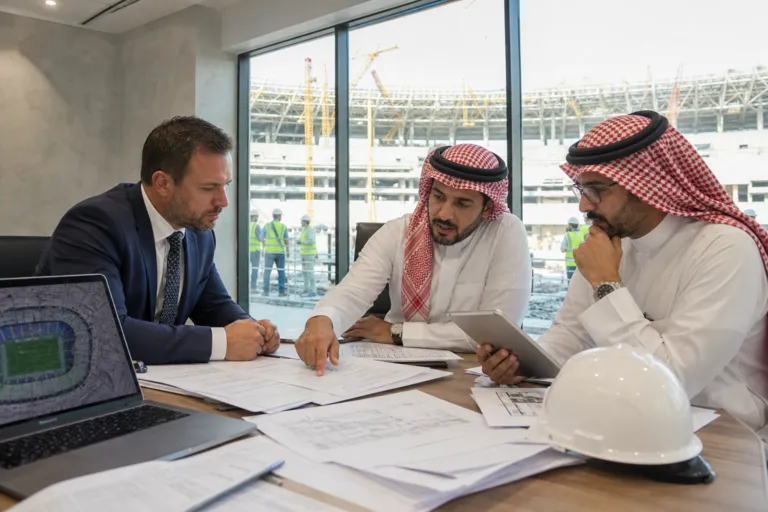
Stadium naming rights Saudi Arabia sits inside a fast-moving sports buildout and a sponsorship market that is becoming more selective. Saudi Arabia is set to host the FIFA World Cup in 2034. One report says that project calls for building 10 or 11 new stadiums across the country, including one in Neom planned to hover a quarter-mile above ground. Separately, another report says construction on 15 new smart stadiums is underway. In parallel, Saudi Arabia is seeking contractors for a $1.8 billion national athletics stadium in Qiddiya Sports Park. Naming rights valuation starts with this pipeline, because new venues increase inventory, but also intensify competition among brands for the best-fit properties.
Valuation should begin with demand signals you can defend in negotiation. Sports participation rates have risen from 13% of the population exercising regularly in 2015 to 50% today. Female participation has grown 400% in the same period. Those figures do not price naming rights by themselves, but they strengthen the argument that stadiums can be used more frequently, by more segments, if programming matches demand. On the macro side, the sports market is projected to reach $22.4 billion by 2030, up from $1.3 billion in 2016. Another marker is $2.7 billion committed to facility development by 2028. When a buyer sees sustained growth and committed capex, they are more likely to accept longer terms and broader activation rights.
Negotiation Levers That Matter in Saudi Deals
Negotiation in Saudi Arabia should reflect that priorities can be reassessed. PIF governor Yasir Al-Rumayyan said: “Whether due to the war or reasons related to economic feasibility, we continuously reassess our priorities.” A professor quoted by AFP said Saudi Arabia is “evaluating the work that has thus far been done, what remains to be delivered, and what has worked (or hasn't worked).” Use this reality to structure a deal that can survive shifting calendars and budgets. Build phased deliverables, clear brand category definitions, and performance-linked options that do not rely on one mega event. If you are selling naming rights, protect price integrity with defined inventory. If you are buying, seek step-in rights and make-good mechanisms.
Contract risk clauses should be drafted with Saudi law in mind. Under Saudi law, force majeure generally applies only where an external event beyond the parties’ control renders performance objectively impossible. It does not extend to cases where performance is merely more difficult, delayed, or expensive. Saudi law also recognizes “extraordinary events” (hardship) where performance remains possible but becomes excessively onerous. Under Article 97 of the Civil Transactions Law, the affected party may request renegotiation, and if no agreement is reached, the court may reduce the obligation to a reasonable level, and any agreement excluding this mechanism is void. In naming rights, that points to carefully defining what “performance” is (signage, media references, hospitality access, content rights) and what triggers renegotiation.
Efficiency is also a negotiation lever. One trade-finance source highlights “disproportionately high legal costs” in Saudi transactions, but says standardised legal documentation can reduce legal fees by up to 80% and cut timelines from months to weeks. For stadium naming rights, that supports using repeatable templates for core provisions, then reserving bespoke negotiation time for high-value items like exclusivity, term length, and termination. Finally, align pricing logic with sustainability themes emerging in Saudi sport. A Saudi Pro League privatization discussion emphasized that clubs “can’t keep dumping money” and cited “financial sustainability.” Naming rights packages that show clear deliverables and controllable costs will be easier to close in that environment.
How should I value stadium naming rights Saudi Arabia without invented benchmarks?
What venue pipeline facts can strengthen a naming rights pitch in Saudi Arabia?
How do force majeure and hardship affect naming rights contracts under Saudi law?
Why should naming rights deals be structured for shifting priorities?
How can parties reduce negotiation friction and legal cost in Saudi transactions?