Stadium F&B operations Saudi Arabia for 2034 World Cup venues should be designed for match-driven demand that spreads beyond the turnstiles. One source notes that the F&B story spans stadium catering and also restaurants, cafés, diners, food trucks, bottled-water suppliers, soft drink companies, beer partners, bakery suppliers, meat distributors, and cold-chain logistics. It also states that fans eat before matches, between venues, after matches, near transit, in fan zones, and in the neighborhoods where they stay. That reality changes how concession models are written, because the stadium is only one node in a wider, time-sensitive service chain.
Concession models can be strengthened by forecasting that is tied to operations. A source argues that match-day footfall, weather, transport delays, fan-zone traffic, and neighborhood occupancy can be modeled to improve labor scheduling, prep volumes, replenishment, and waste reduction. This matters in tenders, because it turns “experience” into measurable operating practices. Another source aimed at hoteliers recommends staffing plans, F&B cover models, and front-desk surge procedures, and says surge staffing plans, cross-training, and temporary labor pools will be essential in high-compression markets. Stadium operators can translate the same approach into service-level requirements for peak windows like pre-kickoff and half-time.
Tenders and Vendor Selection: What to Specify and What to Test
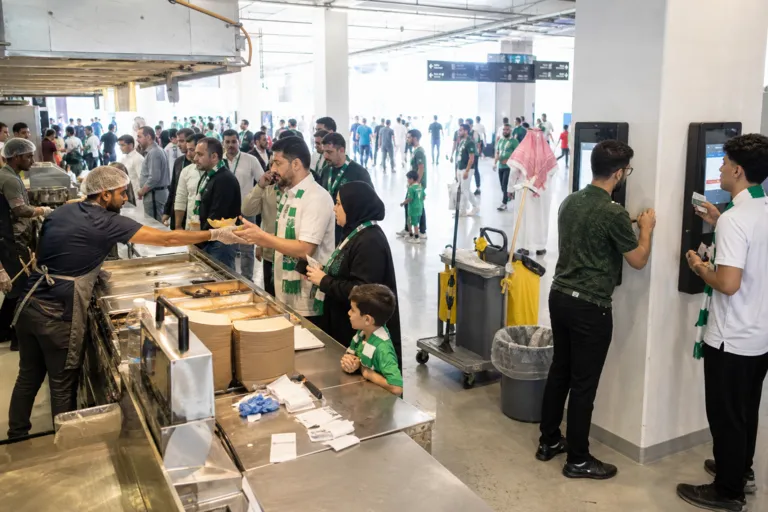
Tenders should test speed, consistency, and the vendor’s ability to protect quality when demand spikes. Self-service kiosks are presented as a way to reduce bottlenecks by letting multiple fans order simultaneously, so they spend less time in line and more time enjoying the game. The same source says kiosks can drive F&B sales with upselling and smart menus by automatically suggesting meal packages, specialty drinks, or limited-edition items related to the match day. In procurement, that becomes a requirement for throughput design and a measurable capability for order flow, menu logic, and staffing patterns around kiosks and pickup points.
Vendor selection should also look at real-world transition risk, not just menu creativity. In New Orleans, Sodexo Live had been the longtime food and beverage vendor for two venues, and the contract ended earlier that year. Legends then handled food and beverages at the Caesars Superdome, but the source reports a rocky start during the preseason and an apology to suite holders for slow service and poor quality. This type of outcome supports tender steps like preseason simulations, service-time targets for premium areas, and clear remediation clauses, because operational failure can show up immediately when a new operator takes over.
Concession strategy can also be framed as an ecosystem and partner story. A Forbes report on St. Louis City SC describes an all-local vendor effort with roughly 25 restaurants throughout the stadium. It also reports that over $7 million has gone to local restaurants since the program started, and describes a “triple-win” for team, restaurants in a revenue-sharing model, and fans seeking a premium food experience. Separately, another source warns that higher flight costs can cascade into fewer nights and lower restaurant spend in some places, which may make convenience-led food and beverage more resilient. In Saudi venue tenders, that combination supports a balanced vendor slate: operationally resilient core concessions plus curated partners that can deliver local identity at scale.
Finally, stadium procurement should align with Saudi’s broader hosting pipeline. A construction report says Saudi Arabia was selected to host the 2034 Asian Games, with the 22nd edition held in Riyadh from 29 November to 14 December 2034. It adds that Saudi Arabia is also set to host the Asian Winter Games in 2029, with the Trojena development at Neom selected in October 2022 to host the ninth edition. These milestones imply overlapping planning cycles where the same F&B vendors, logistics partners, and operating standards may be reused and improved. For stadium F&B operations Saudi Arabia, tenders that require repeatable playbooks, cross-event staffing models, and resilient supply planning fit the schedule-driven reality described in the sources.
What does “stadium F&B operations Saudi Arabia” need to plan for beyond the venue?
How can AI-style forecasting influence stadium concession operations?
Why do self-service kiosks matter in concession tenders?
What vendor risks should stadium operators test during transition?
What is an example of a local vendor concession model that shows scale?