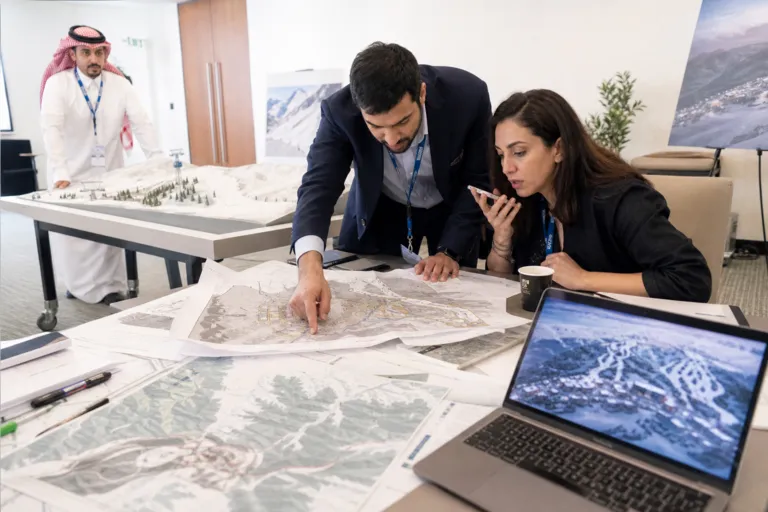
The keyword “Asian Winter Games 2029 Trojena” signals a rare ambition: turning desert mountains into a winter-sports platform with long-term economic intent. The Games were originally set for Trojena, a planned year-round ski resort in the mountains of NEOM. NEOM is described as a $500 billion project to build a new city in Saudi Arabia’s western desert on the Red Sea. The plan linked sport, tourism, and new infrastructure into a single story about economic diversification. It also invited scrutiny because winter sport depends on cold conditions, water, and long-term venue use.
In January 2026, Saudi Arabia’s Olympic Committee and the Olympic Council of Asia agreed to postpone the event indefinitely. The Olympic Council of Asia said the two bodies agreed “to an updated framework for future hosting,” with the Games delayed “to a later date to be announced in due course.” No reason was provided in the statement. Instead of the multi-sport winter Games, Saudi Arabia will host a series of standalone winter sports events in coming years. The statement said this followed “extensive consultations” and reflects a “shared strategic commitment” to long-term and sustainable winter sports development in Saudi Arabia and across the West Asia region.
From Mega-Event Branding to a Sustainable Winter Pipeline
Saudi Arabia’s winter-sports push sits inside a wider calendar of major events that require “tens of billions of dollars” in infrastructure investment. The same reporting points to the 2030 World Expo in Riyadh and the 2034 FIFA World Cup. These events are framed as part of Crown Prince Mohammed bin Salman’s Vision 2030 plan to modernize society, build a sports hosting portfolio, and diversify the economy away from reliance on oil. At the core is spending on sports backed by the Public Investment Fund, described as a $900 billion sovereign wealth operation. The Trojena plan therefore functions as a symbol of a broader investment-led strategy, not only a single event.
Financial and operational pressure also appears in the surrounding context. Oil was reported as trading at around $60 a barrel as global demand slows, affecting Saudi revenues. The postponement was described as an indication that ambitious projects are coming under pressure. Separate reporting also said the Neom megaproject is being scaled back and redesigned after a year-long internal review, raising fresh doubts about the timeline for Vision 2030. Within that setting, shifting from a fixed 2029 winter Games to standalone winter events can be read as a way to keep winter sports activity moving while managing timing, cost, and delivery risk.
The debate over winter sport in warm regions is also shaped by environmental and legacy concerns. The decision to award the Games to Saudi Arabia drew criticism from leading World Cup skiers and other critics who noted the environmental impact of hosting winter sports in a place naturally poor in water and precipitation. A separate analysis on winter mega-events highlights how venues can become “white elephants” without steady post-Games demand, and how artificial snow production can divert “millions of litres of water” in regions already facing water stress. Trojena’s economic promise therefore depends on sustained demand and careful long-term operations, not just a short competition window.
For a model of what a winter sports economy can look like at scale, China’s “ice and snow” sector provides a broader comparison. As of January 2026, the sector surpassed a valuation of 1.2 trillion yuan (approximately $165 billion), and a government plan targets 1.5 trillion yuan by 2030. The same report says inbound bookings for China’s snow destinations nearly doubled this winter, with growth in Xinjiang and Inner Mongolia exceeding 130%, and Southeast Asian travelers making up nearly 70% of foreign arrivals. Saudi Arabia is not described with comparable market metrics in the sources, but the Trojena strategy clearly aims to create a durable ecosystem where sport, tourism, and investment reinforce each other over time.
What does “Asian Winter Games 2029 Trojena” refer to?
Why were the Asian Winter Games postponed?
How does Trojena connect to NEOM and Vision 2030?
What criticisms were raised about hosting winter sports in Trojena?
What example shows how a winter sports economy can scale?