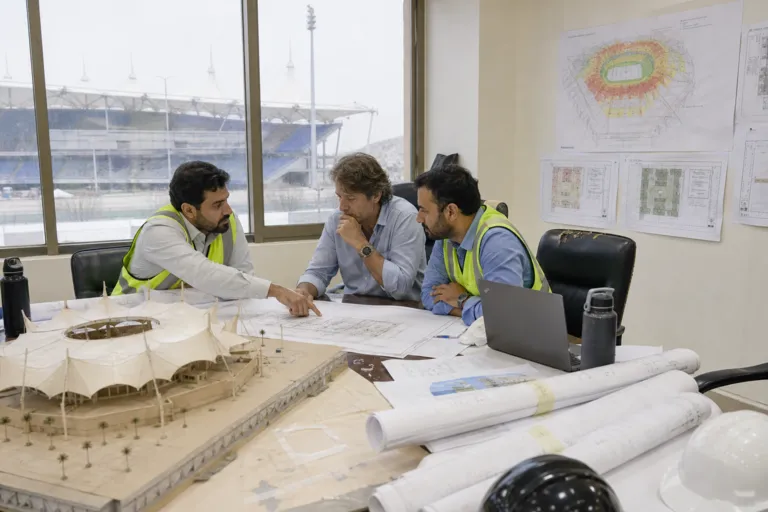
The 2034 World Cup in Saudi Arabia is expected to be geographically compact, but the sources describe a major emissions challenge tied to venue delivery. Saudi Arabia plans to build 11 new stadiums, while this year’s World Cup will use existing stadiums. The LA Times notes that stadium construction is a leading cause of mega sporting event emissions, and that using only existing venues, as Paris mostly did for the last Olympics, is a main way hosts can address climate change. The same report says the Saudi plans will drive the 2034 event’s pollution up to 8.6 million tons of CO2, based on conservative estimates.
Design choices for sustainable stadiums Saudi Arabia should therefore start with avoiding unnecessary new builds and focusing on infrastructure that reduces lifetime energy demand. The sources also point to aviation as a major climate factor around tournaments, with air travel usually the biggest contributor to carbon emissions from major sporting events. The LA Times adds that jet exhaust is a major contributor to climate change, accounting for 3% to 4% of all warming. Stadium planning cannot control every flight, but it can reduce local travel needs by clustering venues and connecting them to public transport, which FIFA’s environmental strategy lists as a priority.
Heat-Ready Stadium Design Is Now a Core Requirement
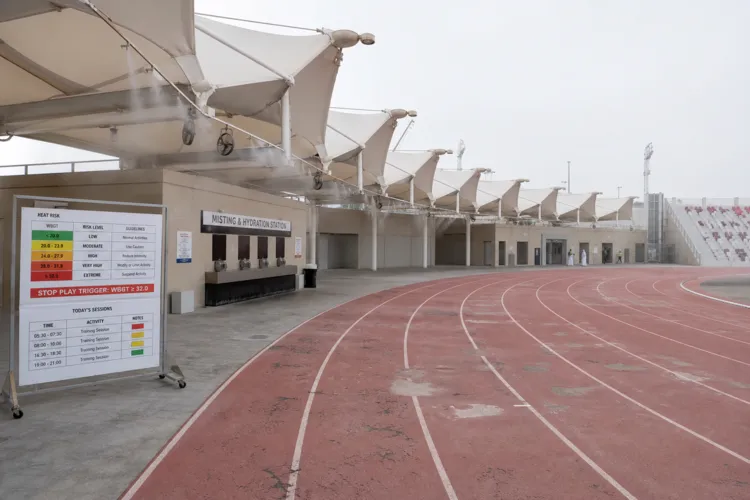
Climate readiness is not only about carbon. It is also about heat safety for players, staff, and fans. Multiple sources describe heat mitigation steps being used for tournaments, including increased access to shade, cooling areas, and water for spectators and workers. Medical personnel are planned for FIFA Fan Festivals and around stadiums during matches to manage heat-related illnesses, and Dallas’ outdoor festival plan includes access to ice and ice immersion bags plus two medical stations in climate-controlled locations. For stadium designers, these details translate into practical requirements for shaded concourses, cooling zones that can handle crowds, and clear routes to medical points.
On-field policies also influence venue design. FIFA said players will get 3-minute hydration breaks midway through each half, regardless of weather conditions. Other welfare plans include allowing teams the usual of up to five substitutions, a minimum of three rest days between matches, and climate-controlled benches for staff and substitutes at outdoor matches. FIFA also said outdoor matches during the hottest parts of the day have been strategically limited, kick-off times adjusted in certain markets, and matches expected in warmer windows prioritized for covered stadiums where possible. A covered stadium can help, but a Forbes analysis warns enclosed venues rely on air conditioning and lighting, increasing energy use, so renewable energy sourcing would be essential to avoid unnecessary spikes in emissions.
Governance and credibility shape what gets built. The Guardian reports FIFA introduced a Climate Strategy in 2021, pledging to reduce carbon emissions by 50% by 2030 and achieve net zero emissions by 2040. At the same time, the LA Times notes one of the World Cup’s biggest sponsors is Saudi Aramco, and it recalls that in 2022 a Swiss advertising regulator found FIFA to be in breach of federal law after nonprofits challenged “carbon neutral” claims about the Qatar World Cup. For 2034, sustainable stadiums Saudi Arabia will be judged not just by renderings, but by specific targets, transparent delivery, and designs that treat heat protection and emissions reduction as inseparable.
Why are new builds a key climate issue for the 2034 World Cup?
What heat-safety measures should climate-ready stadiums support?
How do match policies affect stadium design?
What does FIFA publicly commit to on emissions?
What does 'sustainable stadiums Saudi Arabia' need to balance for 2034?