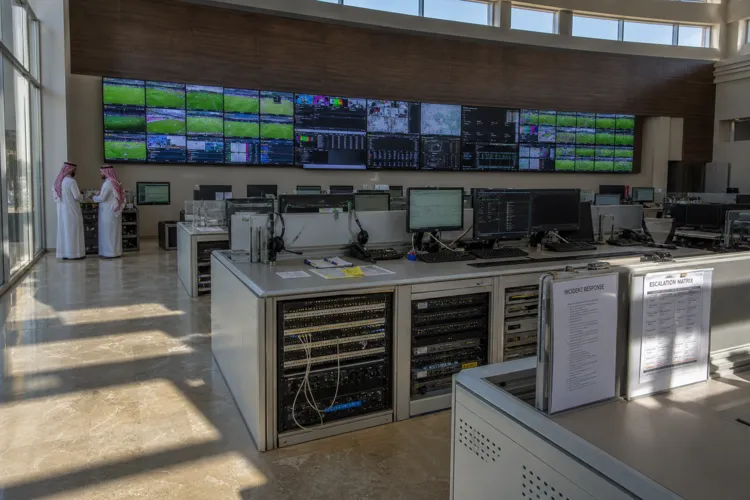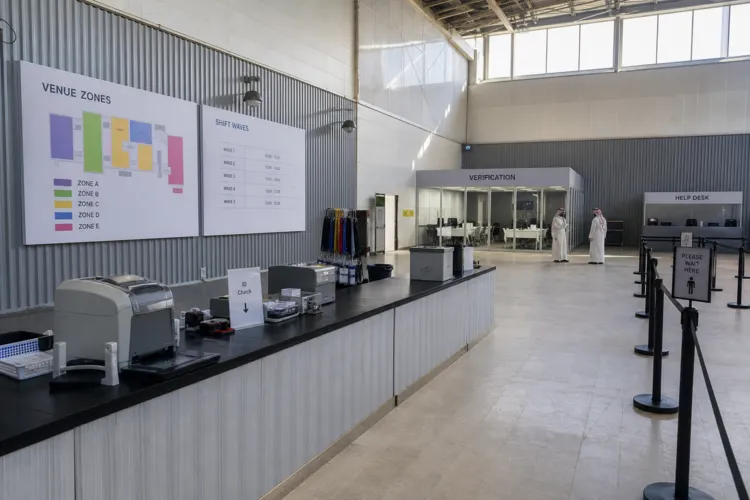
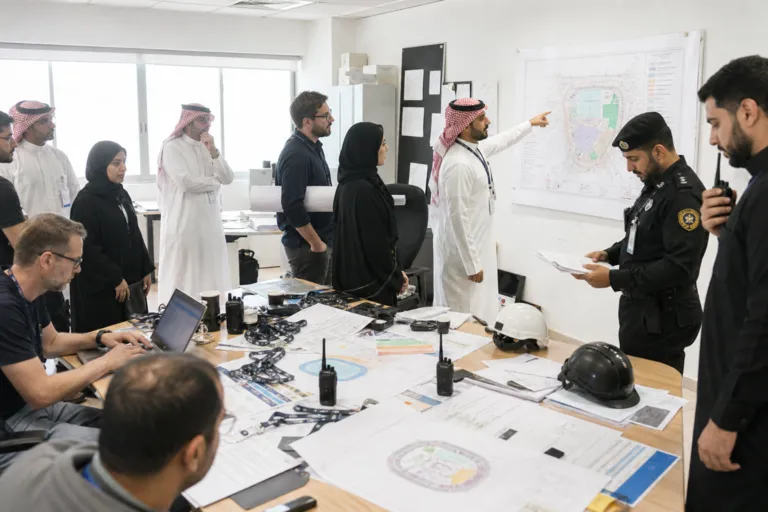
Operational delivery in sports event management Saudi Arabia is being shaped by a packed horizon of global competitions and by policy ambition. Saudi Arabia is slated to host the FIFA World Cup 2034 and the Asian Games 2034, alongside a calendar that includes Formula 1, golf, tennis, boxing, and esports. Skift argues the Kingdom should lean into becoming the world’s most event-friendly country, using its mass-pilgrimage operational experience as a foundation for live events and MICE. That framing turns the operational playbook into a repeatable system: plan for access, capacity, and pricing, and remove friction that keeps fans, athletes, and partners from arriving and moving efficiently.
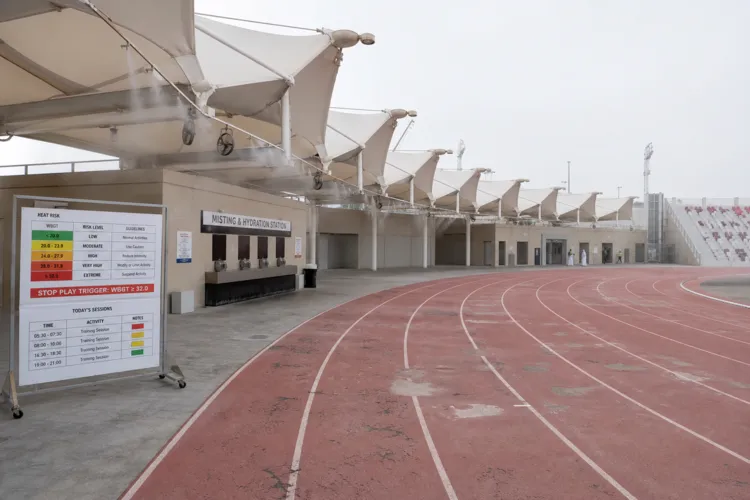
Start with venue and infrastructure readiness, but treat it as a legacy problem, not only a delivery deadline. Consultancy-me reports $2.7 billion committed to facility development by 2028, with construction on 15 new smart stadiums underway. Construction Review Online highlights the National Athletics Stadium within Qiddiya Sports Park as a central facility aligned to Vision 2030, intended to support major international competitions and community use beyond completion. The operational implication is clear: design decisions must reflect post-event utilization, because the same assets that enable World Cup- and Asian Games-scale delivery also determine whether venues become daily community facilities or sit dormant until the next major event.
Scheduling, Portfolio Design, and Multi-Event Weekends
Build an integrated calendar that lets multiple properties share audiences, staff, and infrastructure. Sports Illustrated describes Riyadh Season planning that can pair events across nearby arenas, and points to the Kingdom Arena and ANB Arena as “ideal twin stages” for back-to-back programming. The same source notes that the Esports World Cup took place in August with a major Riyadh Season boxing card alongside it, showing how co-scheduling can extend visitor stays. The Athletic also frames Riyadh Season as a citywide entertainment push, with the General Entertainment Authority creating Six Kings Slam, and notes Saudi hosted the Next Gen Finals in Jeddah for the past two years. Operationally, this means one transport plan, one volunteer plan, and one city-operations rhythm can support multiple tickets and broadcasts.
Next, simplify access and regulation while acknowledging real constraints. Skift flags traffic congestion, venue capacity, and regulatory processes as persistent challenges even as centralized planning and ongoing investments accelerate progress. The playbook should therefore formalize a “friction audit” for every event: visa and entry pathways, accreditation workflows, road and pedestrian flows, and contingency routing. Portfolio managers should also plan for contract and sanctioning realities. The Athletic reports Saudi’s initial tennis ambitions included a combined ATP and WTA 1000 proposal, but now it is set to host a 56-player men’s event for one week starting in 2028, after winning a license through SURJ Sports Investment. That shift shows why operational planning must remain flexible as rights holders negotiate timing and format.
Risk management needs to include geopolitics, budget pressure, and schedule uncertainty. Fox Sports reports Saudi Arabia’s Olympic Committee and the Olympic Council of Asia agreed to indefinitely postpone the 2029 Asian Winter Games, originally planned for Trojena at NEOM, with an “updated framework for future hosting” and standalone winter sports events instead. Ynetnews describes growing disruption in the region, including travel disruptions for players after the Dubai tennis tournament and LIV Golf players stranded in Dubai before an event in Hong Kong. Yahoo, citing BBC Sport, notes Saudi Arabia faces “enormous infrastructure and delivery costs” with 2034 approaching, and suggests capital may be reallocated amid geopolitical tensions and rising construction costs. The operational response is scenario planning: alternate venues, alternate dates, and security and logistics redundancies.
Finally, protect reputation and long-term value by prioritizing legacy outcomes and community use. Consultancy-me emphasizes that infrastructure decisions now will determine whether facilities are used daily by communities, clubs, and the next generation of athletes, or whether they wait for the next mega event. Forbes, discussing Abu Dhabi’s multi-sport hosting, argues that community benefits strengthen when social outcomes are placed first and economic decisions are anchored to them. For sports event management Saudi Arabia, a practical legacy checklist follows: define post-event operators early, ensure venues fit local demand, and align city operations so that event readiness leaves behind durable capabilities in crowd management, permitting, and multi-venue coordination.
What is the core operational focus for sports event management Saudi Arabia?
What major infrastructure signals support mega-event delivery in Saudi Arabia?
How can Riyadh improve operations through event scheduling?
What risks should operators plan for when delivering mega sporting events?
What does “legacy-first” mean in the context of Saudi sports venues?