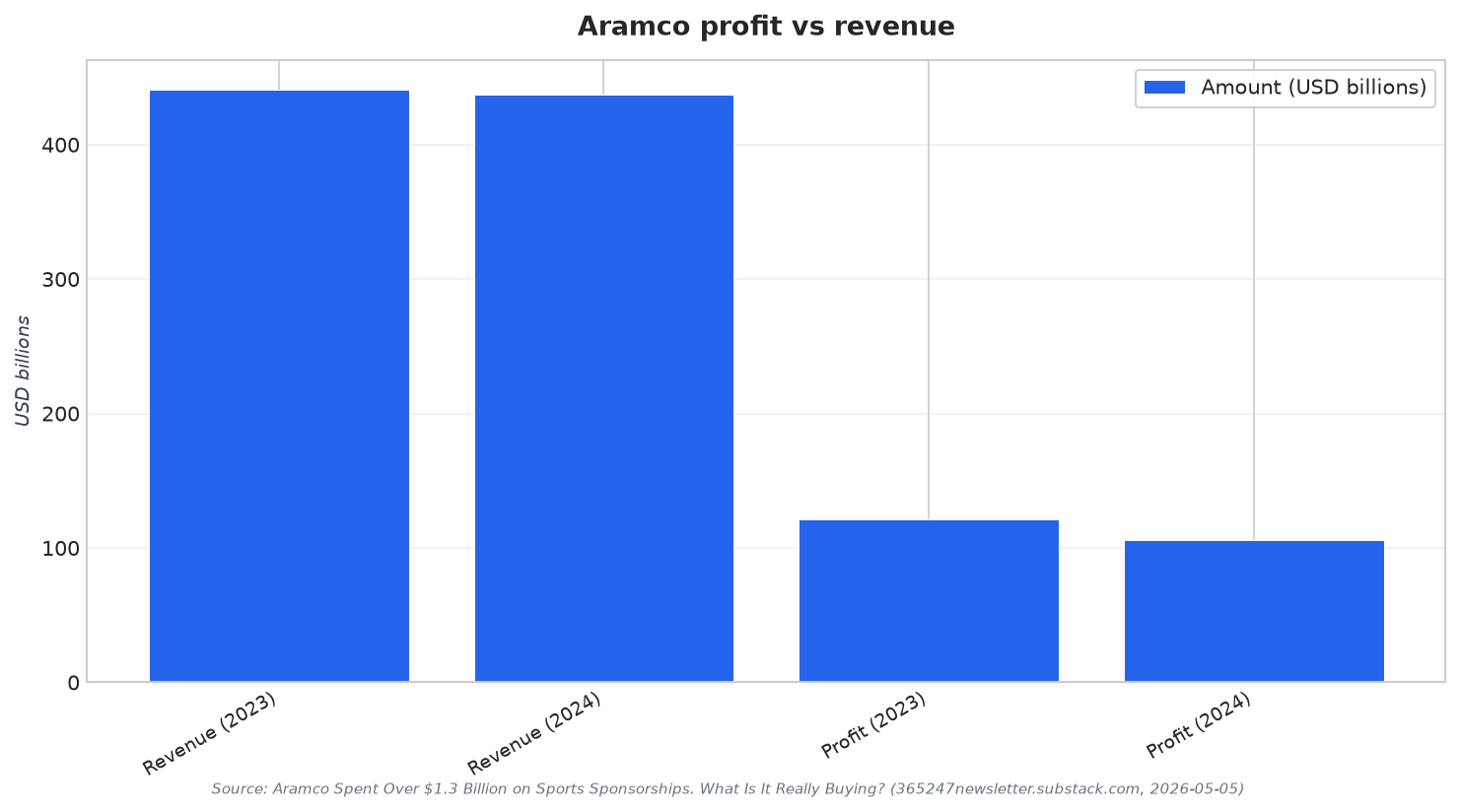
Aramco’s sports presence has become hard to miss across major properties, and that ubiquity is the first clue to its intent. A 2026 analysis estimated Aramco has spent over $1.3 billion on sports sponsorships, spanning competitions including Formula 1, football, and cricket. This level of investment sits alongside the company’s enormous financial scale: it made about $441 billion in revenue in 2023 and $437 billion in 2024, with profits of $121 billion and $106 billion respectively. In 2025, the same source noted revenue fell around 12% as oil prices dropped, while dividends were $85.4 billion—still supporting a sponsorship posture few brands can match.
The logic differs from traditional consumer sponsorships because Aramco does not sell a product most fans can directly buy. Instead, the company’s business centers on producing oil and selling it to refineries, with sales concentrated in specific markets. One breakdown cited China taking about 38% of Aramco’s oil, with India, South Korea, and Japan together taking another 38%; Europe and the United States were described as smaller but important, and Southeast Asia as the remainder. This distribution helps explain why global sports—rather than a single domestic league—fits the brand’s objectives: it offers broad reach across markets that matter to its core revenue flows.
From Visibility to Structural Rights: Building a New Sponsorship Template
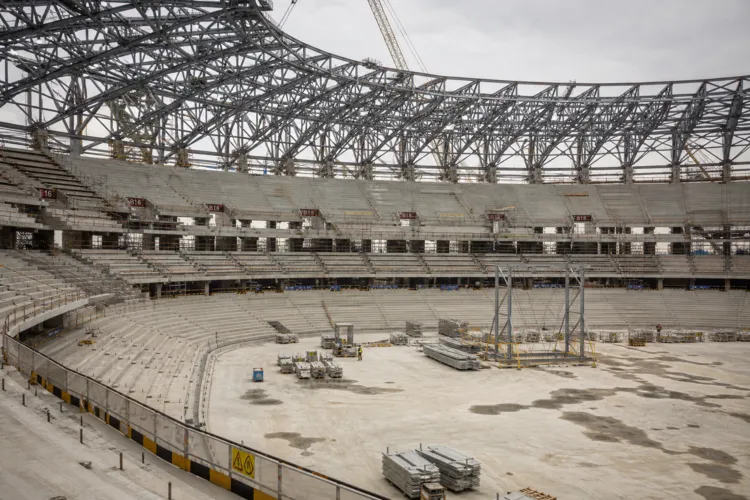
One of the clearest signals of structural ambition came with Aramco’s AFC Asian Cup Saudi Arabia 2027 agreement. Aramco signed as an Official Global Supporter, and the deal includes naming rights to the new Al Khobar stadium. The same report framed this as the first time in the tournament’s 68-year history that venue naming rights have been bundled into the commercial structure of Asia’s flagship football championship. Financial terms were not disclosed, but the packaging itself matters: it moves beyond “logo on LED boards” and toward integrated rights that can reshape how a property sells inventory to future sponsors.
Aramco also leans into technology-led activation, positioning itself as more than a passive badge. In its FIFA partnership messaging, Aramco highlights “power rankings” that use data, analytics, and technology to provide dynamic views of player performance, aimed at delivering deeper insights to fans. That approach aligns with a wider market shift described by Technavio: sponsorship is moving from passive visibility to interactive, data-driven partnerships, with digital content integration becoming a global standard and brand safety protocols increasingly important. The Aramco sports sponsorship strategy, in this sense, reads like an attempt to anchor brand meaning in precision, performance, and innovation—not only in energy operations but in fan-facing storytelling.
Long-term partnerships across multiple sports reinforce that narrative and give it staying power. Aramco describes itself as Formula 1’s Global Energy Partner since 2020 and says it has supplied lower-carbon fuels to all cars in Formula 2 and Formula 3 and the F1 Academy since 2024, with supply continuing during the 2026 season. It also cites a partnership with the International Cricket Council that includes sponsorship of major men’s and women’s cricket tournaments, plus a strategic partnership with the Aston Martin Aramco Formula One Team launched in 2022. For corporate brand partners, the model is clear: combine persistent global reach, premium rights packaging, and data-led activations to build durable attention that outlasts any single event.
How much has Aramco reportedly spent on sports sponsorships?
Why does Aramco sponsor global sports if it doesn’t sell a consumer product?
What was unique about Aramco’s AFC Asian Cup Saudi Arabia 2027 deal?
How does Aramco use technology in its FIFA partnership?
What defines the Aramco sports sponsorship strategy as a model for brand partners?