Endurance sports events Saudi Arabia organizers build today sit inside a wider national shift toward projects with direct domestic benefit and a busy delivery calendar. Market context is also commercial: Grand View Research estimates Saudi Arabia’s sports event market generated USD 4.9 billion in 2025 and is expected to reach USD 12.2 billion by 2033, with a projected 12.2% CAGR from 2026 to 2033. For endurance and triathlon formats, the planning question is not only the course and finish-line experience. It is how you navigate authority split, secure approvals, and design an event model that turns participation into sponsor value while staying aligned with Vision 2030 and the Quality of Life Program.
Start your permits and approvals plan with governance mapping, because responsibilities can vary by project and funding route. The Sports Governance Saudi Arabia Entry Guide notes a mix where, for example, PIF became a major sponsor of the ATP Tour and then the WTA Tour, while the men’s FIFA World Cup in 2034 is described as bankrolled by the Ministry of Sport and awarded uncontested in December 2024. For operators, this reinforces a practical rule: identify who signs, who pays, and what success metrics will be used. Build compliance and reputation planning into delivery, not as an add-on, because stakeholders may scrutinize partnership structures and marketing claims.
Sponsors and Participation: Build Scale, Variety, and Reasons to Stay
Sponsors buy reach and repeatable engagement, so design the format for variety and scalable participation. The Riyadh Marathon provides a local case: it has been held since 2022, is described by organizers as the Kingdom’s first official full marathon, and has World Athletics Elite Label Road Race status since its inaugural edition. Its format combines a full marathon (42.195 km) with shorter races including a half marathon (21.1 km), a 10 km run, and a 4 km fun run described as accessible to participants of all ages, abilities, and genders. That structure supports family groups, newcomers, and competitive athletes in one platform that sponsors can activate across multiple runner types.
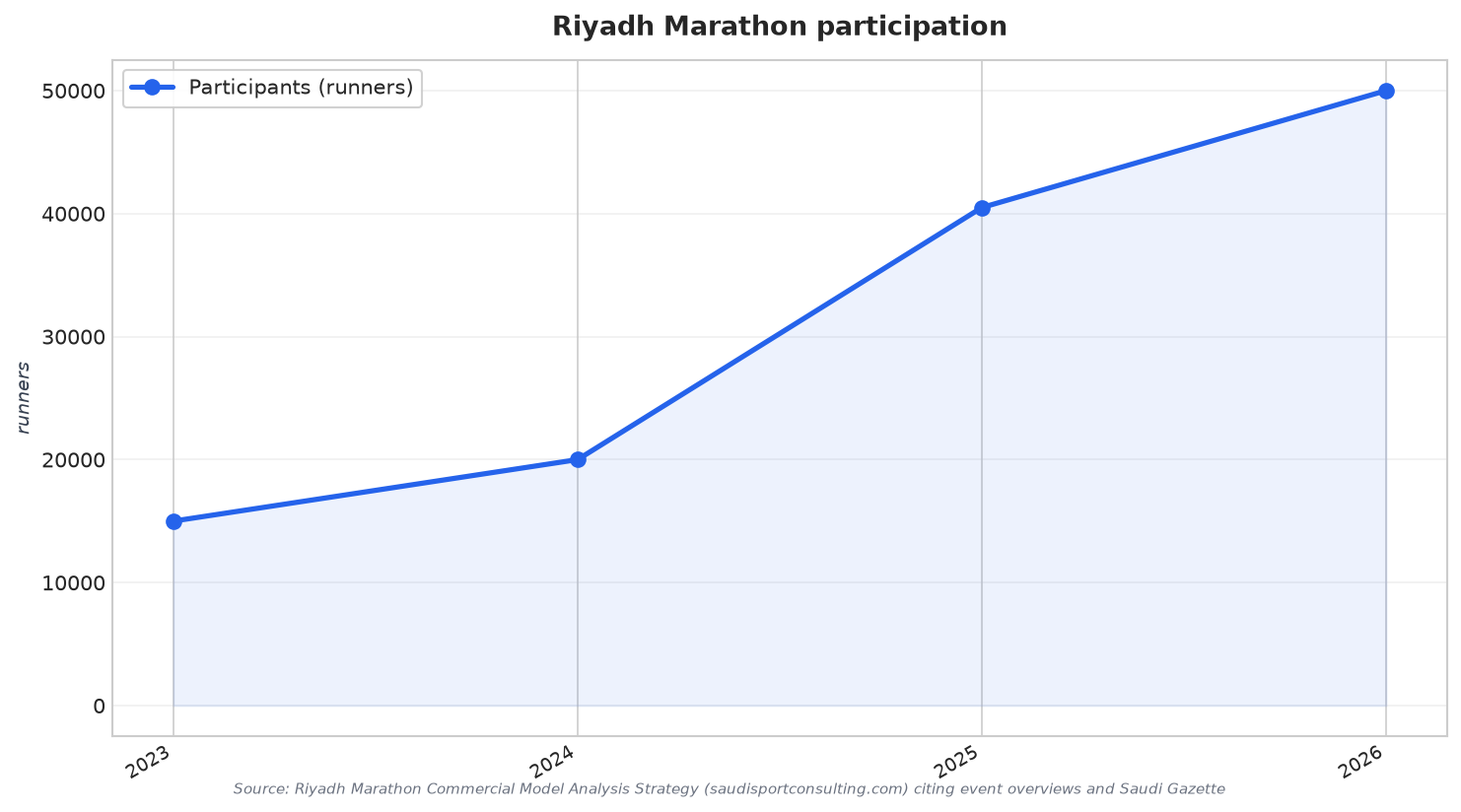
Participation growth is also the clearest story you can take to sponsors and partners. An event overview cited in the Riyadh Marathon commercial model analysis states over 10,000 participants from more than 100 countries attended the inaugural edition on March 5, 2022, and that prizes exceeded SR1 million (approximately USD 266,000). The same source reports the 2023 edition attracted over 15,000 runners, 2024 had over 20,000, and 2025 reached 40,494 participants from 131 countries. Saudi Gazette reported Riyadh Marathon 2026 closed with participation from more than 50,000 runners. For organizer playbooks, this is the blueprint: publish credible participation reporting, broaden entry points, and make international reach explicit when relevant to tourism and partner objectives.
To grow endurance and triathlon participation beyond race weekend, link event operations to local pathways and the wider participation trend. The governance guide reports participation rates rose from 13% of the population exercising regularly in 2015 to 50% “today,” and female participation grew 400% in the same period. Separate infrastructure signals include $2.7 billion committed to facility development by 2028 and construction on 15 new smart stadiums underway. Treat these as enabling conditions, then build your own demand plan: community programs, coaching connections, and repeat event cadence. On the commercial side, IMARC reports the Saudi Arabia sports and fitness goods market reached USD 702.4 million in 2025 and is projected to reach USD 1,119.9 million by 2034, showing how participation momentum can connect to equipment and apparel partners without overclaiming what any single race will achieve.
How should organizers think about permits and approvals for endurance and triathlon events in Saudi Arabia?
What local event example shows how mass participation can grow in Saudi Arabia?
What participation signals support the growth of endurance sports events across Saudi Arabia?
What market figures can help frame sponsor conversations without overstating local impact?