A sports science centre Saudi Arabia stakeholders can fund and sustain should begin with a feasibility-first approach. A Saudi case study for a public-sector authority describes a framework that combines market demand analysis, competitive benchmarking, financial models with sensitivity scenarios, and reviews of staffing, cost structures, and regulatory and land considerations. That same engagement reported that the feasibility process reduced investment uncertainty by 30–40%. It also states that optimized project designs reduced expected operating costs by 15–20%. Those figures reinforce a practical development principle: capex decisions should be staged, measured, and defended with evidence before committing to a final build-out.
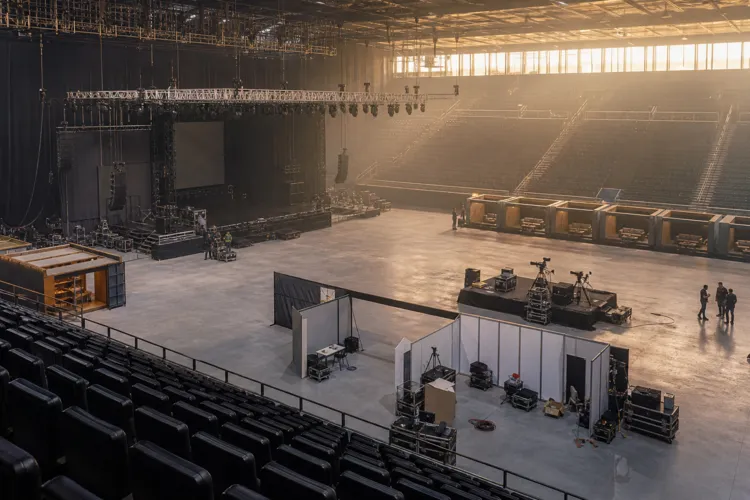
For capex strategy, the sources repeatedly emphasize flexibility and utilization logic, especially where a site can support year-round programming. Analysis on indoor arena development in Saudi Arabia notes indoor venues are more expensive to build and operate, but are positioned as necessary for continuous calendars beyond seasonal festivals. It also reports average venue utilization as of 2025 at 68% in Riyadh and 61% in Jeddah. While a performance centre is not an arena, the same utilization mindset can guide the sizing of labs, rehab zones, testing areas, and education rooms, so the asset is not overbuilt early. The same arena analysis also notes a market mix signal: in 2025, corporate end users accounted for 58.42% of event management market share, while exhibitions & conferences and sports together held 36.94%, pushing designs toward spaces that can switch use without long dark periods.
Staffing Model: Build for Demand, Then Scale
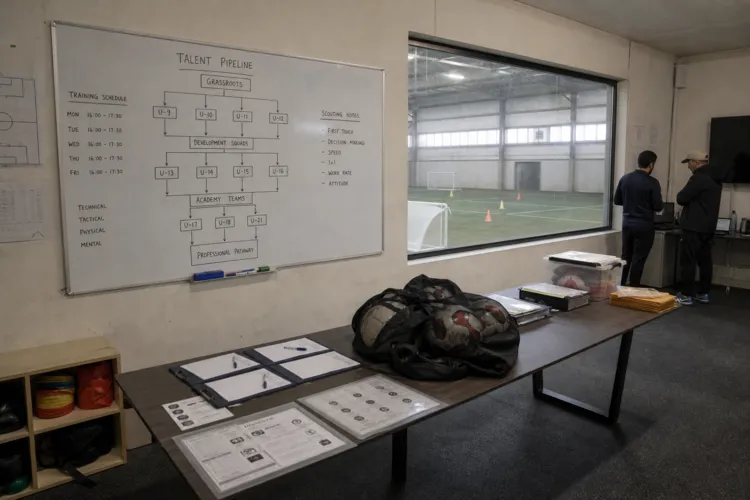
Staffing should follow a phased operating model, because operational requirements change as utilization rises. The feasibility case study explicitly recommends phased implementation aligned with demand maturity, strengthening operational efficiency and cost assumptions, and establishing post-launch performance monitoring frameworks. Labor-market signals in Saudi Arabia suggest expanding supply and demand for sports roles. A commentary cited in a report on collegiate sports says a Ministry of Sports indicator shows Saudi Arabia has already created over 14,000 jobs in the sports industry under the Saudization program, with a projection that this could increase to over 100,000 jobs in the next decade. The same source reports 129% growth in sports club employment from 2018 to 2021 and a 156% increase in administrative roles in that period. For a performance centre, that context supports a staffing plan that starts lean, then adds specialized and administrative capacity as service lines and client volume mature.
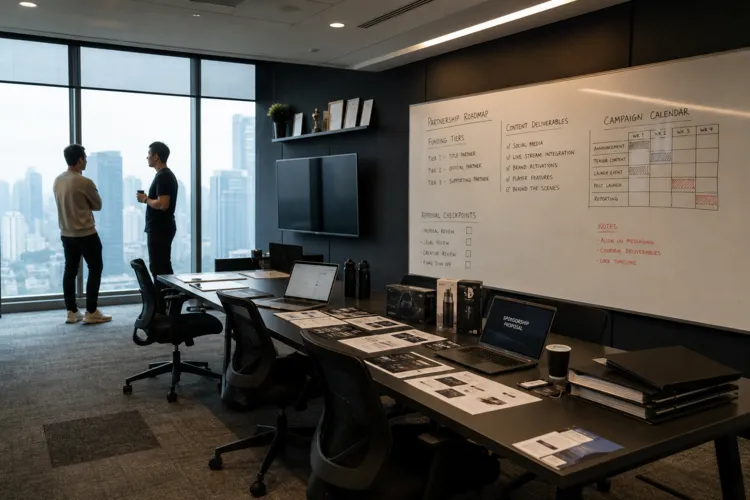
Revenue planning is strongest when it avoids dependence on a single buyer type. Sources on Saudi Arabia’s broader events and entertainment economy provide context for diversified income. The indoor arena analysis cites an entertainment and amusement market estimated at USD 2.98 billion in 2026 (up from USD 2.65 billion in 2025) and projected to reach USD 5.36 billion by 2031, with a 12.4% CAGR over 2026–2031 (Mordor Intelligence). It also cites an event management market expected to grow from USD 2.59 billion in 2025 to USD 2.77 billion in 2026 and reach USD 3.92 billion by 2031, at a 7.14% CAGR over 2026–2031 (Mordor Intelligence). For a sports science and performance centre, these adjacent market signals support multiple pathways: contracts tied to events calendars, corporate programs, and educational partnerships, rather than a single-season model.
Within that diversified mix, commercial packaging should mirror how visitors and customers actually pay for experiences in Saudi Arabia. Mordor Intelligence reports that ticket sales accounted for 50.10% of the Saudi Arabia entertainment and amusement market share in 2025, while premium experiences are forecast to advance at a 20.1% CAGR to 2031. Even if a performance centre is not selling “tickets” in the same way, the lesson is to separate core access from higher-value add-ons, and to price premium services deliberately. Demand-side participation data also matters for long-run volume: a report citing SRJ Sports Investments says nearly 50% of Saudis engage in some form of weekly physical activity, up from 13% in 2015. That participation expansion strengthens the case for a centre with tiered offerings that can serve both broad participation and higher-performance pathways.
How should a sports science and performance centre in Saudi Arabia reduce investment risk before capex is committed?
What staffing signals in Saudi Arabia support scaling a performance centre over time?
Which market indicators suggest multiple revenue streams could be viable for a Saudi performance facility?
How can pricing and packaging learn from Saudi Arabia’s premium-experience trend?
What demand-side evidence supports building a sports science centre in Saudi Arabia for both participation and performance pathways?