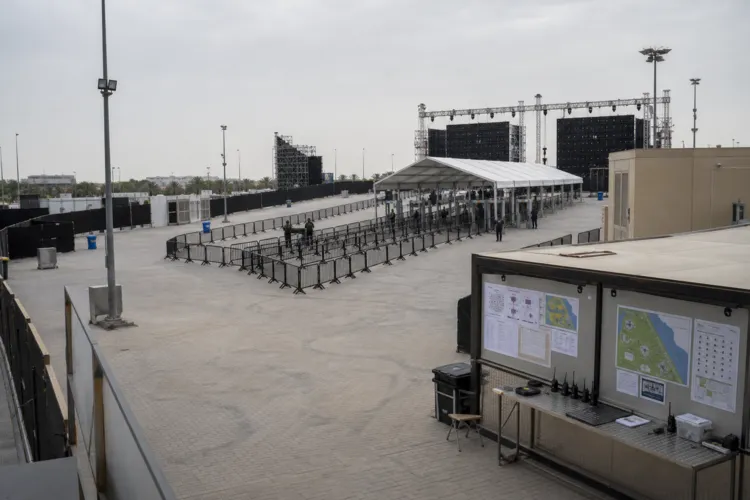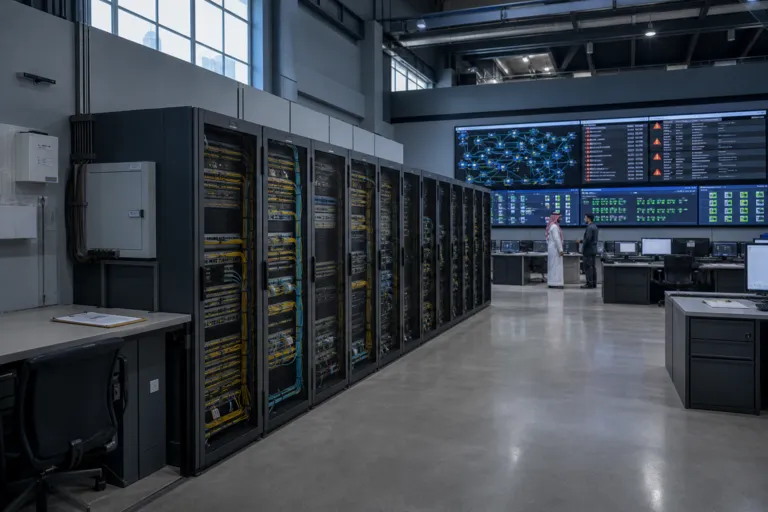
Saudi sports venues are moving toward “smart stadium” architectures that replace legacy copper-backbone distributed antenna systems and manual ticketing with private 5G cores, edge-compute nodes, and AI-driven operations centers. One smart-stadium model described in market research is an operations center that can process more than 50,000 data points per minute during a sold-out event, which illustrates why cybersecurity has to cover both IT and operational technology. In parallel, the Middle East & Africa region is described as the fastest expanding smart-stadium region at a 15.46% CAGR, with growth linked to giga-project investments in Saudi Arabia and the UAE. As these connected capabilities expand, the vendor market naturally shifts from single products to integrated security outcomes.
Investment signals matter for cybersecurity planning, because modernization programs create procurement cycles for secure networking, identity, and managed defenses. One report states Saudi Arabia has planned over USD 2.7 billion for facility development by 2028, with a focus on modern infrastructure to support long-term national economic and sports objectives. The same research also notes Saudi Arabia’s Public Investment Fund has earmarked over USD 7.5 billion for entertainment and sports infrastructure through 2030, and it highlights Qiddiya’s 45,000-seat stadium as a fully connected, zero-legacy venue incorporating AI-powered operations from day one. In practical terms, zero-legacy designs can reduce inherited technical debt, but they still demand security-by-design for private 5G, edge compute, hybrid cloud data management, and digital event operations.
What the Vendor Market Is Selling: Platforms, Services, and Compliance-Driven Integration
For stadium cybersecurity in Saudi Arabia, vendor selection is increasingly shaped by bundled services and integration requirements, not just hardware. A smart-stadium solutions report segments the market by value into 58% software and system components and 42% services, and it adds that 22% of service requests focus on long-term cybersecurity management. The same report states that 60% of stadium owners opt for long-term maintenance agreements, reinforcing why managed security, patching, and operational support can be central to bids. It also notes that 50% of venues in the Middle East and Africa region prioritize 100% high-security biometric systems for international tournaments, which pushes vendors to combine identity, access control, and governance into the overall stadium security stack.
Global security-market forecasts show why stadium cybersecurity is being procured alongside broader “stadium security” modernization. One stadium security market report values the global market at $12.4 billion in 2025 and projects $26.8 billion by 2034, with an 8.9% CAGR over the 2026–2034 forecast period, citing escalating concerns and the adoption of AI-driven surveillance and crowd analytics. Another forecast sizes the stadium security market at $9.8 billion in 2026 and expects $20.25 billion by 2035, progressing at an 8.40% CAGR. These are global figures, not Saudi-specific, but they help explain why vendor roadmaps increasingly converge physical and cyber controls into unified command-and-control platforms, especially for major event certification requirements and high-throughput screening expectations described in industry research.
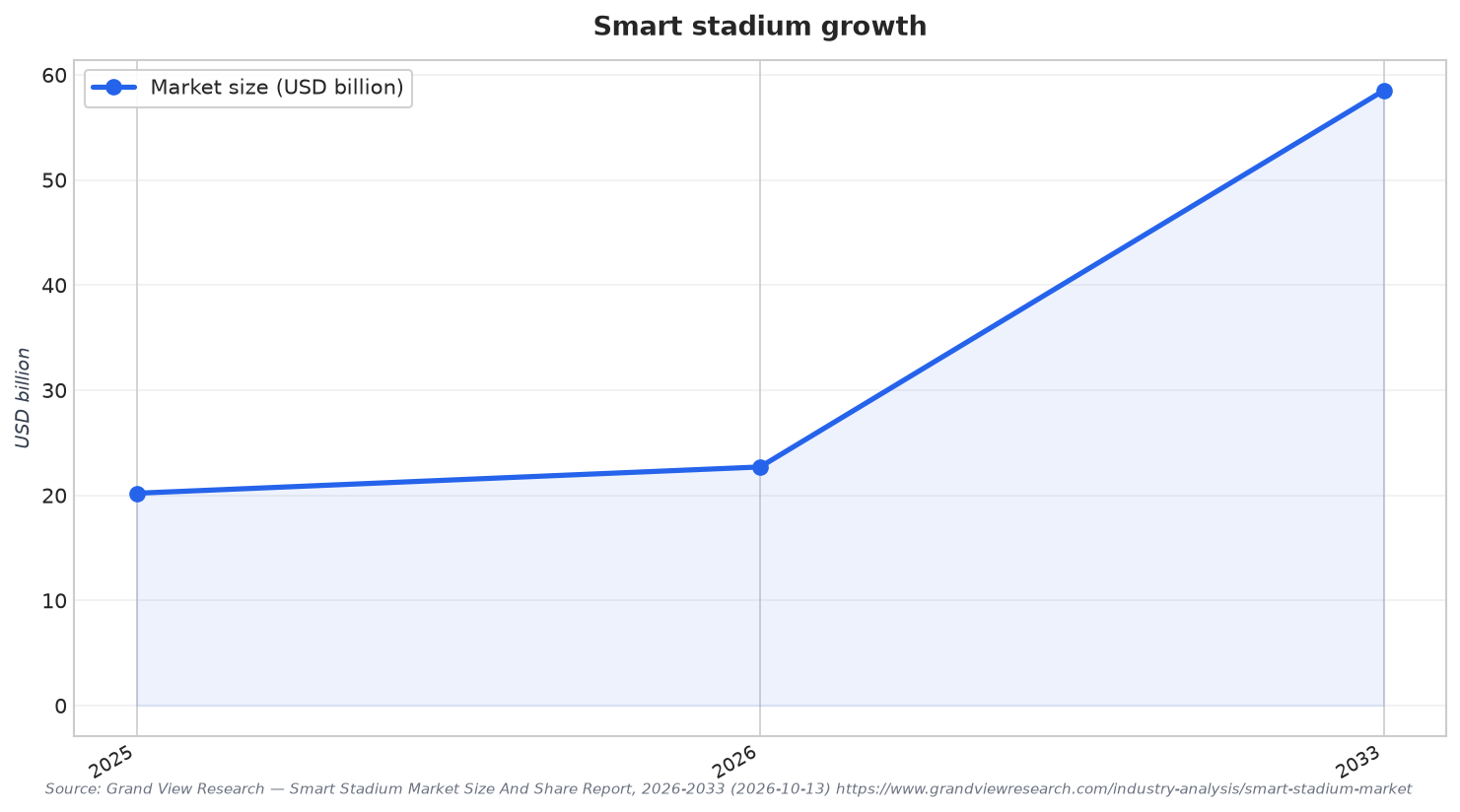
For buyers, the practical differentiators often come down to data residency control, operational accountability, and the ability to integrate across multi-vendor environments. Research on private 5G in stadiums frames the tradeoff clearly: private 5G gives venues control over spectrum, traffic prioritization, and data residency, while carrier-managed builds can cost less upfront but limit the operator’s ability to monetize network-level fan data. Another market note flags multi-vendor integration complexity, where open-architecture protocols reduce lock-in but require specialized system integrators to achieve sub-second interoperability between access control, video analytics, and perimeter sensors. This is where a vendor’s managed services posture, integration capability, and long-term cybersecurity management offerings become decisive in tender evaluations.
What is driving smart-stadium expansion in Saudi-linked projects?
Why does a smart stadium increase cybersecurity needs?
How do services influence the cybersecurity vendor market for venues?
What does stadium cybersecurity in Saudi Arabia depend on when choosing network architecture?