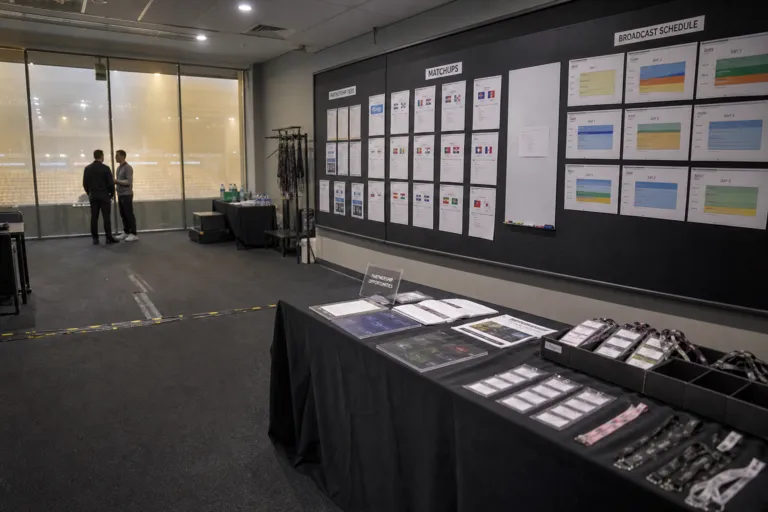
The Esports Nations Cup (ENC) is positioned as a nations-based extension of the Esports World Cup (EWC) ecosystem. It is scheduled to take place in Riyadh from November 2 to 29, 2026. Unlike club-led circuits, the ENC is built around national representation, with players competing under their country’s banner rather than a commercial team brand. Esports Charts describes the ENC as organized by the Esports World Cup Foundation (EWCF) and designed to help establish permanent national teams alongside existing club-focused competition. Deadline reports that the Esports Foundation awarded National Team Partner status for the inaugural tournament after selecting from 630 applications.
Structurally, the tournament is designed to scale national participation while staying competitive. Esports Charts reports a $20M prize pool across 16 titles and a qualification framework spanning seven global regions. Deadline also notes a dozen games in the nations-based lineup, including Apex Legends, Chess, League of Legends, Dota 2, Valorant, and Rocket League, reinforcing the intent to cover multiple player communities. The National Team Partner network spans organizations and individuals representing more than 100 countries, with partners ranging from newly formed bodies like USA Esports to established groups such as the Korea Esports Association, Saudi Esports Federation, and British Esports, plus club-led coalitions and hybrid public-private alliances.
Why National Teams Change the Sponsorship Conversation
The emerging Esports Nations Cup commercial opportunity is tied to how national identity simplifies the story for mainstream audiences and for brands that want international reach. A nation-based event can appeal to sponsors looking for broad exposure rather than title-specific activation, and it can also attract interest from tourism boards, education bodies, government agencies, and national institutions that may not naturally back a single esports organization. Esports Charts’ H1 2026 business analysis adds that national tournaments require local infrastructure to coordinate players, secure public funding, and sign sponsors, and it argues that the ENC is accelerating the formalization of national-team esports. It also notes the ENC’s flexibility, with national teams potentially run under esports federations, traditional sports bodies, government offices, or private marketing agencies.
That structure matters because sponsorship remains a central pillar of the wider esports economy. Quantumrun states that total sponsorship hit $1.2 billion in 2025, and frames that as 42% of revenue once betting is removed, while also reporting that sponsorship and advertising add $1.1 billion and betting drives 58.3% of revenue. SQMagazine likewise reports that sponsorships contribute $1.2 billion and calls sponsorships the primary revenue stream. On the EWC side, SQMagazine reports sponsorships exceeding €50 million in top categories, including Pepsi sponsoring at a €4 million strategic partner level and Adidas investing €0.4–0.8 million as an official partner. Together, these figures show why a scalable national-team platform could become a new inventory layer for brands.
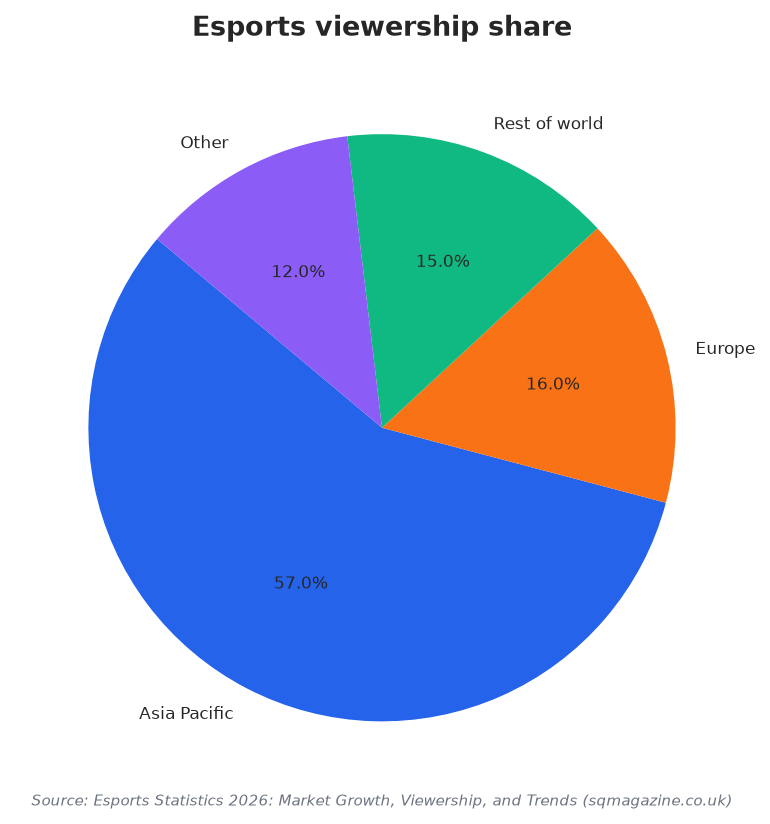
For organizers and national stakeholders, the ENC is also tied to investment and ecosystem-building. Both SQMagazine and Quantumrun report that the Esports World Cup Foundation committed $45 million to the ecosystem via the Esports Nations Cup, while Quantumrun adds that the EWC 2026 prize pool is $75 million, up from $70 million. On the governance side, Esports Charts reports that the United States is moving through a partnership between USA Esports and KeSPA covering national-team selection, delegation exchanges, coaching and officials training, and competition operations. With Asia Pacific accounting for 57% of global esports viewers and Europe at 16% according to SQMagazine, the ENC’s multi-region, multi-title design aligns with where audiences already concentrate while still signaling growth across emerging regions.
What is the Esports Nations Cup and when will it take place?
How large is the ENC program in terms of countries and partners?
What are the prize pool and title count for Esports Nations Cup 2026?
Why is the Esports Nations Cup commercial angle attracting attention from sponsors?
How does sponsorship fit into the wider esports revenue picture cited in the sources?