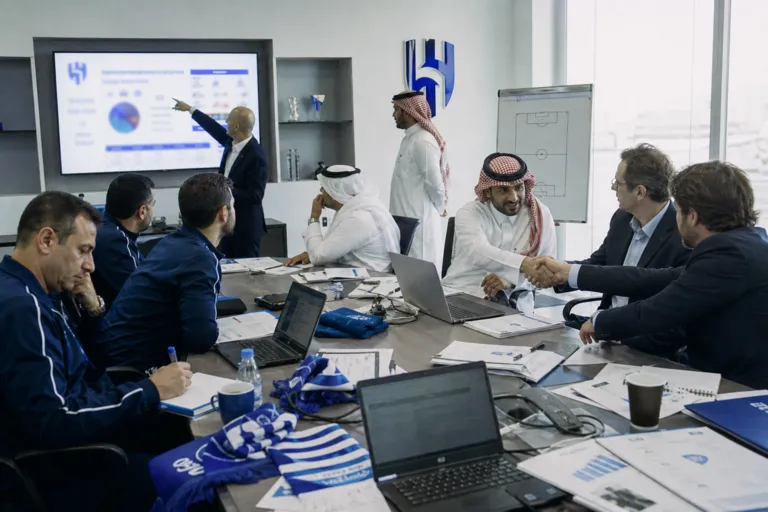
Al-Hilal’s global-brand story is now inseparable from its ownership and investor narrative. In April 2026, Saudi Arabia’s Public Investment Fund (PIF) sold a 70 per cent stake in Al-Hilal to Kingdom Holding Company. The deal valued Al-Hilal at SAR1.4 billion. The buyer is Prince Alwaleed Bin Talal, described as a billionaire businessman and a member of the Saudi royal family. The transaction matters for brand-building because it positions the club as an asset with a clear price, a clear controlling stake, and a stated plan to apply “global investment standards” while preserving “history and identity.”
The Al-Hilal commercial strategy also sits within PIF’s wider sports portfolio decisions. PIF bought controlling interests in four leading Saudi clubs in 2023: Al-Hilal, Al Ittihad, Al Nassr and Al Ahli. PIF also has a majority stake in Newcastle United in the English Premier League, described elsewhere as about 85%. When PIF announced the Al-Hilal sale, it linked the move to a strategy to “maximize returns and redeploy capital within the domestic economy.” That framing is a commercial signal: Saudi football assets are expected to attract investors, generate returns, and fit national economic priorities.
From Sporting Reach to Sponsorship Momentum
For a club brand, global visibility is the fuel that makes partnerships easier to sell. League-level indicators show why that pitch has become more credible. Saudi Pro League leadership said that last season the league reached a record 180 countries worldwide, up from 150 the year before. In the same report, sponsorship-side international deals were said to have surged by 200%. Social media following reportedly grew from 11 million to 15 million last season, alongside a 60% jump in engagement. Those are league figures, not Al-Hilal-only metrics, but they describe the commercial environment Al-Hilal operates in.
On-pitch narratives still function as brand accelerators in this playbook. A cited view is that if Saudi clubs are to compete “on the same basis,” building a global fan base could take decades, so clubs need to “tell a different story.” One suggested story is becoming Asia’s premier club team, especially with the claim that “there is no obvious candidate” as Asia’s No. 1 club or brand. Al-Hilal’s own high-profile moments have been used to support that storytelling, including being the only Asian team said to have made a big impact at a Club World Cup by drawing with Real Madrid and then defeating Manchester City 4-3 in the Round of 16.
The commercial message is reinforced by how decision-makers describe discipline and fit. Al-Hilal’s chief executive, Esteve Calzada, rejected the idea of signing Cristiano Ronaldo on a short-term deal, calling it “completely counter-intuitive” to bring “the biggest player of your biggest opponent” to play with you. He also highlighted that a move “only for three to four weeks” did not make sense. That stance supports a brand thesis built on coherence, rivalry positioning, and longer-term value. It aligns with PIF’s emphasis on “long-term financial sustainability” and Kingdom Holding’s stated intent to cultivate “strategic partnerships.”
Finally, Al-Hilal’s brand platform is strengthened by scale, pedigree, and the ability to attract attention in a crowded market. The club is described as one of Saudi Arabia’s biggest, with league-title totals cited as 19 in one report and a record 21 in another. Regardless of the count, the core point is consistent: Al-Hilal is framed as a national symbol and a leading champion, and that status makes it easier to sell a premium proposition to partners. The April 2026 sale turns that proposition into a structured investment case, with an explicit valuation and a plan to unlock commercial potential through global standards.
What is the Al-Hilal commercial strategy, in simple terms?
Who bought Al-Hilal and what stake was sold?
How does PIF explain the reason for selling a majority stake?
What measurable signals show growing international commercial momentum around the league Al-Hilal plays in?
Why did Al-Hilal’s CEO say a short-term Ronaldo move made no sense?