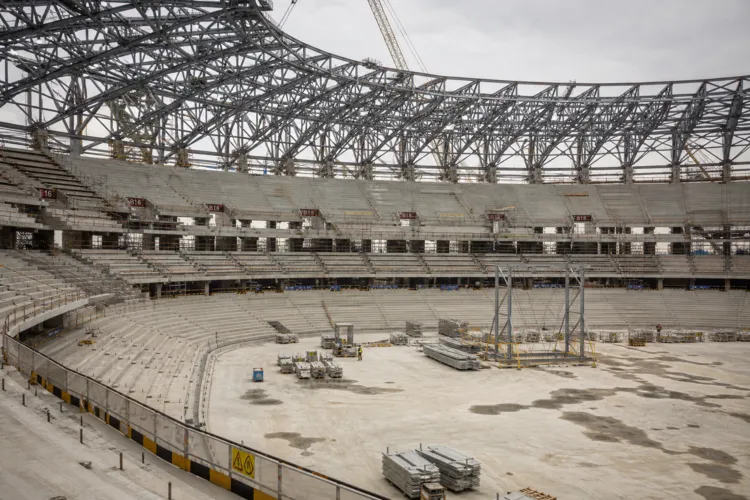
Riyadh Expo 2030 will run from October 2030 to March 2031, and it is designed to carry cultural and sporting programming across its six-month window. That timing matters for brands because Saudi Arabia’s events calendar is not a loose set of festivals. It is described as a state-backed soft-power system that includes Vision 2030 objectives, the National Events Center, the General Entertainment Authority (GEA), tourism platforms, and PIF-backed sports assets. In practice, that structure enables cross-event sponsorship, where one partnership can be amplified through multiple touchpoints across entertainment seasons, sporting championships, and citywide visitor flows.
The visitor scale attached to Expo is also framed as a tourism driver. One expert-view source says Riyadh Expo is expected to attract more than 42 million visits from around 197 countries, creating demand for hospitality, transport, and infrastructure. In parallel, the same source reports Saudi Arabia recorded 123 million tourists in 2025, including more than 30 million international visitors, with tourism spending exceeding USD 81 billion. For brands, the opportunity is not only at the Expo gates. It is in aligning offers with travel demand and using sponsorship rights to pull visitors into hotels, retail, food and beverage, and paid experiences throughout a longer calendar.
How Cross-Event Sponsorship Turns Visits Into Repeat Demand
Sports provides frequent moments to sustain attention before, during, and after the Expo. Discover Riyadh reports that in a single Riyadh Season (October 2025 to March 2026), the city hosted fifteen world championships across tennis, boxing, wrestling, snooker, padel, golf, and other disciplines. Official attendance milestones also show reach at city scale. GEA said Riyadh Season 2024 attracted 12 million visitors, and another source reports the 2025 edition reached 14 million visitors by January 19, 2026. Brands can use these anchors to build “sequenced sponsorship,” where campaign themes, VIP hospitality, and travel bundles move from a sports weekend into broader Expo and tourism itineraries.
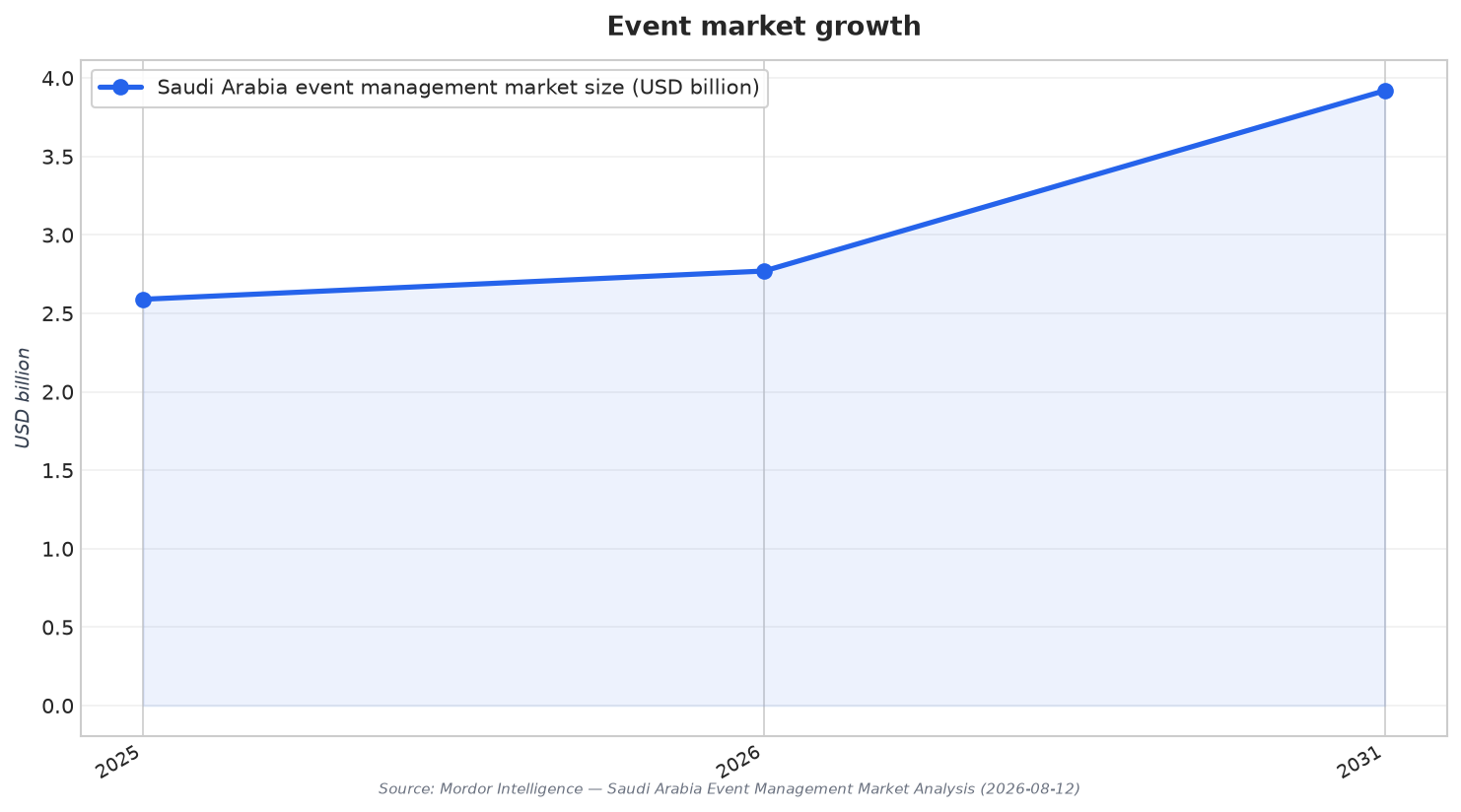
Market mechanics also support the case for integrated planning. Mordor Intelligence forecasts the Saudi Arabia event management market to grow from USD 2.59 billion in 2025 to USD 2.77 billion in 2026, reaching USD 3.92 billion by 2031, with a 7.14% CAGR over 2026–2031. In 2025, corporate events accounted for 58.42% of market share, while ticket sales represented 54.92% of revenue. Sponsorships are forecast to grow at a 12.85% CAGR between 2026 and 2031. This mix signals that brand-led activation, ticketing partnerships, and B2B hospitality can be packaged together across Expo programming and the sports calendar.
Execution depends on infrastructure and operator readiness, and the sources cite both. Mordor Intelligence reports average venue utilization at 68% in Riyadh and 61% in Jeddah as of 2025, and says streamlined licensing allows foreign organizers to establish local subsidiaries in under one week. On mobility, one expert-view source describes Riyadh’s automated metro network as spanning 176 km and 86 stations, positioning it as critical for Expo 2030 and future events. For brands pursuing Riyadh Expo 2030 sports synergy, the practical play is to synchronize media, hospitality, and digital ticketing offers across venues and transport corridors, rather than treating Expo and sport as separate budget lines.
How can brands approach Riyadh Expo 2030 sports synergy without treating Expo and sport as separate campaigns?
What visitor scale is expected for Riyadh Expo 2030, according to the sources?
What do the sources say about Riyadh Season reach that brands can use as an activation platform?
How fast is sponsorship revenue expected to grow in Saudi Arabia’s event management market?
Which operational details in the sources support multi-event brand planning in Riyadh?